



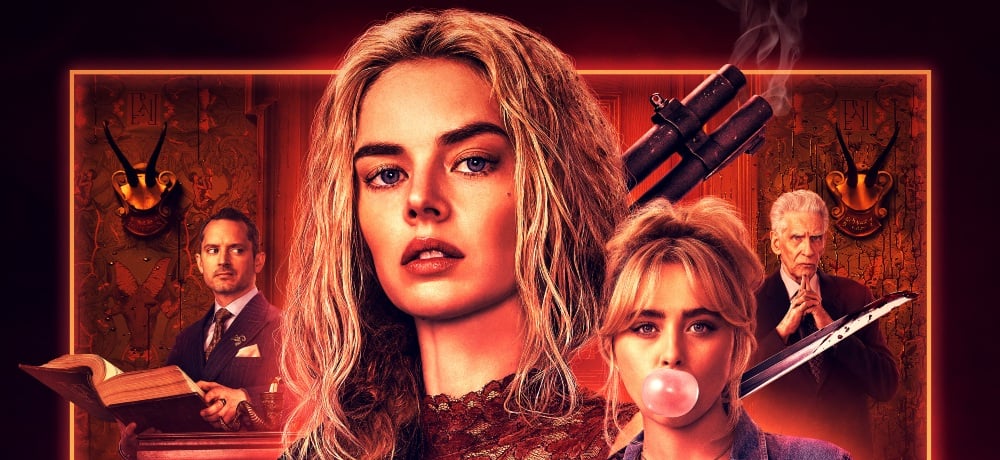
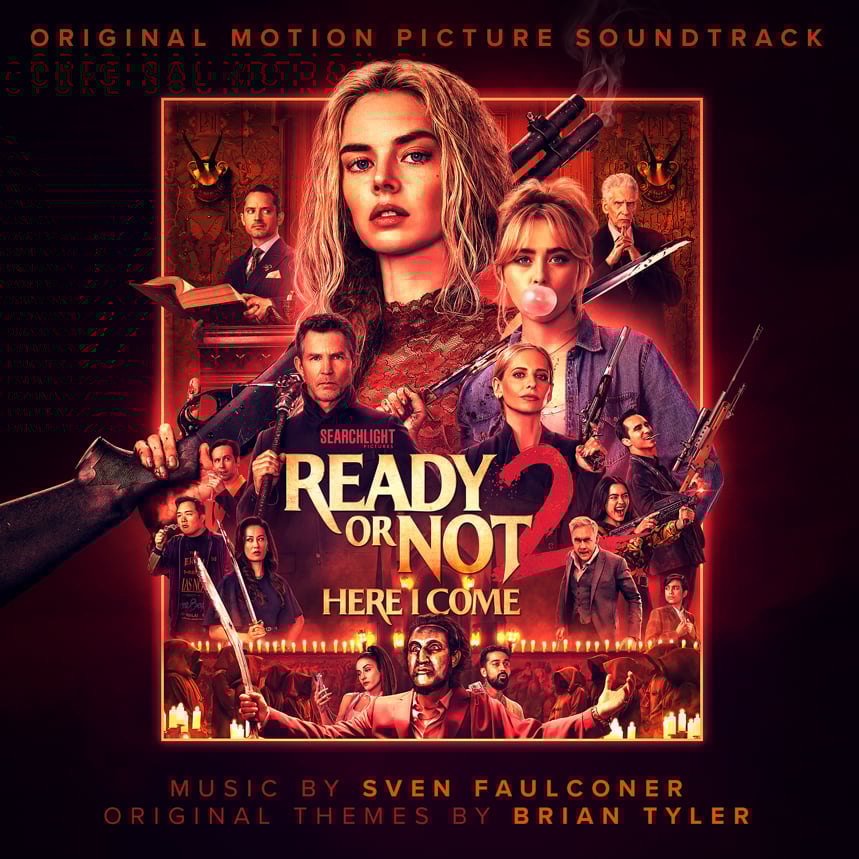
Blending the visceral violence of a deadly ritual with a rekindled bond between estranged sisters, Ready or Not 2: Here I Come covers a wide range of blood-soaked emotional beats and shocking tonal turns. It's a truly unique story that requires an equally unique score, and thankfully composer Sven Faulconer was more than up to the task, building on Brian Tyler's themes from the original film while infusing the sequel with plenty of magical and mysterious musical moments.
To celebrate the digital release of Ready or Not 2: Here I Come—Original Motion Picture Soundtrack via Hollywood Records and Searchlight Pictures, we caught up with composer Sven Faulconer to discuss the collaborative and creative approach to making the music for Ready or Not 2: Here I Come, including incorporating a satanic motif into the score, utilizing an eclectic array of instruments, and highlighting the sibling relationship that is the beating heart of the blood-splattered sequel.
Thanks for taking the time to answer questions for us, Sven, and congratulations on your score for Ready or Not 2: Here I Come! How did you initially get involved as the composer on this sequel, and were you already a fan of Ready or Not when you came onboard this film?
Sven Faulconer: Thanks Derek, and yeah, I was a huge fan of the first film. The directors Matt and Tyler are absolute geniuses when it comes to crafting these wildly fun, genre-bending thrill rides. The writing was exceptional and Samara’s take on Grace completely blew me away—so talented and perfectly executed. I remember just grinning all the way through that first film.
My involvement in this one actually came after working on another one of their films, Scream VI, which I co-scored with Brian Tyler. Brian had scored Scream 5 and brought me on to help write the sequel’s score, which was a huge deal for me and something I’m incredibly grateful for. It
also gave me the chance to collaborate closely with Brian, Matt, and Tyler, which was an amazing opportunity.
The score for Ready or Not 2: Here I Come combines your music with original themes by the score’s producer, Brian Tyler, who was the composer on the first movie. How much did you reference the original film while working on the score for the sequel, and did you communicate a lot with Brian while working on the music for the new film?
Sven Faulconer: One of my first conversations with Matt and Tyler centered on the tone of the original film and how much they loved the direction Brian took, leaning into a more classical, traditional orchestral approach. Since Ready or Not 2 picks up right where the first film left off, we wanted the score to continue that same musical language. That meant building on a similar orchestral palette while allowing it to evolve alongside the film’s expanding world. We also felt there was a need for a strong new sisters theme, as well as a satanic motif that could thread its way throughout the story.
There were definitely key moments where it made sense to bring back thematic material from the first film. After Faith’s introduction, particularly when Grace recounts the original events, it felt like an ideal moment to revisit the first film’s main theme and let it evolve, gradually blending it with the satanic motif into a more hybrid form. The wedding dress sequence was another great opportunity for a callback and of course the hide-and-seek song later in the film during Grace’s absolutely badass shotgun moment, which was a perfect place to bring that musical identity full circle.
I love how your music for this film combines a classic orchestral sound with the futuristic vibe of synthesizers, which reflects the contrasts in the film between refined elegance and blood-splattered violence. How intentional were you in reflecting the themes of the film in your approach to the music?
Sven Faulconer: Thank you! I’d say the use of synths alongside a more classical foundation was already established in the first film by Brian Tyler, very much in line with Matt and Tyler’s vision for what the Ready or Not world could be. It’s a really effective combination, especially given the contrast between refined elegance and those wildly over-the-top kills.
It felt natural to carry that approach into the sequel, with synths playing a similarly supportive role; they’re especially effective in the more action-driven sequences. Matt and Tyler also really liked the use of low-end synth textures which led to this really fun, dark, bendy synth swell that almost acts as a kind of call-and-response with my satanic motif.
I also think the slightly baroque character of the satanic theme helped the synth elements stand out more in certain moments, creating a nice contrast while still feeling cohesive within the overall sound.
Although there are many vicious killers in Ready or Not 2: Here I Come, the heart of this story lies in the sibling bond between sisters Grace and Faith MacCaullay (played by Samara Weaving and Kathryn Newton, respectively). How important was it to reflect that sisterly love in your score in addition to all of the blood-soaked carnage?
Sven Faulconer: That’s absolutely right, the sisters’ theme was one of the very first things Matt and Tyler brought up. They were really clear that this film is, at its core, about their relationship and emotional bond, and that the story is deeply rooted in love.
To help balance the darker elements, I developed an emotional theme for Grace and Faith, something intimate and human that could exist in contrast to the film’s more sinister musical world. What’s interesting is that it’s typically used in a fairly understated way, much smaller than in the original suite which I wrote at the very beginning. There are only a couple of moments where it really expands; the “bath time” sequence for instance, was a fantastic opportunity to present it in a more powerful, action-packed way.
While working on this score, did you collaborate with directors Matt Bettinelli-Olpin and Tyler Gillett to ensure that your music matched their vision for the film?
Sven Faulconer: Absolutely. We kicked things off with a spotting session where we spent the better part of a day watching the film, talking through what each scene was really about and discussing the choices they’d made with the temp music. I learned a lot from that meeting and it became clear early on that the goal was to build on the orchestral palette of the first film while allowing the score to evolve alongside the story’s expanding narrative. As I mentioned earlier the mythology grows to a much larger scale in this film, so Matt and Tyler wanted a satanic motif, something that could drift through the film in an almost ethereal way. At the same time, it was clear we needed a strong, emotionally grounded sisters theme.
When Matt and Tyler came by my studio, I put together a suite that introduced the sisters theme, along with a range of ideas for how the satanic motif could take shape. From there, they suggested expanding that motif into a broader theme, one that could capture both the tragedy and the darkness behind the High Council’s pact with the devil.
Once we had that foundation in place, I started writing to picture and the rest of the process flowed naturally. They’d regularly stop by to listen to new material and share feedback, it was a genuinely fun and collaborative experience.
What types of instruments, sounds, and technology did you utilize the most for this score?
Sven Faulconer: This film was really interesting in that regard. As I began exploring ideas for the satanic motif and developing that initial suite, we discovered that the wealth and privilege of these powerful families paired beautifully with a baroque-inspired chamber string sound. By incorporating antique instruments like the viola da gamba, we were able to explore textures that felt both elegant and subtly unsettling. The cello in particular offered an incredible range of color for shaping the motif.
What was especially interesting is that the instrumentation for the satanic theme began to bleed into the sisters’ theme. There’s a particularly moving moment in the film where that theme is carried entirely by a small ensemble of cellos, nothing else, which gives it a very intimate,
almost fragile quality.
As the story progresses and we move deeper into the ritualistic, cult-driven elements, the themes begin to expand across a much broader orchestral canvas. The writing becomes more expansive and choir gradually emerges as a key element, especially as we head into the third act.
Do you have a favorite musical moment in particular from this movie that you’re especially excited for listeners to experience?
Sven Faulconer: Oh man, there are a lot. Some of my favorite moments came from adapting the darker satanic theme into lighter, more playful variations. For example, when the Lawyer explains the rules of the game, Matt and Tyler wanted that to feel magical and mysterious. Or the scene where the families sign the book in blood, where we leaned into a sense of playfulness and even joy in the score, which really highlights how little these wealthy families care about the consequences for their victims.
Later on, when Grace enters the Sanctuary, that was another really interesting moment to tackle. It needed to carry that same sense of magic and mystery. I loved using a solo vocal in that section; from there the sequence becomes a real balancing act, with the score weaving through a wide range of events and emotions, including some deeply personal moments between the sisters.
Some of my other favorite moments are more about the instrumentation itself. I loved working with shorter string articulations on cello and bass viol, where the player uses bowing techniques like ricochet and spicatissimo. You hear that especially at the start of the hunt, where the families are racing to find the girls. The score needed to maintain energy and momentum while still accommodating all the tonal shifts in the scene; from the sisters arguing, to the comedic bickering between Titus and Ursula over who’ll get to keep the ring, to Xing launching her drone. I used those textures in other places as well, like during the 911 call.
Earlier I also mentioned how the instrumentation of the satanic motif began to overlap with the sisters’ theme; there’s a particularly emotional scene later on where that theme is performed solely by a small group of cellos. It’s very intimate and you can actually hear the player’s breath in one of the quieter moments which we chose to keep as we didn’t want to lose anything from the performance.
And then, of course, the third act was a real highlight. I was given a lot of freedom there in terms of orchestration and the use of choir, and the scale of what’s happening in the story really supported that. It’s not often you get that kind of opportunity so I definitely embraced it.
Lastly, any moment involving the Lawyer—especially when he appears or when the doors open—was just a lot of fun to score. There was a small musical idea in the original suite that ended up evolving into a kind of signature for those moments. It’s always fascinating to see how a tiny fragment can grow into something much bigger over the course of a project.
Were you influenced or inspired by any other musicians or films scores while creating the music for Ready or Not 2: Here I Come?
Sven Faulconer: The tone of Brian Tyler’s score for the first film was of course a very important reference point. Beyond that, I didn’t really look to other film scores for inspiration. The tone of this film is so unique, and the way Matt and Tyler blend styles and genres felt like a truly original starting place.
A lot of the foundation came from experimenting early on, especially with that small motif on the cello and the articulations on the viola da gamba. Those textures really helped define the tonal identity of the score. It ultimately became a very thematic approach, with much of the writing guided by the material I developed in that initial suite.
Another big influence was the film’s pacing. It shifts tone very quickly and often, and that became a key structural element for the score as well. A lot of the musical decisions were shaped by how to support and navigate those rapid transitions while still maintaining a cohesive musical language.
Ultimately, what do you hope listeners take away when they hear your score for Ready or Not 2: Here I Come for the first time?
Sven Faulconer: Well, I guess that depends on whether people experience it within the film or as a standalone album. In the context of the movie, my hope is that the score amplifies the right emotions and draws the audience in without ever feeling manipulative. Ideally, viewers walk away feeling fully immersed in that world, with the music helping to shape its unique tonal identity.
As a standalone experience, I made a conscious decision to include most of the score on the album and present it in chronological order. That way, people who’ve seen the film can almost relive the story just by listening. And hopefully, it also gives listeners a chance to appreciate some of the finer details, the textures and nuances brought to life by these incredible musicians, within this strange world shaped by a satanic pact.
What advice would you give to composers who are just getting started?
Sven Faulconer: My main advice would be to be comfortable finding your own path. Over the years, I’ve met composers at all stages of their careers and what’s remarkable is how different each journey has been. There’s no single “right” way to grow as a film composer. Opportunities often come unpredictably, usually through personal relationships formed during previous collaborations.
For me, it’s been a combination of unexpected paths that led to key opportunities. One recently came from an actor in a short film that I scored 15 years ago, he remembered my work and reached out when he directed his own feature. Other pivotal experiences came while I worked as an assistant for James Newton Howard, one of the true grandmasters of the craft; spending over seven years with him was incredibly formative. Later, my agency (Gorfaine/Schwartz) opened new doors, including introducing me to Brian Tyler who generously invited me to co-score Scream VI and who played a key role in my opportunity to score Ready or Not 2. I’ve also found opportunities simply by being present, attending film festivals and meeting new, exciting filmmakers.
The old saying is true: luck is what happens when preparation meets opportunity. For me, that preparation has always been writing music to picture, whether on my own projects or earlier on assisting other composers. Working with other composers has also exposed me to a wide range of approaches, allowing me to adopt and refine the elements that best align with my own style. Every opportunity, no matter the scale, taught me something. Working with different people under different circumstances is invaluable for growth.
So my advice is simple: find filmmakers and write music to picture. Be a good collaborator, interpret feedback thoughtfully and help create the score the film needs. Over time, those relationships and efforts naturally lead to new opportunities.
With Ready or Not 2: Here I Come now playing in theaters and with the soundtrack out now on digital platforms from Hollywood Records and Searchlight Pictures, what other projects do you have coming up that you can tease for our readers, and where can they go online to keep up to date on your work?
Sven Faulconer: There are two really exciting projects I don’t want to jinx just yet, so I’ll hold off on mentioning them for now. There’s also a thrilling documentary called Hanging by a Wire that premiered at Sundance this year, which will hopefully be released later this year, it’s quite a ride that honestly feels more like a thriller than a documentary; I hope to share more on that soon. The best way to stay updated on my upcoming projects is through my website or IMDb.
Thank you very much for your time, Sven!
Sven Faulconer: Of course, it’s been my pleasure, Derek!
---
From the Press Release: Hollywood Records and Searchlight Pictures announce the release of Ready or Not 2: Here I Come-- Original Motion Picture Soundtrack today, March 20, with music by composer Sven Faulconer and original themes by the score’s producer Brian Tyler. Faulconer and Tyler’s original music deftly combines orchestra and synths creating a vividly dark backdrop to the intense and often over the top horror film sequel directed by Radio Silence (AKA Matt Bettinelli-Olpin and Tyler Gillett). Also included is a striking cover of the classic song “Will You Love Me Tomorrow” performed by Brian Fallon and Madi Diaz.
Says Faulconer: “To score Ready or Not 2, I built upon the orchestral style established by Brian Tyler in the first film while expanding the music to match the sequel’s larger mythology. Working with Matt and Tyler, I developed a new satanic motif designed to drift ethereally through the story, using a baroque-inspired chamber string palette featuring antique instruments like the viola da gamba to reflect the wealth and privilege of the powerful families while creating an elegant yet unsettling sound. The cello became central in shaping this motif and led to a broader satanic theme expressing both the tragedy and darkness of the High Council’s pact with the devil. To balance these darker elements, I also created an intimate emotional theme for Grace and Faith that represents the story’s core of love. A major creative challenge was matching the film’s rapid tonal shifts, requiring the score to transition fluidly between violent chaos, playful mischief, magical mystery, melancholy, tenderness, and ominous ritual.
Ready Or Not 2: Here I Come is now in theaters.
Track listing
1. Will You Still Love Me Tomorrow - Performed by Brian Fallon and Madi Diaz
2. Ready or Not, Here I Come - Performed by Sven Faulconer
3. Grace and Faith - Performed by Sven Faulconer
4. Group Text - Performed by Sven Faulconer
5. Get On With It - Performed by Sven Faulconer
6. Hospital Raid - Performed by Sven Faulconer
7. Putting the Wedding Dress Back On - Performed by Sven Faulconer
8. Grace Meets the Council - Performed by Sven Faulconer
9. The Rules of the Game - Performed by Sven Faulconer
10. Can I Have a Cigarette? - Performed by Sven Faulconer
11. Francesca - Performed by Sven Faulconer
12. Sign in Blood - Performed by Sven Faulconer
13. The Hunt Begins - Performed by Sven Faulconer
14. Sisters Escape - Performed by Sven Faulconer
15. Dirty Laundry - Performed by Sven Faulconer
16. Make My Wife Hunt - Performed by Sven Faulconer
17. 911, What's Your Emergency? - Performed by Sven Faulconer
18. Chen's Deal - Performed by Sven Faulconer
19. You Left Me - Performed by Sven Faulconer
20. Tell Us How to Open the Gate! - Performed by Sven Faulconer
21. Good Luck and Fuck Off! - Performed by Sven Faulconer
22. I Have Your Sister - Performed by Sven Faulconer
23. Run, Run, Run, Here I Come - Performed by Sven Faulconer
24. Titus Accepts - Performed by Sven Faulconer
25. Before the Wedding - Performed by Sven Faulconer
26. You're Not Like Us - Performed by Sven Faulconer
27. Thank You for Showing Me Who You Really Are - Performed by Sven Faulconer
28. Down Into Mr. Le Bail's Temple - Performed by Sven Faulconer
29. The Sanctuary - Performed by Sven Faulconer
30. Shemhamforash - Performed by Sven Faulconer
31. The Coronation - Performed by Sven Faulconer
32. It's Me Who Got You - Performed by Sven Faulconer
33. Can We Go? - Performed by Sven Faulconer
34. HOG Status - Performed by Ben ZalesSearchlight Pictures has a Ready Or Not 2 Spotify playlist with the notable song needle drops.
Playlist Track List to Date:
1) Will You Still Love Me Tomorrow?—Amy Winehouse
2) Vivaldi: Gloria in D Major, RV 589: I. Gloria in excelsis Deo
3) Crazy—4Minute
4) And I Love You So—Perry Como
5) Have You Looked Into Your Heart—Jerry Vale
6) Total Eclipse of the Heart—Bonnie TylerAvailable on all digital platforms including:
Raised on a steady diet of R.L. Stine’s Goosebumps books and Are You Afraid of the Dark?, Derek has been fascinated with fear since he first saw ForeverWare being used on an episode of Eerie, Indiana.
When he’s not writing about horror as the Managing Editor of Daily Dead, Derek can be found daydreaming about the Santa Carla Boardwalk from The Lost Boys or reading Stephen King and Brian Keene novels.
Raised on a steady diet of R.L. Stine’s Goosebumps books and Are You Afraid of the Dark?, Derek has been fascinated with fear since he first saw ForeverWare being used on an episode of Eerie, Indiana.
When he’s not writing about horror as the Managing Editor of Daily Dead, Derek can be found daydreaming about the Santa Carla Boardwalk from The Lost Boys or reading Stephen King and Brian Keene novels.




![[Guest Article] Maggots On Your Body Of Work: Clay McLeod Chapman On Finding His Own Muses](https://dailydead.com/wp-content/uploads/2026/03/Bodies-of-work-1000-180x83.jpg)
![[Editorial] AI of the Living Dead: Why Have So Many Already Accepted the Simulation?](https://dailydead.com/wp-content/uploads/2025/09/M3GAN-180x83.jpg)