

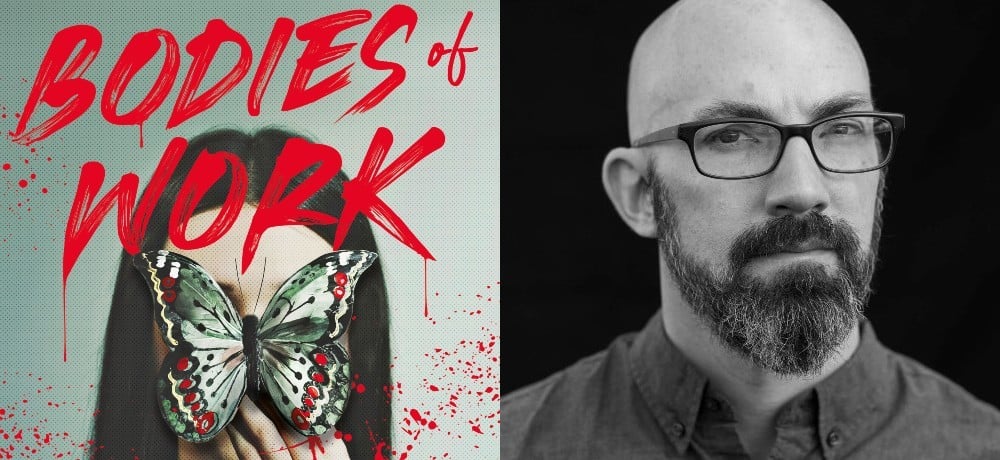

[Editor's Note: Ahead of Clay McLeod Chapman's latest release, Bodies of Work, from Titan Books on April 7th, we are thrilled to have him return for a brand-new guest article. Just for Daily Dead readers, Chapman digs into the inspiration behind his latest book and gives us an incredible insight into his own creative process that brought Bodies of Work to life.]
Maggots On Your Body Of Work:
Clay McLeod Chapman On Finding His Own Muses
written by
Clay McLeod Chapman
Let’s just get this out of the way up front:
Winston Kemper is not Henry Darger.
If neither of those names ring a bell, let me explain: One is fictional and the other is real, the latter inhabiting a rather obscure corner of art history. Both intersect in my new novella Bodies of Work from Titan Books, a completely suffocating combo of psychological horror and hallucinatory fantasy, detailing the extremely interior life of a serial killer—or is he?—Winston, who spends his off-hours toiling away on his voluminous body of artwork, which may—or may not—be modeled after his victims, his so-called “muses,” who just-so-happen to be the narrators of our story, which, in effect, is the story of Winston himself…
Or are they merely the voices in his head?
Still with me?
Let’s put the fictional character of Winston aside for the moment and focus on Henry Darger himself, the real-life inspiration for this book and its central anti-protagonist.
I, like a lot of other art-weirdos, have been particularly obsessed with outsider artist Henry Darger for quite some time now. There are those artists trained in the service of their higher calling, reared at the easel, educated in technique, endowed with the skills to express themselves and answer to their muses… and then there are those who are not.
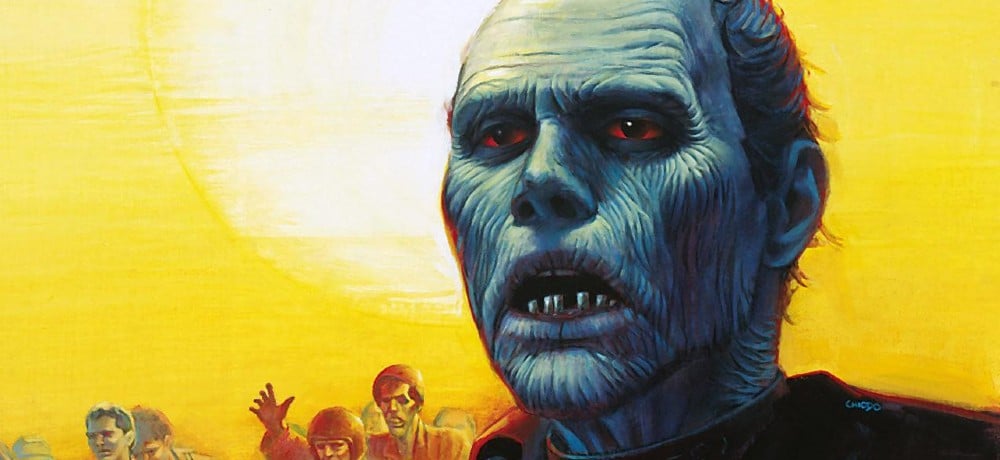
Henry Darger had nothing. No formal training, no education, no resources to answer his calling. He lived in complete obscurity for the entirety of his life in the suburbs of Chicago, toiling away in poverty until his death in 1973 at the age of eighty one. It wasn’t until his landlords were tasked with cleaning out his small apartment that they discovered a treasure trove of paintings and writings crammed into nearly every corner of his claustrophobic home. Massive tapestries that stood toe-to-toe with Picasso’s Guernica, enormous cinderblocks of typewritten material that rivaled any of the Lord of the Rings novels, sketchings and notebooks galore. There was a world in these works, hereunto unexplored, at the very precipice of being destroyed. To peer into them was to enter into the mind of an untrained artist who lost himself within his own art, never to climb out again.
Darger’s landlords made a decision that would turn him into a folk hero within the art world, rescuing his work from the dumpster and granting the rest of us access to his feverish mind. They kept it. All of it. Now Darger is the subject of numerous monographs and countless retrospectives. He became a posthumous cause célèbre for outsider art.
He became my muse.
I remember the first time I saw the work of Henry Darger in person. Not in an art book, not a reprint, but one of his ten-foot long tapestries displayed in a museum. I was in college, still clinging to my teens, visiting the American Folk Art Museum in Manhattan. A few of Darger’s tableaus were on display, suspended behind glass as if they were enormous prehistoric butterflies, pin and framed. His work took my breath away. That’s what the best art does, doesn’t it? I experienced something akin to a religious experience.
I was inspired. Truly inspired. I felt like I could enter the painting itself, simply step in and wander among his vivid murals.
I’m not alone. Darger’s work has captured the imaginations of many, seizing the likes of poet John Ashbery, musician Natalie Merchant, fashion designer Anna Sui, even filmmaker Ari Aster, just to name a choice few. The primitive craftmanship, the untrained technique, it all takes on a language of its own, and other artists wish to speak it. Here is the undiluted imagination of an unwell mind, equal parts unnerving, alarming and utterly breathtaking. There’s a purity to his art. It is not lost to technique. It is raw. It is honest. It is sincerely disturbing because it can’t hide its own darkness.
Darger needed to create. He needed to write. To draw. To paint. If he couldn’t exorcise the voices—his own muses—from inside his mind, they would be trapped.
I knew I could never tell Darger’s own story. The rights to his life have been optioned. There was a brief, fleeting moment, years ago, where I was in conversations—extremely loose conversations—with a producer eager to develop Darger’s story into film. It sadly never came to be—for me, at least. Who knows? Maybe one day, someone else still might.
Hollywood: I’m ready. Call me.
Years ago, and I mean years, I had the idea of creating a fictional character akin to Darger, a man lost in his own mind, whose sole outlet with the surrounding world is his artwork. What would happen if that artist were to lose themselves within their own work? What if the line between one’s artwork and reality blurred to such a degree that the artist themselves wouldn’t be able to tell the difference? Where would the blank page, the empty canvas, end and the real world start? What if that line simply didn’t exist anymore?
To push it even further: What if the creations of one’s work were to narrate the life of the artist who made them? In terms of fiction, it would be the characters narrating the story of their own author. A dual-narrative establishes itself: The story the author writes, and the story of those characters in the story narrating the story of the storyteller telling their story.
Make sense? It barely does for me, honestly, but that narrative feedback loop, that literary ouroboros of storytelling, felt rather appropriate for this quasi-Darger character. For an artist lost in his own mind, trapped within the canvas, having his characters talk back to tell his tale seemed like a natural next step for this evolving story I had in my own head.
I held onto that simple idea for years. Well over a decade. I pitched the idea every now and then, but nothing ever came of it… until another narrative wrinkle entered the fold:
What if my fictional character was a serial killer?
Here is where I may lose you, dear reader. What kind of monster takes a historical source of inspiration—a personal hero—and turns them into something so heinous? How could I do that to Darger? Well, my character was no longer Darger. I wasn’t setting out to tell his life story. I needed to follow my own muses, and this is where they led me.
Blame Caroline Kepnes. I read her brilliant novel You at just the right—wrong?—time to start noodling over a story around a sociopathic personality, a murderer, but have him haunted by the ghosts of his victims. Or perhaps they are just the voices in his head?
Feels like familiar terrain, yeah? The trope of a killer’s victims seeking revenge from beyond the grave is pretty well-tread… so where could I go with it? Which fresh direction was open to me?
Enter Henry. My version of him, at least. Henry, meet Winston, your fictional counterpart. This additional narrative wrinkle was enough to construct an entire storyline.
Here was the story, at long last. I had the central character, the concept… and now I had my muses ready to narrative. Two separate storylines, intertwining, becoming one.
Becoming Bodies of Work.
Fiction frequently pillages history for inspiration. What if I told you Popeye was modeled after a real person? Rocky Balboa? Sherlock Holmes? Hannibal Lector? Miss Piggy? We know the characters so well, yet the historical source of their inspiration either remains obscure or irrelevant. These characters have evolved beyond their real-life counterparts, taking on lives, however fictional, in of themselves, and in that respect, I believe my character Winston Kemper has evolved beyond his own historical roots and come into his own. We find inspiration in life and we spin our own stories out from it, and for that, I am forever indebted to Henry Darger for leading me to create Winston Kemper.
Winston is not Henry. Winston is his own monster.
And I’m the monster who made him.
How would Henry Darger feel about being the source of inspiration for Bodies of Work? Good question. I’m sure it would make him uncomfortable. Then again, look at Darger’s own body of work, how it remained hidden from us all, buried in his own apartment, uncovered only after his passing. I’m curious how Darger might feel knowing that his artwork is known the world over now, displayed in museums around the globe, inspiring the likes of writers, artists, musicians and filmmakers.
As much as I’d love to tell Henry Darger’s story, I know I’ll never be able to. I honestly don’t know if I should, if I’m good enough of a writer to tell it. I sure hope someone does.
I found inspiration in his artwork, much like so many others, and forged a path separate from his own, entering into uncharted narrative terrain wholly different from its source. Whether Darger would appreciate that or not, I’ll never know, but I take some comfort knowing that Darger himself found endless inspiration in the world around him, pillaging children’s books, magazines, department store catalogues, all becoming fodder for his own fertile and boundless imagination.
That Darger himself—shades of him, at least—might find his way into the works of other storytellers and artists seems rather fitting. We’re all maggots feeding on Darger’s own body of work. What a meal he makes, teeming with life that his corpus has inspired.
----
Editor's Note:
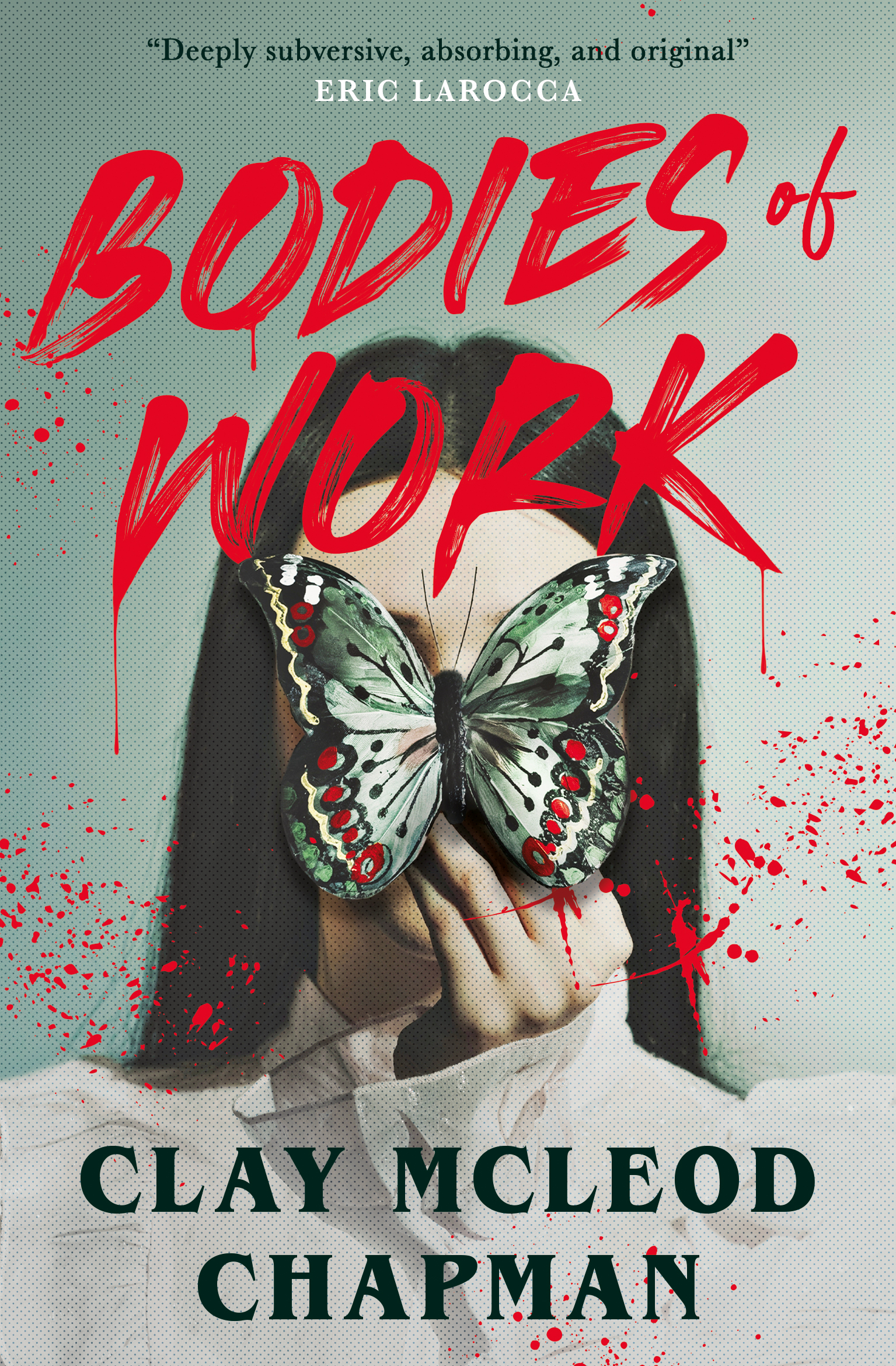
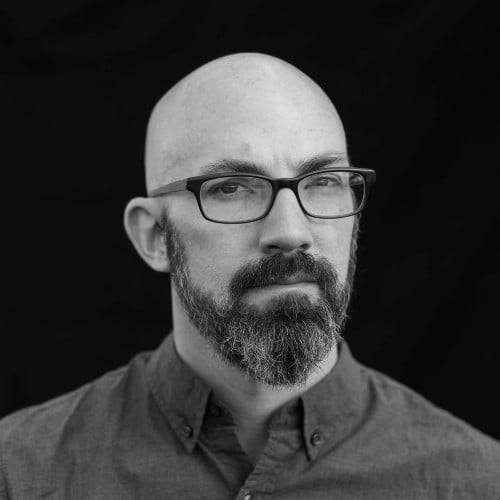
Clay McLeod Chapman is the creator of “The Pumpkin Pie Show” and the author of Rest Area, Nothing Untoward, and The Tribe trilogy. He is the co-author, with Nightmare Before Christmas director Henry Selick, of the middle grade novel Wendell and Wild. In the world of comics, Chapman’s work includes Lazaretto, Iron Fist: Phantom Limb, and Edge of Spiderverse. You can find him at claymcleodchapman.com.
Clay McLeod Chapman is the creator of “The Pumpkin Pie Show” and the author of Rest Area, Nothing Untoward, and The Tribe trilogy. He is the co-author, with Nightmare Before Christmas director Henry Selick, of the middle grade novel Wendell and Wild. In the world of comics, Chapman’s work includes Lazaretto, Iron Fist: Phantom Limb, and Edge of Spiderverse. You can find him at claymcleodchapman.com.









![[Editorial] AI of the Living Dead: Why Have So Many Already Accepted the Simulation?](https://dailydead.com/wp-content/uploads/2025/09/M3GAN-180x83.jpg)

![[Comic-Con 2025] Interview: Michael Giacchino Talks Marvel’s WEREWOLF BY NIGHT: BLOOD MOON and Why He Loves Classic Monsters](https://dailydead.com/wp-content/uploads/2025/07/Werewolf-1000-b-180x83.jpg)