

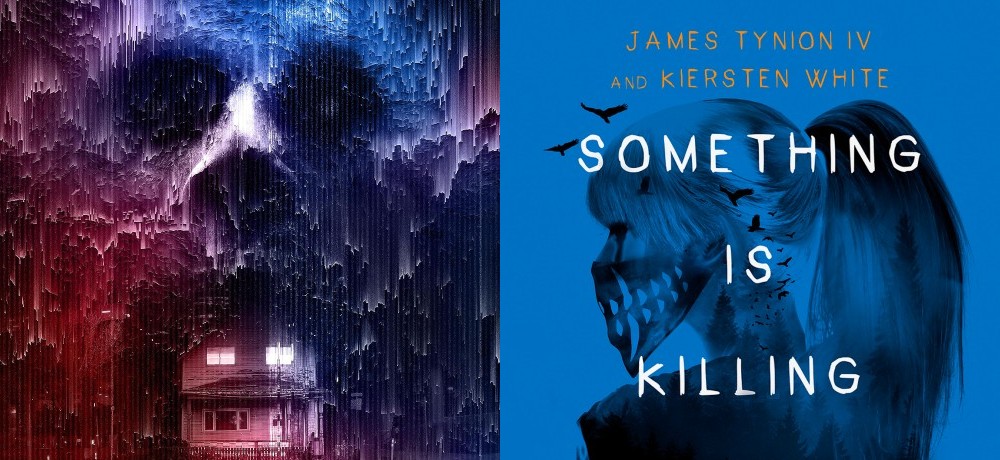
Through the Lens of Terror: DP Clayton Moore on Crafting the Raw Realism of Bodycam: "When The Blair Witch Project premiered in 1999, it didn’t just reinvigorate the found footage horror subgenre—it brought this style of filmmaking into the mainstream around the world. In the years since, franchises like Paranormal Activity and V/H/S, along with films such as Cloverfield and Shelby Oaks, have continued to remind audiences that sometimes all you need to create effective horror is a camera and a compelling story. A recent example is Shudder’s Bodycam directed by Brandon Christensen, which presents most of the film through the body-worn cameras used by its two police officers. The synopsis for the film reads: When two police officers show up to investigate a domestic dispute, a startling escalation leads to a tragic accident. Not wanting to be crucified by the public, the officers attempt to cover it up - only to reveal that their body cameras aren't the only things watching them. Serving as the film’s cinematographer was Clayton Moore, who abandoned many traditional filmmaking techniques in favor of something more raw and reactive. He discusses the shooting process and much more in the below interview."
How did you first become involved with Bodycam, and what excited you about the project from a cinematography standpoint?
Brandon Christensen (Writer/Director) and I started discussing the project late 2022. We actually shot the film in the spring of 2023, so we’ve had to keep it under wraps for a few years now. The most exciting thing about the project was the fact that the audience spends the whole night with these police officers and that meant the cameras would be in constant motion. I knew it would be a challenge, especially given our limited crew and short schedule of only 12 overnights. After Brandon and I had done 2 traditional narrative horror features together I was actually looking forward to throwing those traditional rules and disciplines of a more crafted storytelling perspective out the window.
Horror often relies heavily on atmosphere and tension. What were your primary visual goals for the film when you first discussed it with director Brandon Christensen?
Our goal from the get go was to portray realism through the ever-present eye of the body worn cameras. Body cam footage is becoming more and more prevalent on social media lately so people are starting to get a sense of how the footage “should” look. We never wanted it to feel artificially lit, or like we were doing things for a specific camera angle. We needed the audience to remain a captive observer to all the chaos that unfolds throughout the movie in order to maintain that sense of verisimilitude. Our approach to keeping things grounded in reality and never trying to make anything overly polished and perfect are what help set the atmosphere and tension of the film right from the first scene until the credits roll.
The film unfolds largely through body cameras and other in-world perspectives. What were the biggest creative opportunities, and challenges, of telling a horror story through that format?
The creative opportunities were exciting in that we were going to be able to experience this story from a fresh new perspective. Found footage as a genre has certainly been around, but I think this film might be the first of its kind to feature police body cameras so prominently.
The challenges were many of course. You have to change your perspective on how a scene should be shot. You don’t have the traditional methods to cover a scene on different focal lengths, or camera positions. You lose the ability to get your traditional inserts or cut away shots. Everything has to become a one shot in a sense. We did have the ability to cut between the two officers' perspectives so that was about as traditional as we were able to get at any time. We took some liberties to use other in-world perspectives such as a dash cam in the patrol car. There are some scenes where they take the bodycam off and set it on a desk and perhaps don’t realize the cameras are still recording. Those small moments where the camera angles change gave us an opportunity to add some extra visual interest to the film, and also give the audience a little break from the chest mounted perspective.
As a cinematographer working in horror, what do you think the genre allows you to experiment with visually that other genres might not?
Horror is such a fun genre to work in because there are no real rules. You can start your movie with a very naturalistic lighting approach and by the end you could end up going completely fantastical depending on where the story takes you. I think that's what I like the most about it is that there is room to experiment and try things, and nobody can really give you a good reason not to.

Were there moments where you intentionally let the image feel imperfect to increase tension or realism?
There were many moments, both intentional and not. Many times that inside I’m cringing as a cinematographer, thinking about how the light levels are too low, or the framing is too crooked, but that's where you have to separate your desire for perfection in order to serve the story by allowing the image to get beat up a bit. Part of that “letting go” process was a big step for me, but also liberating once we saw how authentic the footage felt.
How do you know when a shot is “scary enough” without overselling it visually?
Less is usually more, and that certainly applies to lighting. We can show the audience what we choose to show and hide what we want as well. You’ll find specifically in Bodycam we use that technique a lot when we get into scenes that are lit with just the officer’s flashlights. There is a bright circle of light surrounded by heavy dark shadows and it gives a tunnel vision effect, containing us within the darkness and terror surrounding the characters. We also can’t underplay the ability to use sound design as a tool to compliment the visuals and help elevate tension in a scene which we also use to good effect in Bodycam. I think you’ll often find that anticipation of what you think is going to happen next will frighten you a lot more than what might actually happen on screen.
What kind of communication was essential between you, the actors, and the sound team to make the bodycam perspective feel believable?
Communication was vital of course, but I have to give credit to the actors. Sean and Jaime took direction very well and were on board from day one knowing that they would have to modify their techniques a little bit as they essentially became the camera operators and the lighting technicians. I had shot some test footage leading up to our first day, which helped us dial in the settings on the cameras and figure out which flashlights we liked best, but other than that we largely figured it out as we went. After our first day on set with the actors, and coaching them on the best ways to position their bodies and their flashlights for what we were seeing, it became second nature to them.
As far as the sound team, well, that was also me. We figured that once the camera was good to go, during the take I didn’t have much to do other than monitor the shot with Brandon. The fact that the actors had so much police gear on them made it easy to hide the mics on them. All of us involved in this film took a very hands-on approach. I wore the audio mixer bag and had an iPhone that I could use to control the camera remotely for each take.
Was there a particular scene or shot in Bodycam that proved the most technically challenging or creatively rewarding for you?
There is a sequence near the end of the film where Jaime Callica’s character is driving through an “endless city”. This sequence took over a year to finish. We ended up mixing footage from what we shot on set, some stuff we shot on a virtual volume, and of course a ton of visual effects helped tie it all together. Seeing that come together for the first time was a very rewarding experience for everyone involved.
How has this project changed the way you approach horror cinematography, or filmmaking in general, moving forward?
If anything it gave me a crash course on scrappy low budget work. It was like revisiting my roots, a film school bootcamp if you will. It taught me to think on my feet and problem solve using only what little resources we had available. I’ve been fortunate enough to have almost anything I’ve wanted as far as crew and equipment on my previous feature film projects, so this was a return to those early days of having to stretch every little asset you have to its fullest value. I think it actually benefitted us by having less to work with, as it made us have to come up with creative solutions that ultimately led to a better film. I learn a lot on every project I do, Bodycam was no exception, and I’ll get to take all that knowledge and experience onto the next project.
---
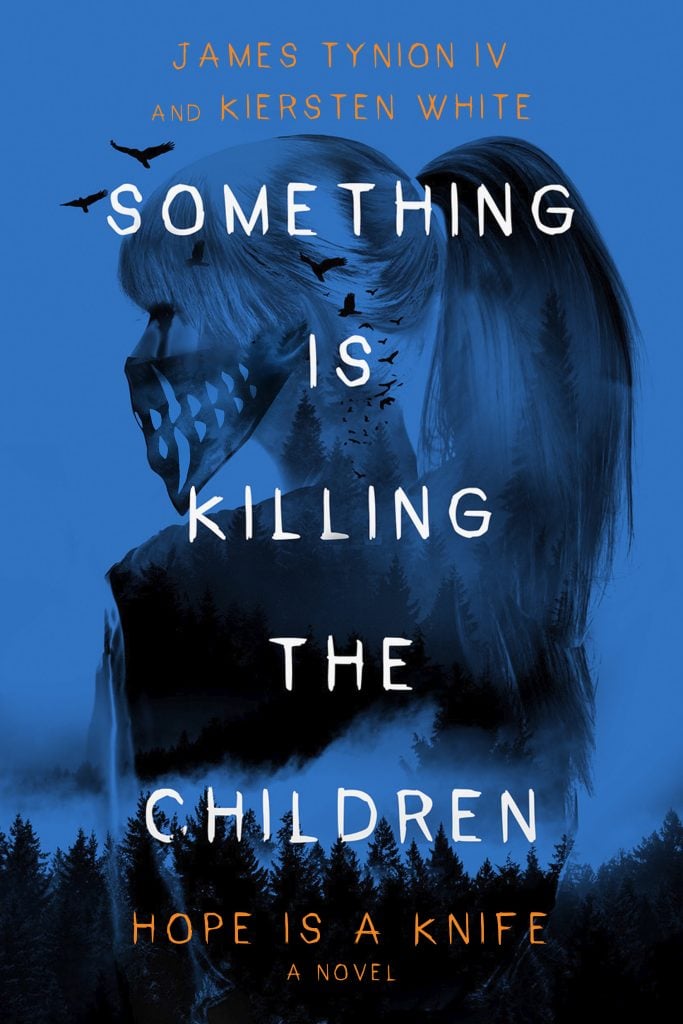
Something Is Killing the Children' Gets Its First Novel—Hope Is a Knife by Tynion & Kiersten White: "Crown Publishing Group and BOOM! Studios announce the forthcoming publication of Something is Killing the Children: Hope is a Knife (Crown; on sale 10/13/2026), by series author James Tynion and #1 New York Times bestselling horror novelist Kiersten White. This marks the first full-length novel set in the world of Something Is Killing the Children, the internationally bestselling comic series from BOOM! Studios. Set one year before the events of the comic series, Hope Is a Knife centers on iconic protagonist Erica Slaughter—a monster-survivor-turned-
“Something Is Killing the Children has always been about how we process and react to horror in the world around us, and it has been a thrill to work with Kiersten to use prose to dig into the deepest, darkest parts of Erica Slaughter's psychology," said James Tynion IV. "I'm so excited for new readers to enter the Slaughterverse through this novel, and for longtime fans to experience an Erica Slaughter story unlike any they've seen before."
“Erica Slaughter is one of the most compelling characters in modern horror,” said Kiersten White. “Writing Hope Is a Knife meant embracing the raw terror and moral complexity of her world—where children’s fears are deadly real and survival demands impossible choices. I’m thrilled to help bring the universe of SIKTC to life in a new form.”
The deal was negotiated by UTA on behalf of BOOM! Studios and James Tynion IV with Aaron Wehner, EVP & Director of Business Development for the Crown Publishing Group. Lori Kusatzky at Crown, will edit the novel. Kiersten White, Tynion’s co-writer, is represented by Wolfson Literary. UK and Commonwealth rights were acquired by Del Rey UK. Translation rights are being handled by UTA.
Hope is a Knife serves as the prequel to Tynion’s and co-creator Werther Dell’Edera’s Something Is Killing the Children universe. As a Black Mask, Erica Slaughter has a very straightforward job: find the monster, kill the monster, then do it all again. But when she arrives in Badwater, Idaho, nothing is simple. She can’t determine whether the horrific death of a twelve-year-old was caused by a bear, a person, or something much worse. Complicating matters is the charismatic doomsday preacher who is quickly leading the small town to the verge of hysteria. If Erica wants to save the surviving children, she has to figure out which kid’s fears might have summoned a monster—and fast.
Hope Is a Knife is a chilling, original tale in SIKTC lore, where monsters are real and only the hunters of the Order of St. George are equipped to challenge them. The iconic Erica Slaughter, monster survivor-turned-hunter, slices her way onto the page in a new format, sure to captivate longtime fans as well as new readers daring to enter this world for the first time.
About the authors:
James Tynion IV is an Eisner Award-winning, New York Times bestselling writer and publisher of comic books. He is best known for co-creating hit horror comics series like Something Is Killing the Children, The Nice House on the Lake, and The Department of Truth. He is also the writer of young adult adventure series like multiple GLAAD Media Award-nominated Wynd and the GLAAD Media Award winner The Woods. He spent ten years writing various Batman titles at DC Comics, where he co-created exciting new characters like Punchline and Ghost-Maker. He lives and works in Brooklyn.
Kiersten White is the #1 New York Times bestselling, Bram Stoker Award-winning, and critically acclaimed author of dozens of books for readers of all ages, including The House of Quiet, the And I Darken trilogy, Star Wars: Padawan, Lucy Undying, and The Fox and the Devil, as well as Hide and Mister Magic and their graphic novel adaptations. She lives in San Diego with her family and their surly tortoise, Kimberly.
About Crown: Crown is an imprint of the Crown Publishing Group, publishing across a wide range of genres with an emphasis on politics, current affairs, social justice, personal narrative, biography, history, economics, business, cultural criticism, science, social science, psychology, and commercial fiction. As a team, we are committed to publishing a diverse array of leading and emerging voices who enlarge our understanding of the world, help us navigate and succeed in a rapidly evolving climate, challenge legacy narratives, and harness the power of storytelling to illuminate, entertain, inspire, and connect readers everywhere."
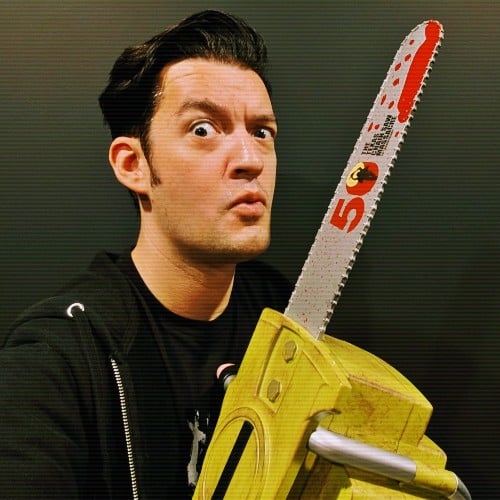
After more than a decade as a consultant in the entertainment industry, Jonathan James launched Daily Dead in 2010 to share his passion for horror. He takes immense pride in Daily Dead's talented team of writers, who passionately explore and celebrate horror as a respected art form capable of telling complex, character-driven stories with deep emotional and cultural impact.
Over the course of his career, Jonathan has written more than 10,000 articles and hosted panels at major conventions, including New York Comic Con and San Diego Comic-Con. He is also consulted with as an expert on horror and pop culture, offering insights on horror history and the latest trends through media outlets, film festivals, and conventions.
After more than a decade as a consultant in the entertainment industry, Jonathan James launched Daily Dead in 2010 to share his passion for horror. He takes immense pride in Daily Dead's talented team of writers, who passionately explore and celebrate horror as a respected art form capable of telling complex, character-driven stories with deep emotional and cultural impact.
Over the course of his career, Jonathan has written more than 10,000 articles and hosted panels at major conventions, including New York Comic Con and San Diego Comic-Con. He is also consulted with as an expert on horror and pop culture, offering insights on horror history and the latest trends through media outlets, film festivals, and conventions.






![[Editorial] AI of the Living Dead: Why Have So Many Already Accepted the Simulation?](https://dailydead.com/wp-content/uploads/2025/09/M3GAN-180x83.jpg)

![[Comic-Con 2025] Interview: Michael Giacchino Talks Marvel’s WEREWOLF BY NIGHT: BLOOD MOON and Why He Loves Classic Monsters](https://dailydead.com/wp-content/uploads/2025/07/Werewolf-1000-b-180x83.jpg)
![[Editorial] ANNIHILATION (2018): The Algorithm of Natural Selection Just Unfollowed You](https://dailydead.com/wp-content/uploads/2025/07/Annihilation-1000-180x83.jpg)