

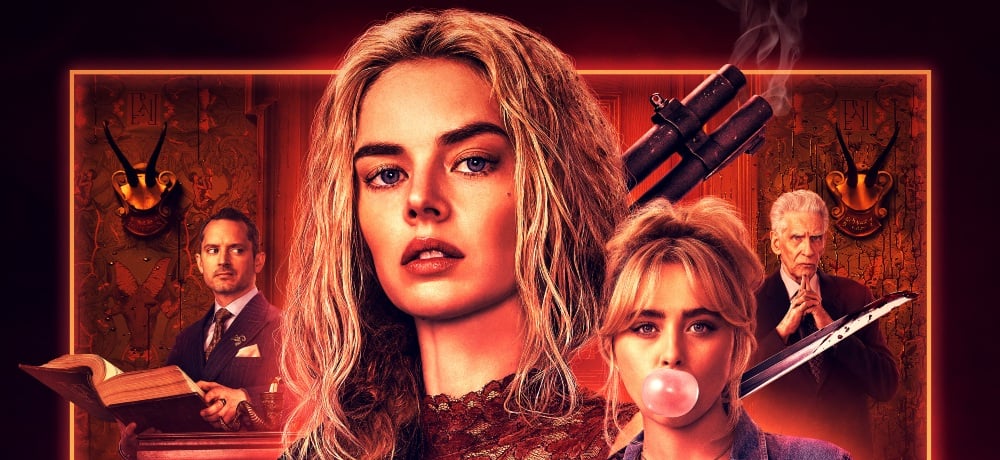
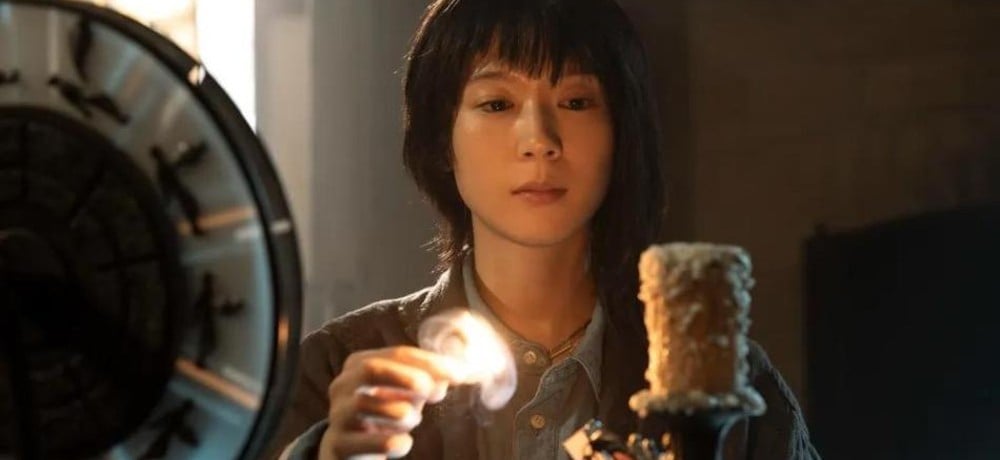
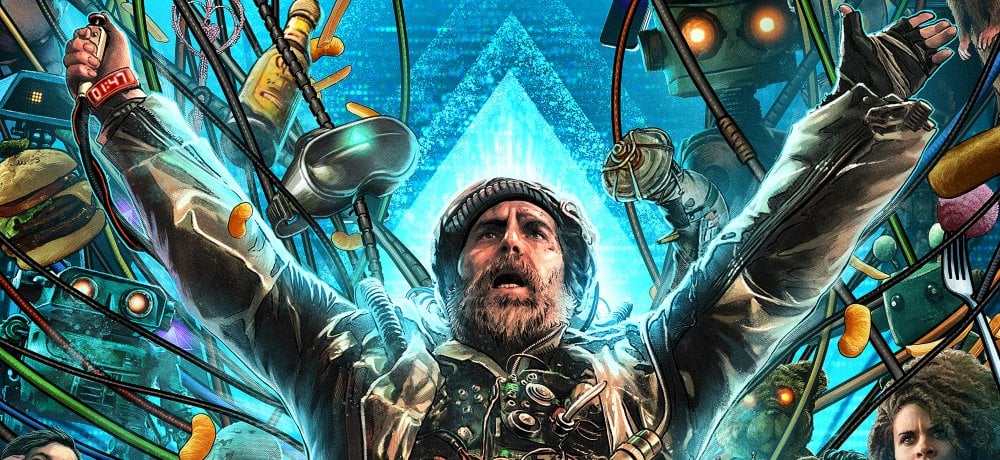
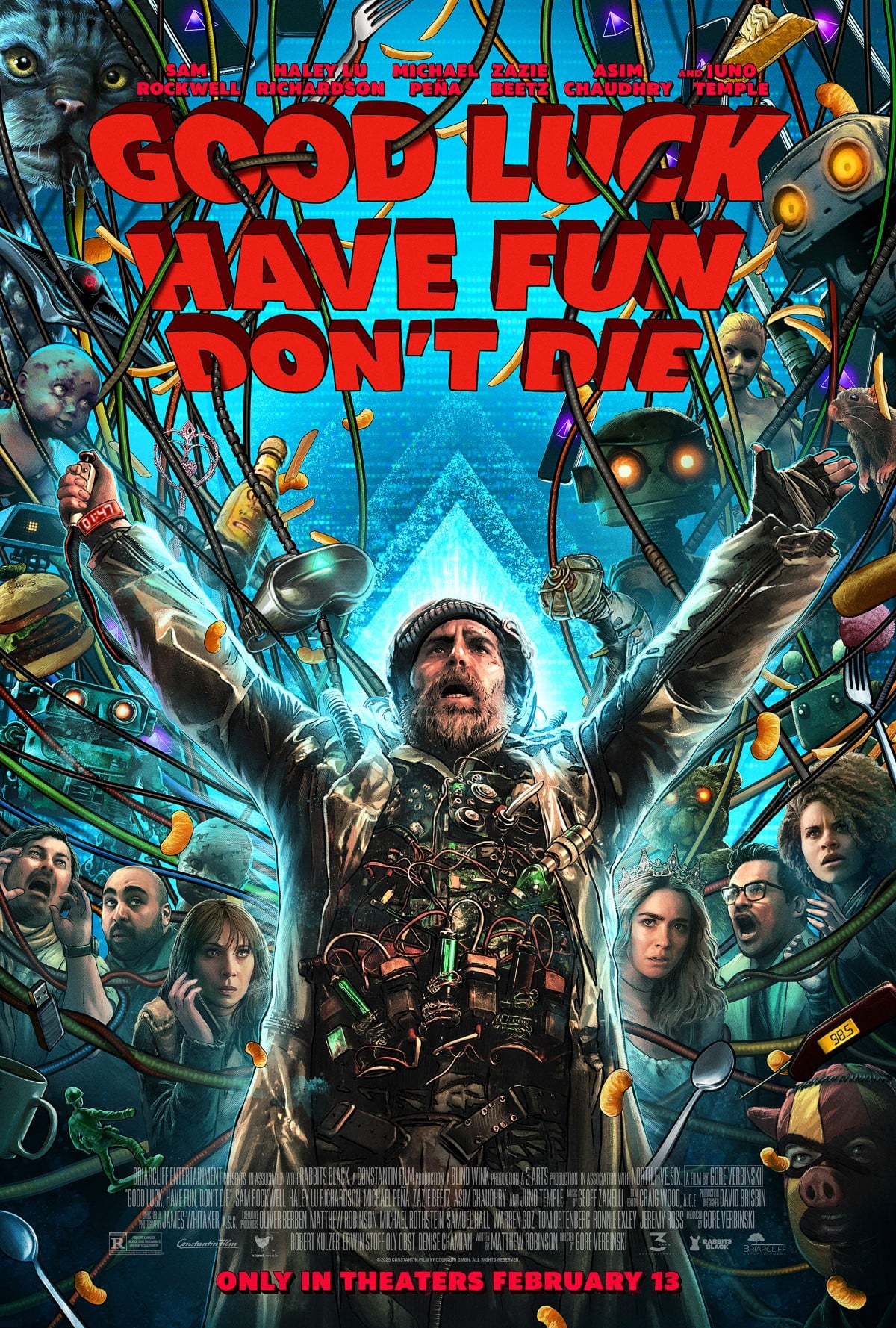
Good Luck, Have Fun, Don't Die is Gore Verbinski unhinged. The filmmaker has always had a rebellious streak, but his latest genre-bending work is almost unrelentingly brazen. It overflows with escapist fantasy and terrifying reality, pitting the man from the future (Sam Rockwell) and a ragtag team against a God-like piece of artificial intelligence.
It is Verbinski turned up to 11.
Which is splendid news for fans of the filmmaker, known for The Ring, the Pirates of the Caribbean trilogy, Rango, and A Cure for Wellness. As varied as his work is, his personality always shines through, whether in the Old West or the Pacific Northwest. A Gore Verbinski film is almost always about characters versus the world.
It’s what Daily Dead discussed with the man himself, as well as his affinity for monsters, his eye for framing, and why mischievousness is paramount.
Congratulations on the film.
Gore Verbinski: Well, thank you for whatever you can do to help spread the word. This one is scrappy.
Your heroes are almost always scrappy.
Gore Verbinski: I'm a fan of the picaresque, the rogue, the incapable hero. I think our future is so fucked that they didn't send us Arnold Schwarzenegger—they sent us Sam Rockwell. There's something beautiful about that.
Could we consider your Bad Religion music video, “21st Century (Digital Boy),” a prequel to Good Luck, Have Fun, Don’t Die?
Gore Verbinski: I love that. Fuck yeah. Hell yes. Wow. It could be, right? They were instrumental in my early days of filmmaking—shooting Super 8 music videos of those guys. Our soundtrack for this movie's coming out on Epitaph [Records], too.
[Founder] Brett [Gurewitz] is doing us a solid because nobody buys soundtrack records, but it's going to be cool. We're going to make 500 pieces of vinyl. It's been nice to reconnect with the folks over there.
How much do you think your days in rock, both as a musician and director, shaped you as a filmmaker?
Gore Verbinski: I like so many different kinds of music, although I'm a big fan of Bad Religion and NOFX and all those Epitaph groups. There's a spirit to that music that is, like, you're getting away with it. It's anti. It's anti-establishment. If you're not somewhat mischievous at your core, then you're blind to the absurdity of this life. I think it's more of an energy to try to bring to everything. To do it the straight way in is probably less interesting to me.
In Good Luck, Have Fun, Don’t Die, you immediately come out swinging with an 11-minute monologue set in a Norms café with the man from the future assembling his team. How’d you face that challenge?
Gore Verbinski: Well, that's definitely the scariest. When I first read Matthew's script, I thought that's going to be the do or die scene. I feel relatively—I don't want to say comfortable—but I know how to do everything else in the movie.
We spent a lot of time working on the second half of the screenplay, but that opening monologue is pure Matthew [Robinson], almost unchanged. I broke it down into a radio play. I would record myself doing it, and then I would record Sam doing it, and then we'd get it to time. I would break it into five chapters and think about it musically in terms of how we're going to move through the space.
We were designing our Norms interior layout to facilitate that movement. If we're going to build it, let's make sure that the counter is here and that that's here, and he can move this way laterally and horizontally. Let’s not bore anybody and make it almost its own little movie.
You saw a musical rhythm in it, so did it help that Sam Rockwell is an excellent dancer?
Gore Verbinski: The entire set was built on what we call the “dance floor,” so you don't have to lay any track. You don't have to like, "Okay, stop. We're going to relay the track and put the dolly here. You can just drive the dolly right on the floor." So when we got to the shoot, I was like, "I don't want him to rest." I want to be like, "We're ready. Okay, can I take off this uniform? It's 40 pounds of electronics. Nope, we're ready to go. Next setup, next setup, next setup."
I’ve spent nights at that Norms, and the man from the future fits in there.
Gore Verbinski: I remember talking to the waitress and she was saying, “At 3:00 a.m., it gets really weird.” It's open 24 hours. A portal opens after 3:00 a.m. and it gets even weirder. I think that place is magical. I'm hoping that everybody who sees the movie goes to Norms and has a piece of pie and conversation afterwards.
With time travel, what rules did you want to break or follow?
Gore Verbinski: I don't want to answer too many questions, but I think there are a lot of reasons to see it more than once. There's numerology and triangles. What's a timeline and what's a simulation? What is the difference between those two?
I do think there's some cosmic lint. You're not going to make that trip 117 times and not pick up some sense that something is slightly different, particularly if your nemesis is fucking with you each time you're trying to level up. How many times did you not make it out of Norms? How many times did you not get across the street? What about that time there were just rats and fire?
It’s fun to play with that paranoia of, what have I missed? Why isn't every time a Groundhog Day repeat? Is there some hidden causality or secret? You picked up some sort of Schrödinger's cat, a lint from a whisker from your journey. There's something about that loop that is unexplainable or analog.
Akira is a bit of an influence for you there, right?
Gore Verbinski: I think about movies like Akira—the power of enigma. The last 20 minutes of that movie? I'm still trying to figure it out, but it brings me back. It just brings me back. You don't want to answer every question, so there's more.
In The Ring, there’s a scene about television killing brain cells. Here, screens and phones are weaponry. The irony is, you’re very good at drawing audiences’ eyes to screens. How do you wrap your head around, I'm fearful of this, but at the same time, I'm good at this?
Gore Verbinski: If you're going to make the medicine, you have to taste it. I mean, you want to get high on your own supply. I'm a fan of contradictions. The yin-yang is important in everything. I think you can celebrate it and you can also be nervous in terms of AI. You can be horrified of what's coming or you can be ignorant, or you can embrace both of those and surf it. I think that's the mantra of our movie: good luck, have fun, don't die. We're going to have to drop in on this tsunami, and it's going to be choppy, but the rest of us are going to navigate it somehow. We don't have another choice.
Characters navigating social decay and/or advancement, that’s a big part of your movies. What keeps bringing you back there?
Gore Verbinski: Yeah, social decay, greed, and feeling powerless. If you're telling a Western, I'm always interested in the post-modern Western and Sam Peckinpah films. I'm drawn to where you're meeting the gunfighter at the end, when there's an automobile coming in. Where are they going to go? You're at the end of an era. I think those are more interesting times than maybe the traditional John Ford narratives. I like the point where you have no other choice but to corrupt the narrative or the genre.
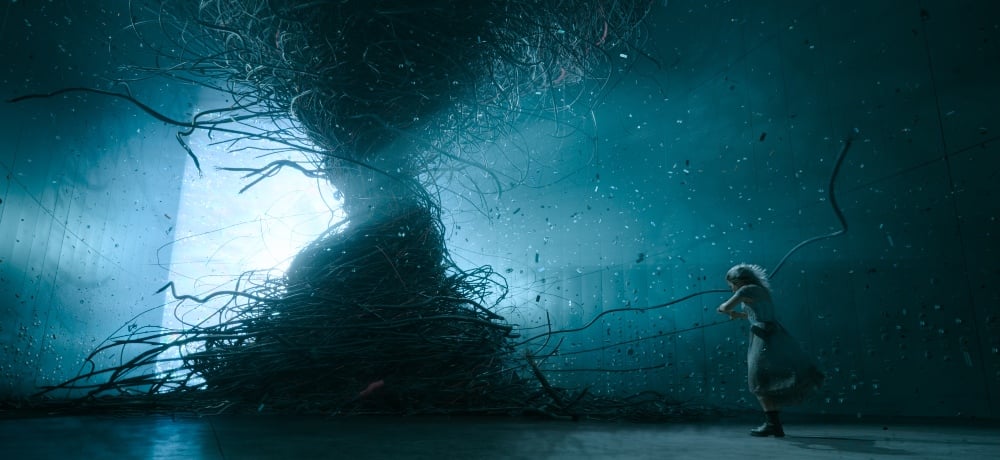
What is your eye always seeking in a frame? Whether it’s an action or dialogue-heavy scene, what drives your shot construction?
Gore Verbinski: The first time I read a screenplay, I'm drawing rectangular boxes in the margins. I'm always thinking about the language of the construction of shots. It's how my brain thinks. I think about how it's going to cut before I shoot it. I don't really just cover a scene. I try to think about where, just so everybody can put their juice into the moment that we're after for the editorial sequence.
As soon as we move the camera, we're putting the table up on apple boxes, we're moving this stuff, we're cheating, we're finding the frame and we're bringing it. We cheat. Every setup is a cheat. We're moving salt and pepper shakers around. We’re just trying to build a frame.
Movies aren't an episode of Seinfeld. Movies are graphic novels. I think those Sergio Leone movies are like graphic novels. They predate graphic novels, but that frame is so critical. So to answer your question, I would just say we cheat.
For example?
Gore Verbinski: I'm looking at you and I'm seeing the window behind you. If we turned around, you wouldn't even be anywhere near that window because the back of your head would be frontlit. We're going to put a black over the window. We're going to move four feet to the left. It depends on what you're looking at. Probably looking at a screen, but what's behind your screen?
As soon as I turn the camera around, you might take your whole desk and move it 14 feet back or forward or wherever we need to make a reverse. That is also an interesting composition. We don't just go to the other side of your desk to shoot.
If your monitor was me and I'm sitting at the other end of the desk, I mean, it would be interesting as soon as we finish this setup, it'd be like, Okay, I get a viewfinder, I put it on the lens, I walk around and that first thing I do is ask, what's the immovable part of the frame? The mountain, the window, what's the part I can't move? Okay, that's what I want. Now let's bring everything to it.
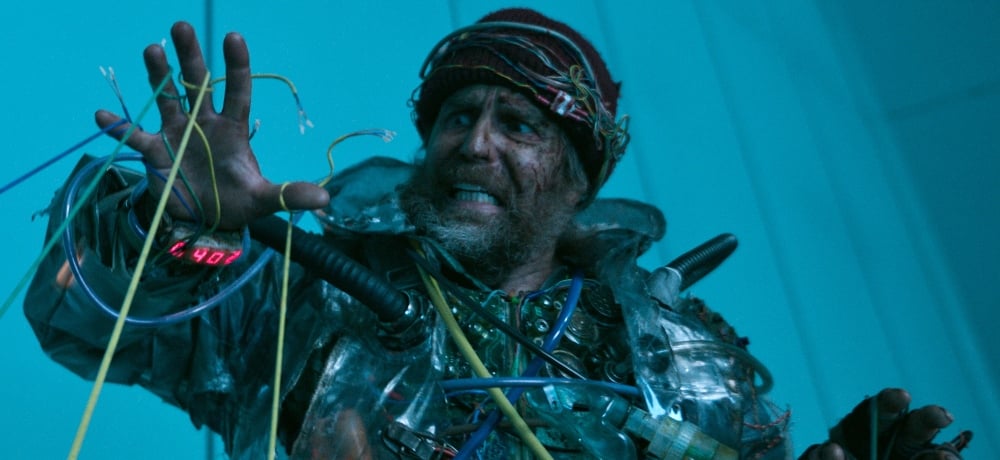
What about colors? What appeals to your eye? Given your work, I’m not surprised to see that your office is blue.
Gore Verbinski: A lot's changing as we've moved from the photochemical process to the digital process. On a movie like The Ring, we actually had a green filter over the lens just to desaturate, to not allow the film to push the magenta. We didn't want a lot of magenta in that movie. We wanted everything to have a creamier, desaturated feel. Photochemically, you couldn't just go in and reduce the magenta.
Sometimes, in the case of Norms, it was almost embracing a little of the stuff I'd typically avoid because there's that orange. It's their brand: orange. Sometimes you have to adapt your aesthetic. In the case of this movie, you'll see those colors that maybe I lean more towards come in the back third as we enter the villain of the story, as we get closer, as the taffy twists and we take us to the back third. I think for the front end, because we are going to leave reality, it's important that we start in reality. Sometimes movies can be too stylized, so they're not anchored.
How so?
Gore Verbinski: If I watch The Headless Horseman and it's all theatrical, when I go to empty the trash at night, I'm not scared. But if I watch a movie like Mulholland Drive and I go to the trash can, I'm fucking creeped out. It's going to stick with me, because something in that movie was authentic to my existence. The curtain doesn't close and I'm like, That's over, because I'm walking around in my world.
It was important that we made that migration to the first two-thirds of the movie. The high school looks like a high school. We're keeping it honest. We can then corrupt that narratively. When you corrupt that, you do get monsters.
You got more than one monster in this movie, which we won’t spoil, but looking at this film, Davy Jones, or the villain in A Cure for Wellness, where did your interest in monsters begin? What were early influences?
Gore Verbinski: I certainly got a lot of absurdity from early Monty Python. There used to be a festival of animation. They used to go around from city to city and have a reel of film with a bunch of short claymation and stuff. Two guys ran it. I forget their names, but that was sort of informative because of talking frogs and creatures. Certainly everybody when we were kids was reading The Lord of the Rings.
I like the idea that on the Sixth Street Bridge here, underneath it, there's some creature. I don't necessarily need the whole world to be a world where fantasy creatures exist. I kind of like, No, there's one in my fucking basement. Maybe I go to the 7-Eleven and I get a Slurpee and there's a hidden note in my Slurpee.
There's something nice about anchoring it. When you can, anchoring that stuff in our world and then going, Oh yeah, but my vongole is talking back to me. All the clams are psychoanalyzing me. I mean, why not? I don't necessarily need the world to feel like it has to be magical.
Will we see another full-on horror movie from you soon?
Gore Verbinski: I hope so. There's this great short story by George R. R. Martin called “Sandkings” that we're adapting. We have a great script. It's going to need a larger budget than this last movie, but it's wicked. I'm hoping you'll hear more about that if we can find some partners.
When you’re making a movie, do you need to feel like you’re getting away with something?
Gore Verbinski: I think being mischievous, it's part of observing the absurdity of this life. If you're not getting away with something as you're telling a story, I think you should be selling real estate for a living.
A film journalist with over a decade of experience writing for Slash Film, The Credits, and High Times Magazine.
A film journalist with over a decade of experience writing for Slash Film, The Credits, and High Times Magazine.






![[Editorial] AI of the Living Dead: Why Have So Many Already Accepted the Simulation?](https://dailydead.com/wp-content/uploads/2025/09/M3GAN-180x83.jpg)

![[Comic-Con 2025] Interview: Michael Giacchino Talks Marvel’s WEREWOLF BY NIGHT: BLOOD MOON and Why He Loves Classic Monsters](https://dailydead.com/wp-content/uploads/2025/07/Werewolf-1000-b-180x83.jpg)
![[Editorial] ANNIHILATION (2018): The Algorithm of Natural Selection Just Unfollowed You](https://dailydead.com/wp-content/uploads/2025/07/Annihilation-1000-180x83.jpg)