



"Boys will be boys," chuckles society. Girls, on the other hand, are painted as "Mean Girls" — these ruthlessly manipulative, micro-aggressive cafeteria demons. But, despite stereotypes, young boys can be just as cruel. Charlie Polinger's sleepaway thriller, The Plague, is authentic in its portrayal of traumatizing male-on-male schoolyard harassment. It's not quite 2017's gobsmacking Super Dark Times, but speaking a similar language. Super dark in spurts, yet lacking as the horrors of competitive water sports and hurtful childish pranks culminate into a lesson about prematurity and self-discovery.
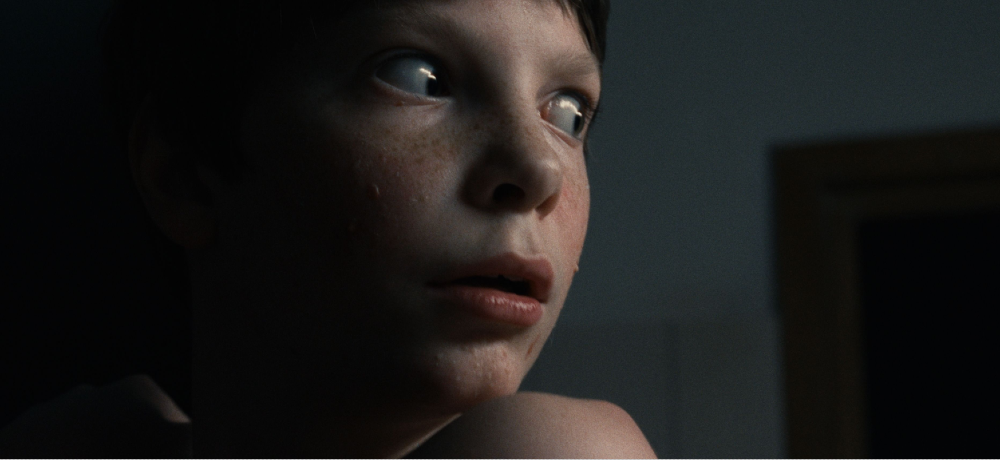
We view childhood through the lens of the Tom Lerner Water Polo Camp. Pre-teen boys train under "Daddy Wags" (Joel Edgerton), their forty-something coach. Ben (Everett Blunck) is your average kid trying to fit in, who earns the nickname “Sop” or "Soppy" after mispronouncing "Stop." He doesn't care, though. Jack (Kayo Martin), the alpha of the camp, is letting him be one of the group. Not like Eli (Kenny Rasmussen), an ostracized attendee with acne spots and a rash he covers under a waterproof shirt. Any time Eli comes close, Jack and his crew scramble because, as they shout, Eli has "The Plague." But it's not real, just a callous goof … right?
Polinger transports us back to the days of physical changes and classroom hierarchies, where coolness means everything. A young, appropriately aged cast navigates the ickiness of cliques and the harshness of insulting words. Now, what they learn causes the plot to swerve about—right lessons, wrong lessons, it's all dangerous territory. The Plague makes unsettling use of common indecency, driven by the meanness behind Jack's directives. Polinger, in turn, makes a mean, nasty movie in the name of calling out the painful behaviors that shape us. Locker room talk in the hands of eleven and twelve-year-olds? Polinger's script has a specific, uncaring sting.
There's a technical polish to The Plague that spotlights Steven Breckon's cinematography. Visuals are dampened by somber hues, like the film can't shake this hanging darkness. It's thematic, matching the deplorable treatment Eli and others undergo. But framing is also magnificent, especially as Breckon captures synchronized swimmers upside down, giving the illusion that they're dancing on water. Breckon’s style boasts captivating artistry as the polo meanaces gallivant around trash-can fires and get into alcohol-spiked mischief, while the camera stalks with a looming sense of dread. Slow movements, lurchy tracking, and deer-in-headlights steadiness help set an overall tone that mirrors Johan Lenox's panting, anxiety-inducing score.
That said, The Plague is a movie about assholes. Plain and simple. We were all this age, and we all have those cringy memories. The pint-sized ensemble is no stranger to immaturity, letting their hormones drive conversations. It can be overwhelming, but again, continually hits on the organic growing pains of questionable morality. Kayo Martin is a proper bastard as Jack, this devious ringleader who turns an entire water polo team against Eli, a child showing clear signs of being on the spectrum. The whole fabrication, "The Plague," shines a light on the awkwardness of living in young bodies and the stigmas that come with changes, but that unfiltered brand of infantilism can be a lot to swallow. Too much for some viewers to witness, in fact.
Worse off, for what the film is saying, and how vicious its torments become, Polinger's third act wobbles out of alignment. The Plague is a feel-bad movie, intentionally preying on our desire for comeuppance and justice—that's achieved. But, without spoilers, Ben's journey through Jack's tyrannical control and sympathetic thoughts towards Eli culminates in an underwhelming fashion. That's not to say Polinger's tucks us into bed and kisses us on the forehead; it's a proper punch to the gut. And yet, taken in stride with the immense fury that's building inside of us all movie, the closing shot feels more padded and basic than all that prior negativity deserves.
I don't want to take anything away from Everett Blunck's performance, because I'm more frustrated by the material than his handling of Ben's arc. Polinger uses Ben to show the toll of "boys being boys" on the participants of such actions. Ben first falls in line with Jack, but then compassionately decides to join Eli in his overlong sauna soaks. That, in turn, brings another wrinkle into play that Polinger doesn't explore enough—what is Eli's affliction, and could it be a plague? It's a tickle of a subplot that's used for some itchy-scratchy fits, but, much like the ending, it isn't nurtured enough. Blunck nails emotional beats as Ben tries to fit in, fails to trust himself, and has to choose between thriving as "Sop" or risk being judged by his own standards. All that works, but not as well when compared to the less sustained genre elements.
The Plague operates on this promise of shock and awe that never really explodes, but cinematic language and composure prevail. Polinger proves himself an impressive filmmaker, finding fluidity in his film's movements even if its screenplay stays a bit surface-level on some of its weightier elements. The cast plays their parts as rambunctious tweens who are meant to send you into a rage, as their insults and torments fester within like a poison. However, when it's over, something's missing. Everyone's executed as instructed, and the horribleness of adolescence once again becomes an existential nightmare, but the final moments stumble. A rock-solid debut, one that announces Polinger proudly, albeit with a better buildup than an outro.
Movie Score: 3.5/5
Matt Donato is a Los Angeles-based film critic currently published on SlashFilm, Fangoria, Bloody Disgusting, and anywhere else he’s allowed to spread the gospel of Demon Wind. He is also a member of the Critics Choice Association. Definitely don’t feed him after midnight.
Matt Donato is a Los Angeles-based film critic currently published on SlashFilm, Fangoria, Bloody Disgusting, and anywhere else he’s allowed to spread the gospel of Demon Wind. He is also a member of the Critics Choice Association. Definitely don’t feed him after midnight.














![[Editorial] AI of the Living Dead: Why Have So Many Already Accepted the Simulation?](https://dailydead.com/wp-content/uploads/2025/09/M3GAN-180x83.jpg)

![[Comic-Con 2025] Interview: Michael Giacchino Talks Marvel’s WEREWOLF BY NIGHT: BLOOD MOON and Why He Loves Classic Monsters](https://dailydead.com/wp-content/uploads/2025/07/Werewolf-1000-b-180x83.jpg)
![[Editorial] ANNIHILATION (2018): The Algorithm of Natural Selection Just Unfollowed You](https://dailydead.com/wp-content/uploads/2025/07/Annihilation-1000-180x83.jpg)