


It's apropos that I'm writing about "Sleepless Nights" at 3:00 AM. I haven't been keeping a regular schedule since getting back from Tokyo, so the nights are when I get my writing in. I prefer it this way. There's a stillness during the twilight hours at my home and inbox. My best ideas and writing tend to occur during that blurry state where I drift in and out of lucidity, so in short: I'm in my best state of mind and having the time of my life writing about the work of Junji Ito. What could be better?
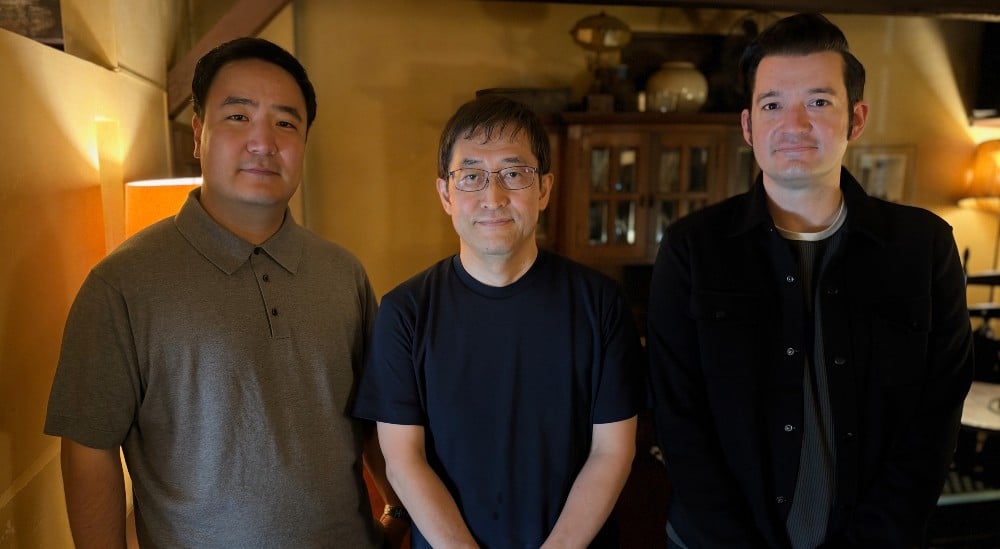
It still feels surreal to think that, just last week, I was in Tokyo for an absolutely wonderful family trip. As anyone who knows me personally is aware, I can never completely unplug from writing about horror, and the stars aligned for an opportunity to do something I thought was only possible in a dream: sit down with Junji Ito in Japan to discuss his work, inspirations, and the new TV series based on his stories.
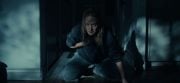
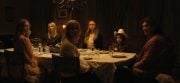
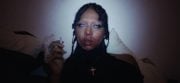
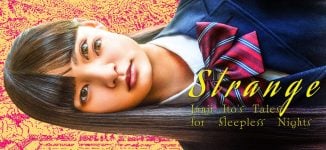
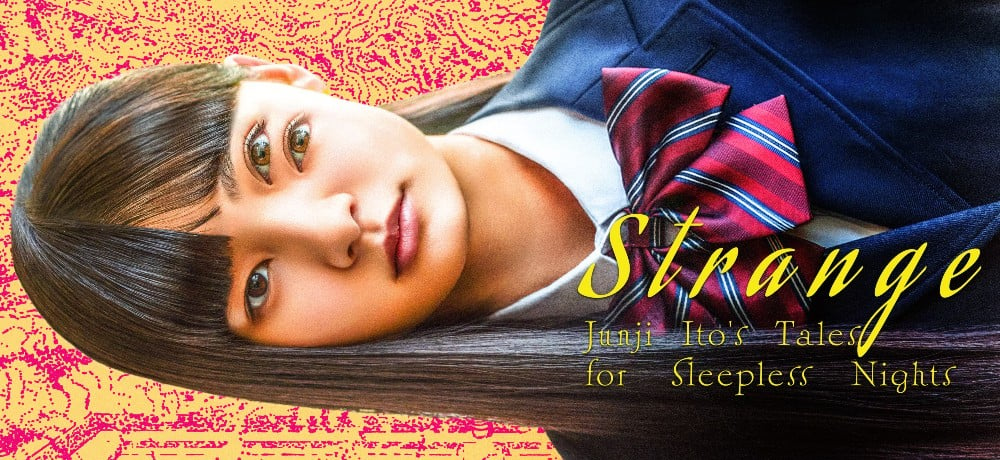
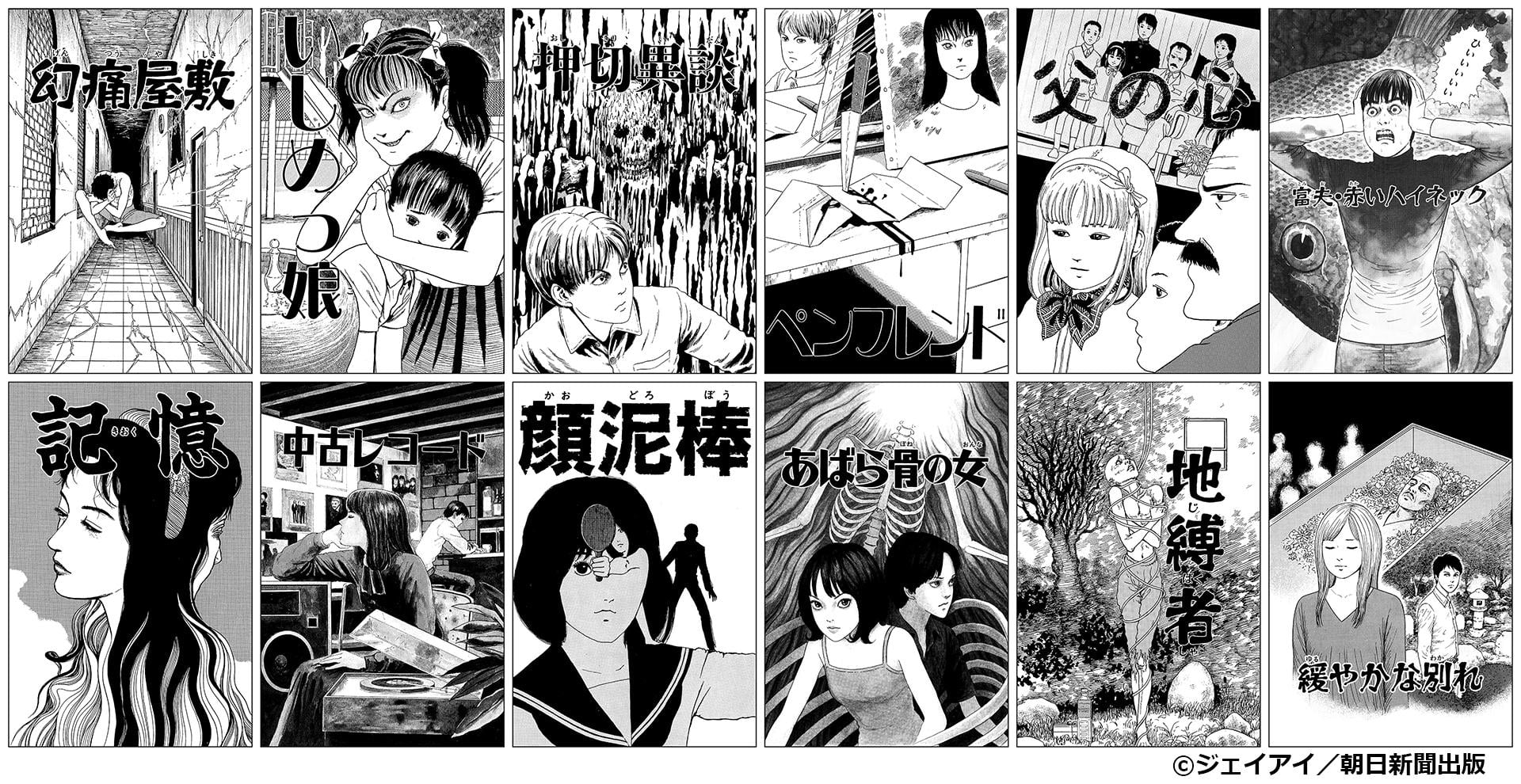
In Strange: Junji Ito’s Tales for Sleepless Nights, "Junji Ito's nightmares enter the real world in live action, where ordinary lives twist into the uncanny, the grotesque, and the inescapable." From TV Tokyo, the series adapts 13 of Ito's stories in live-action, anchored around "Lovesickness," but with fan favorites like "The Bully" and "Used Records." Strange recently aired in Japan and has started streaming on HBO Max, just in time for Halloween, with new episodes releasing every week. Along with Junji Ito, we were joined by director Yûta Shimotsu and TV Tokyo producer Mayu Nobe to talk about adapting Ito's stories, starting with the process for selecting which of Ito's nightmares made the cut for this series:
With decades of Junji Ito's stories to choose from, what was the creative process for selecting the stories that would be adapted for Strange: Junji Ito’s Tales for Sleepless Nights?
Mayu Nobe: It’s TV Tokyo who chose which stories were going to be a part of this series. It wasn't easy to choose what would make our first live-action adaptation effort from TV Tokyo because there are so many wonderful short stories. First of all, we have to consider feasibility, whether it's possible to make a live-action adaptation. We had to include Lovesickness because that's everybody's favorite, but also, I got to include the ones that are my personal favorites that would portray quite well on the film screen as a live-action adaptation.
Yûta, you directed multiple episodes of the series, including the first installment of Lovesickness. Which stories were you most excited to adapt?
Yûta Shimotsu: The series was directed by three of us. We were able to choose episodes, and I just submitted my wishlist. To our surprise, there were no overlaps on the episode that each of us has chosen. So I was very fortunate to be able to direct the episodes of my choice, and my favorite amongst the ones that TV Tokyo selected were The Face Thief and The Bully.
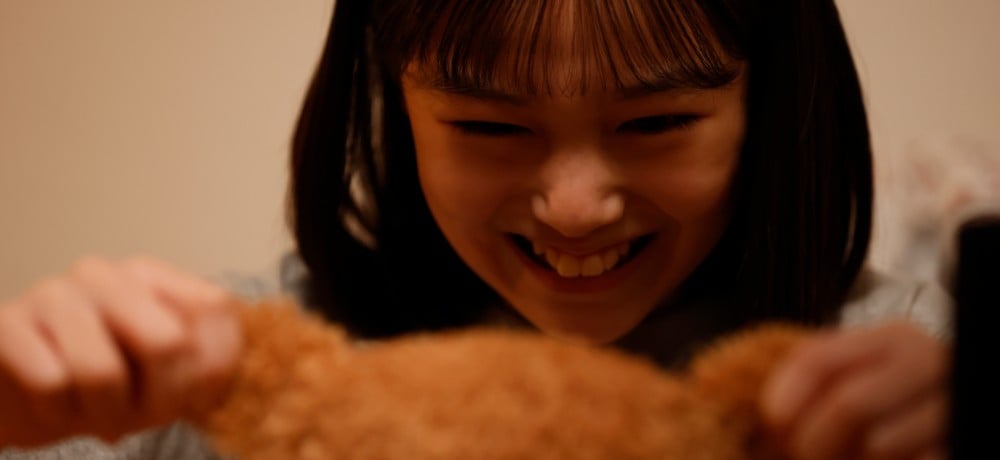
Those happened to be two of my favorite stories from the series. The Bully in particular seems like it would have been so difficult to pull off, but you brought it to live action expertly. The music, the pacing, the smile... it's perfectly disturbing. It's so very well done. For Junji Ito, what did you think of the adaptation of The Bully?
Junji Ito: First of all, the casting was great because I'm a big fan of the featured actress, Yôko Maki. That story covers a long lifespan, starting from a very young woman into motherhood. I think she acted perfectly, and I appreciate that quiet pace of how the story evolved across the drama. I was quite impressed how she and the team, with the director, represented my very focused last page. There was a striking graphic image of this mother standing in the old costume, like a girl. And she did that perfectly with the makeup, and that was so well done. It was as impactful as I wanted it to be.
[Author's Note: I had brought along a copy of Deserter from Viz to reference panels, including from The Bully, and showed off the final page to the group that attended the interview.] I was so impressed by how well they were able to capture your disturbing final image in live action.
Junji Ito: The team really did represent this main character having the big weight of carrying the guilt of her being a bully a long time ago. That was really well done.
Yûta Shimotsu: Getting the composition just right in the final cut of the final scene was very important. So I remember having the original manga right next to the camera screens to make sure the composition's right.
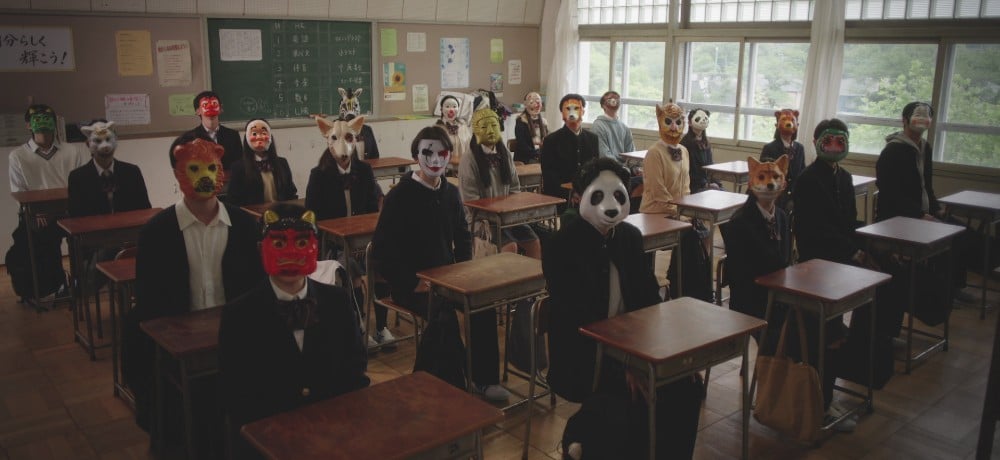
With this series coming out around the Halloween season in the United States, I thought that The Face Thief and the masks were especially appropriate. Unlike some of the stories for this series, The Face Thief expands the relationship of the main characters from the manga and gives us an alternate take on the story. Yûta, can you talk about your approach to adapting this story and the importance of the girls' relationship?
Yûta Shimotsu: In that episode, we had made some adjustments to the ending in the last climax versus the original stories. We have introduced the element of two friendships. And I thought that the theme was quite timeless. The original comic was written close to 30 years ago, but it still stands very true today.
Junji Ito, what were your thoughts on this episode deviating from the original story?
Junji Ito: I could definitely see the difference because I think that the live action adaptation really did portray the two friendships. While, when I look at my original version, even today, they're as cold as ice. I did recognize what the live adaptation team has created by changing the ending because the story has more depth to it compared to the original version.
I like that this series has a mix of stories that are adapted very closely, while others have updates that differ from the manga. It keeps fans guessing, gives them something new, and invites new fans of Junji Ito's work to explore the manga to learn more.
Yûta Shimotsu: It's definitely a choice that [Junji Ito] recommended.
For Junji Ito, what was the process for reviewing the plan for the adaptations? And Yuta, for having been a fan of these stories, what was it like being able to collaborate with Junji Ito when directing these episodes?
Junji Ito: My main role for this live-action adaptation was to validate or double-check the screenplay. [Author Note: Additional comment from when the series was announced:] Every script is highly polished—not only do they preserve the spirit of the original works, but the adaptations are also wonderfully handled. There were many moments when I found myself thinking, "I see… perhaps I should have written the original that way!"
Yûta Shimotsu: It was great that we were able to not only work on the title, but also get his blessing before we started producing all these episodes. And this is not only about "Face Thief." We had to make some detail changes here and there from the original manga when we were making [all of the] live-action adaptations. But he was quite graceful in giving us allowance and giving us the freedom to direct. So I'm grateful for that.
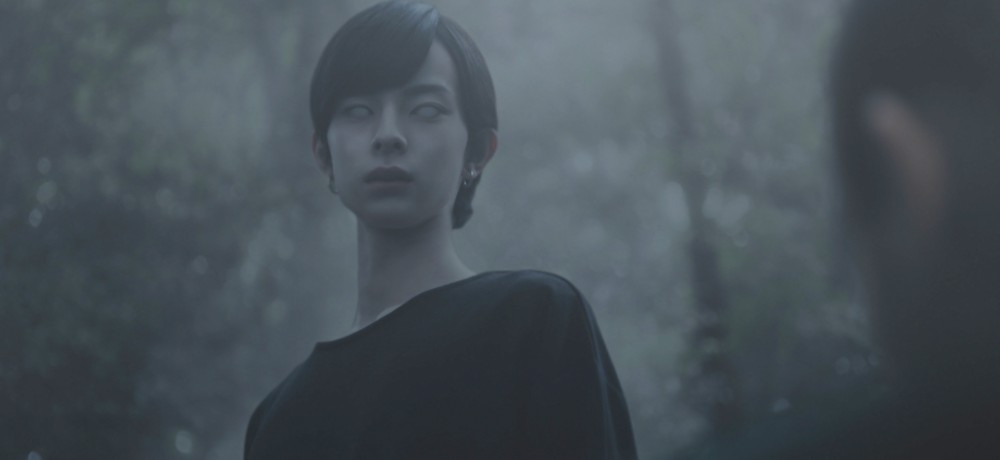
Speaking of adaptations, as Mayu mentioned, "Lovesickness" is a favorite Junji Ito tale among fans, and there are multiple episodes dedicated to it in this first season. Yûta, what was your approach to setting up the first episode of not only this beloved story, but the series as well?
Yûta Shimotsu: I directed the first episode. This story has spread over three episodes for this series, so my role was to introduce the characters and setting. And there's another iconic shot that I had to reproduce one-to-one. It's the scene where the beautiful boy appears at the corner for the first time. And I remember having the manga right next to the camera to make sure the composition's right.
The work of Junji Ito is read and loved by people from around the world. And now this series is getting global attention as well. Yûta was just recently at New York Comic Con to talk about the show and its recent United States debut, and there's a lot of excitement. How do you feel about the increased attention surrounding your work?
Junji Ito: Honestly speaking, this is a really unbelievable situation. When I started first writing manga way back, I would never have thought that my work would be read outside Japan. So I can only thank all the fans who support my work. I do get the sense that they really love and appreciate my work, so I'm grateful.
[The series] was featured in a theater seating 500 seats, and it was sold out with fans crowding that space with t-shirts of the episodes or having merchandising around them. I could sense the enthusiasms of the fans there at New York Comic Con.
With this being a Halloween special feature on Daily Dead, I wanted to talk about horror movie influences. What are some of the films, or who are some of the filmmakers, that inspire you?
Junji Ito: The horror films that gave the greatest influence to my work, even today, are because I grew up in the '70s. So my favorite film still today is The Exorcist, which brought the whole occult boom to the world. Plus Suspiria, and also [The Legend of] Hell House and The Omen. Those are some of my favorites.
Yûta Shimotsu: I love Jordan Peele and M. Night Shyamalan. They are two of my favorite horror film directors.
When you [Junji Ito] appeared at San Diego Comic-Con, I was in the audience at one of your Q&As when you mentioned your love of Hammer Horror and related 60s films. Can you speak to those influences?
Junji Ito: That was before The Exorcist, which changed the scene. It's very difficult to pick all of the [Hammer and 60s British horror films] that influenced me, but I like Dracula [aka Horror of Dracula], The Snake Woman, Bloodsucking Zombie [aka The Plague of the Zombies], and more.
Yûta, can you speak to your approach to horror and scaring or unnerving the viewer?
Yûta Shimotsu: I am always interested in depicting sceneries that people are not accustomed to seeing, so something new that they've never seen before. For example, in my recent features, I picked a theme of the human pyramids... gymnastics. And that's not something that's often a topic in the horror film. I thought that was interesting.
Also, I don't want to rely on so-called jump scares tactics. I would like my work to keep scaring people days even after [they watch] my films so that the thrill continues. That's what I like about Junji's work because many of the episodes are quite thought-provoking.
For Junji Ito, when you started telling stories, was the focus more on the character or the "monster," and has that changed at all over time?
Junji Ito: It really depends on the story. Some of my stories are very much character-driven. I get this idea that I want to portray a certain atmosphere and then build a story around that and add horror elements to it. And another case is, I wanted to create some odd and strange situations and evolve the characters around that.
For Junji Ito, I had read that you loved the movie Alien. Can you talk about the impact that film had on you and your approach to body horror?
Junji Ito: Well, definitely a clear reason why I love this Alien classic: it all has to do with the character design by H.R. Giger. That creature having such an elongated head is out of the world for me. And I remember watching the trailer. I was only in middle school, but I was going to theaters then. And I remember a trailer featured only the mouth part of the aliens. I didn't see the entire body. And the only time that I got to see how the alien really looked was by looking at a cartoon creation in an American comic book. I think that's when I recognized how strange that creature looked with an elongated head. That really interested me. In the original Alien, H.R. Giger got himself involved in creating that monster outfit. And I enjoyed the stickiness and grossness of this very realistic-looking creature superbly directed by Ridley Scott.
I understand that you have expressed interest in exploring horror stories in space. Is that something that still interests you, and are you actively working on any space horror stories?
Junji Ito: I was impressed with how Lovecraft introduced this genre of cosmic horror. [Until I read Lovecraft,] I never thought space could be a subject for any horror stories. I thought it was in the realm of science fiction. And when I thought of horror, it was quite domestic, something that originates from a ghost house. So Lovecraft gave me a new perspective. I wanted to do my part in creating my version of space horror, but the stories that I have created in that genre, I'm not as satisfied with as much as my other work. So I'd like to keep at it.
With our readers now able to start watching Strange: Junji Ito’s Tales for Sleepless Nights, can you share a favorite behind-the-scenes story from the making of the series?
Mayu Nobe: As a producer, I've been to many of the sets. And what I really appreciate amongst, not only director Shimotsu, but also all the other directors and his teams, is that there's a significant sense of respect to the original creator, to Ito Sensei, because everybody has read his stories. It's true that they were always making sure that the composition was just right for the keen shots that were depicted in the manga, like [Yûta] was saying. And that was apparent in all the other episodes as well.
Yûta Shimotsu: Of course, we are quite serious about scaring people—that's why we're making horror films—but actually on the locations, everybody's quite happy and laughing with each other. With The Bully, our main actors are children, right? So I have to be quite careful and make a special consideration to make sure it won't have any traumatic effect. But they are so much fun playing their part that that boy wanted to jump again and again.
There's a lot of enthusiasm for this series, and US audiences seem to be loving the first episodes. It may be too early to officially announce anything, but are there plans for more episodes if the first season is successful? I'm sure fans have already been making requests for stories to be adapted as future episodes.
Mayu Nobe: Of course, I would love to continue the series.
More than ever, we're seeing new voices and younger horror story tellers telling diverse stories across movies, manga, graphic novels, and video games. Looking towards the future, Yûta, what are the types of stories and projects you want to take on in the future? What's something that really excites you?
Yûta Shimotsu: I think original ideas, the ideation, is very important when it comes to making horror films. So I'm always looking for something that is unique... What would be the unique angle when creating a new horror that doesn't exist? For example, I'm really interested in creating a film out of academic disciplines, like linguistic or quantum mechanics. I'm working on a script to see whether I can make a good horror film leveraging those academic disciplines.
Junji Ito: It's really a new breed of horror storytelling because getting ideation from a variety of genres [and storytellers] only makes horror stories better.
--------------
Closing Thoughts:
It's always surprising to me when I see complaints online—and it happens often enough—that there aren't enough good new horror releases. Not only are there excellent new original horror stories across movies, TV, comic books, and video games every single year, but I also immediately suggest that horror fans seek out international horror. And not just movies... there's an abundance of mind-bending horror in anime and manga.
There are millions of people around the world who have experienced the horrific genius of Junji Ito. But for those that haven't, there are decades of some of the best horror stories you can find, and they're available to pick up today. Whether you're a long-time Junji Ito reader or new to his work, make sure to check out Strange: Junji Ito’s Tales for Sleepless Nights. It's streaming today on HBO, with new episodes released weekly, and it's worth your time and support this Halloween weekend. And if you're new to manga and Junji Ito, I usually suggest Shiver, a 400-page collection from Viz that contains some of Ito's best stories. It's an excellent introduction to the body horror of Junji Ito and will have you seeking out the rest of his work as soon as you start reading.
Two weeks prior to this interview, my wife and I got into a fairly serious car accident when a deer jumped in front of our car. We're recovering with no long-term side effects, but it further reinforced my longstanding belief that we never know when our time is up and need to make the most of our lives, treating every day like it could be our last. Had circumstances been slightly different, it certainly could have been, and the accident has given me an even deeper appreciation for my family, friends, and the incredible experiences I've been able to take part in. Following the accident, I didn't know if I was going to be able to fly to Tokyo or if I'd be in a mental state to conduct an interview.
Needless to say, I recovered enough that not only was I able to take on the interview, but I also spent time afterward talking with Junji Ito and Yûta Shimotsu. There were no cameras or photos or recorders, and we enjoyed time together candidly and passionately discussing our love of horror movies, books, and video games over coffee. It's an evening I will treasure, a high mark in my 15+ years of running Daily Dead, and I'm forever grateful for everyone who was involved in making this happen, including my absolutely incredible interpreter, Tsuyoshi, who I could not have done this without.
While writing the closing to this article, I learned the saddening news that Sir Patrick Stewart had just passed away. Like millions of people around the world, he's been a part of my life for decades, and maybe without even realizing it until now, one of his most poignant lines (and one of the best Star Trek episodes of all time) imprinted itself on me at a young age: "Seize the time... Live now. Make now always the most precious time. Now will never come again."
-------
"Junji Ito’s nightmares step into the real world in this live-action horror anthology. Across thirteen chilling tales, ordinary lives are pulled into the uncanny, where beauty becomes obsession, bodies betray their owners, and familiar places twist into something grotesque. From the fogbound terror of “Lovesickness” to stories of phantom pain, cursed music, and impossible transformations, each episode brings Ito’s singular imagination to life in flesh and blood."
To start streaming the series now, you can find it on HBO Max: https://www.hbomax.com/show/8713b59c-1443-4cd7-bb28-b248bb34c139
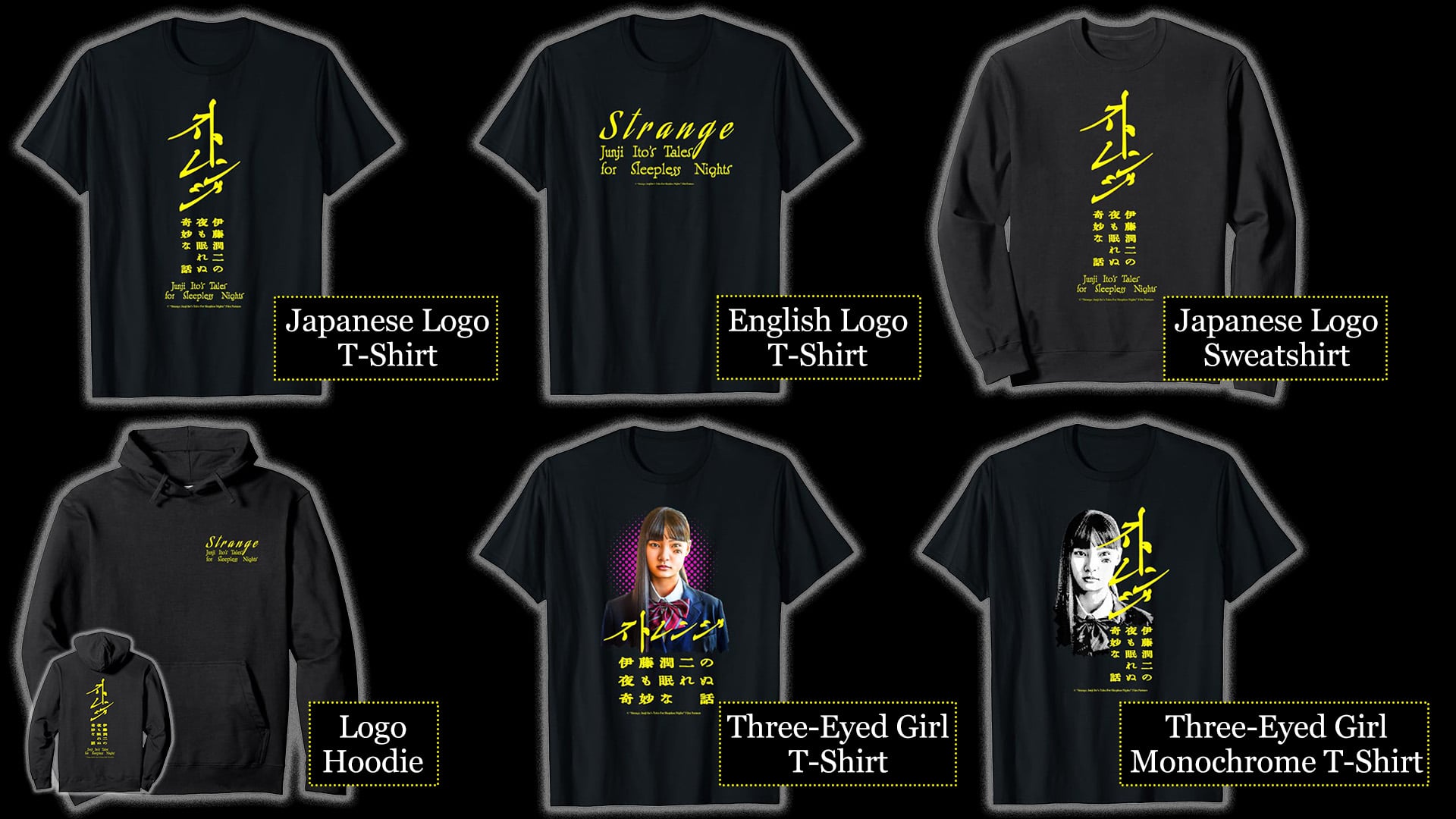
Looking for merch from Strange: Junji Ito’s Tales for Sleepless Nights? TV Tokyo recently released shirts and hoodies on Amazon for multiple countries, including:

After more than a decade as a consultant in the entertainment industry, Jonathan James launched Daily Dead in 2010 to share his passion for horror. He takes immense pride in Daily Dead's talented team of writers, who passionately explore and celebrate horror as a respected art form capable of telling complex, character-driven stories with deep emotional and cultural impact.
Over the course of his career, Jonathan has written more than 10,000 articles and hosted panels at major conventions, including New York Comic Con and San Diego Comic-Con. He is also consulted with as an expert on horror and pop culture, offering insights on horror history and the latest trends through media outlets, film festivals, and conventions.