




Blending hard sci-fi with empathetic humanity, Jay Eaton's Runaway to the Stars is now on Kickstarter via Iron Circus Comics, and we caught up with Jay in a Q&A feature to discuss their ambitious new graphic novel, including the unique centaur alien design of the main character Talita, the importance of incorporating diverse perspectives in the story, and the types of goodies that supporters of the Kickstarter campaign can look forward to!
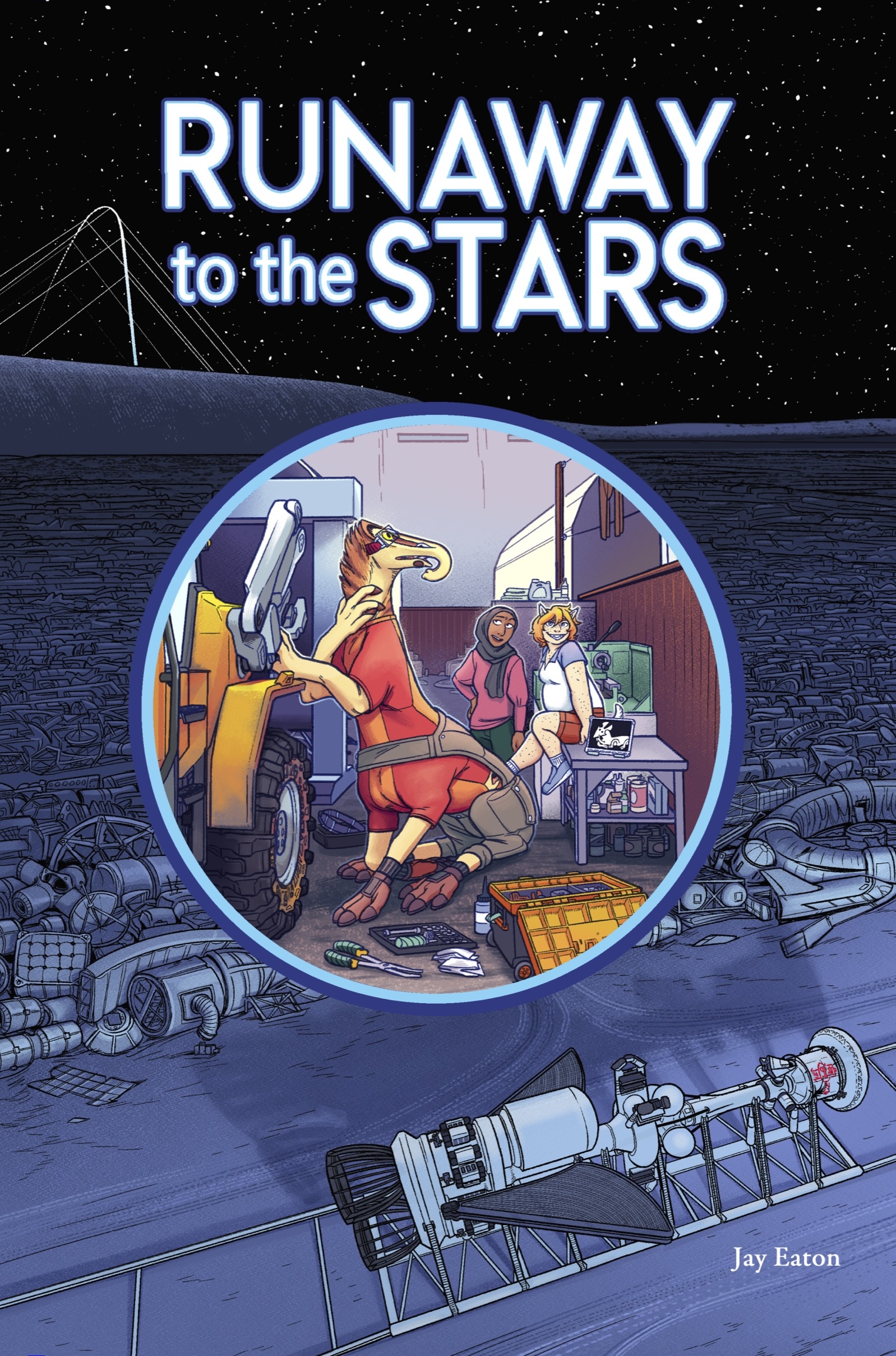
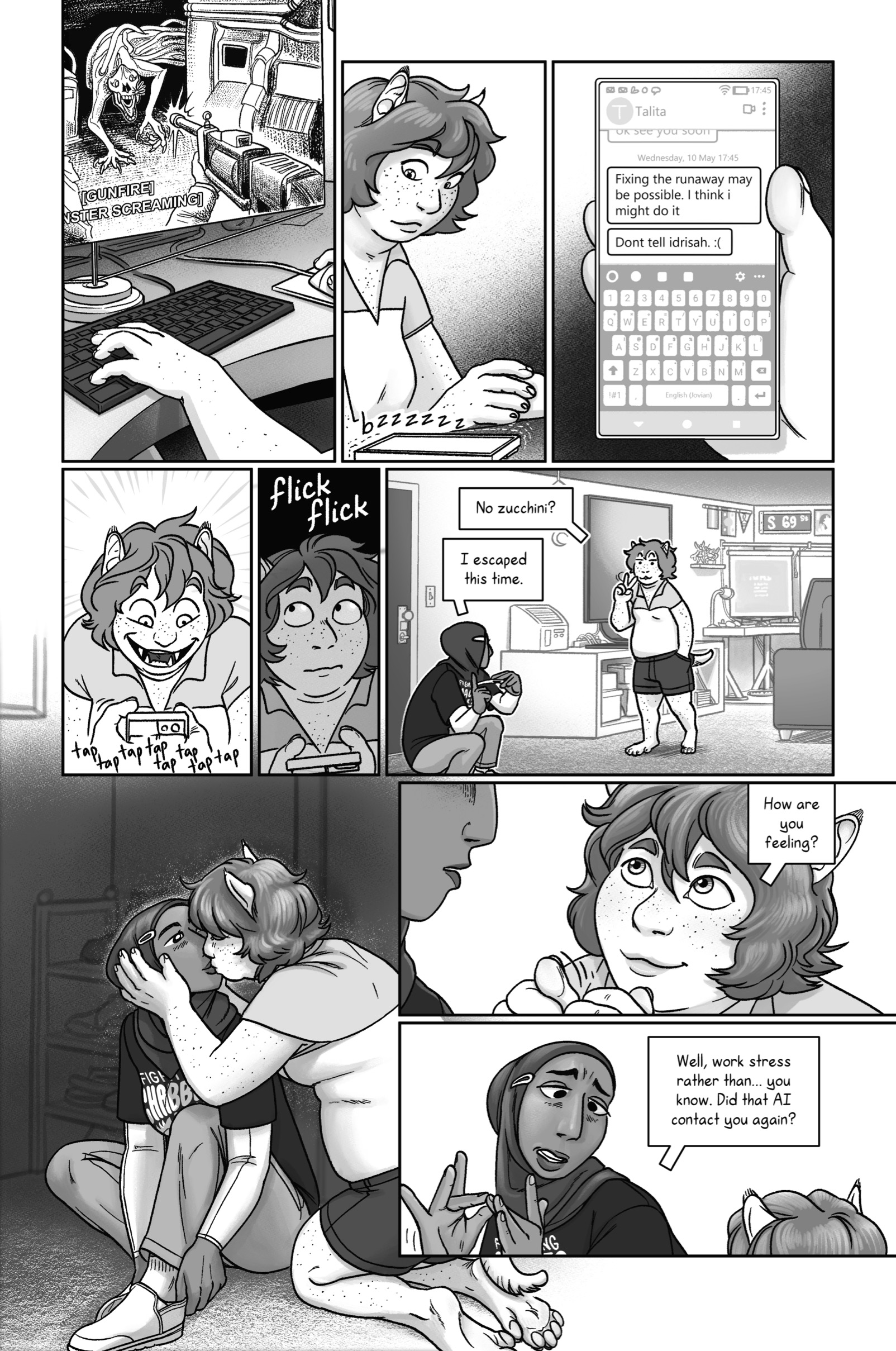
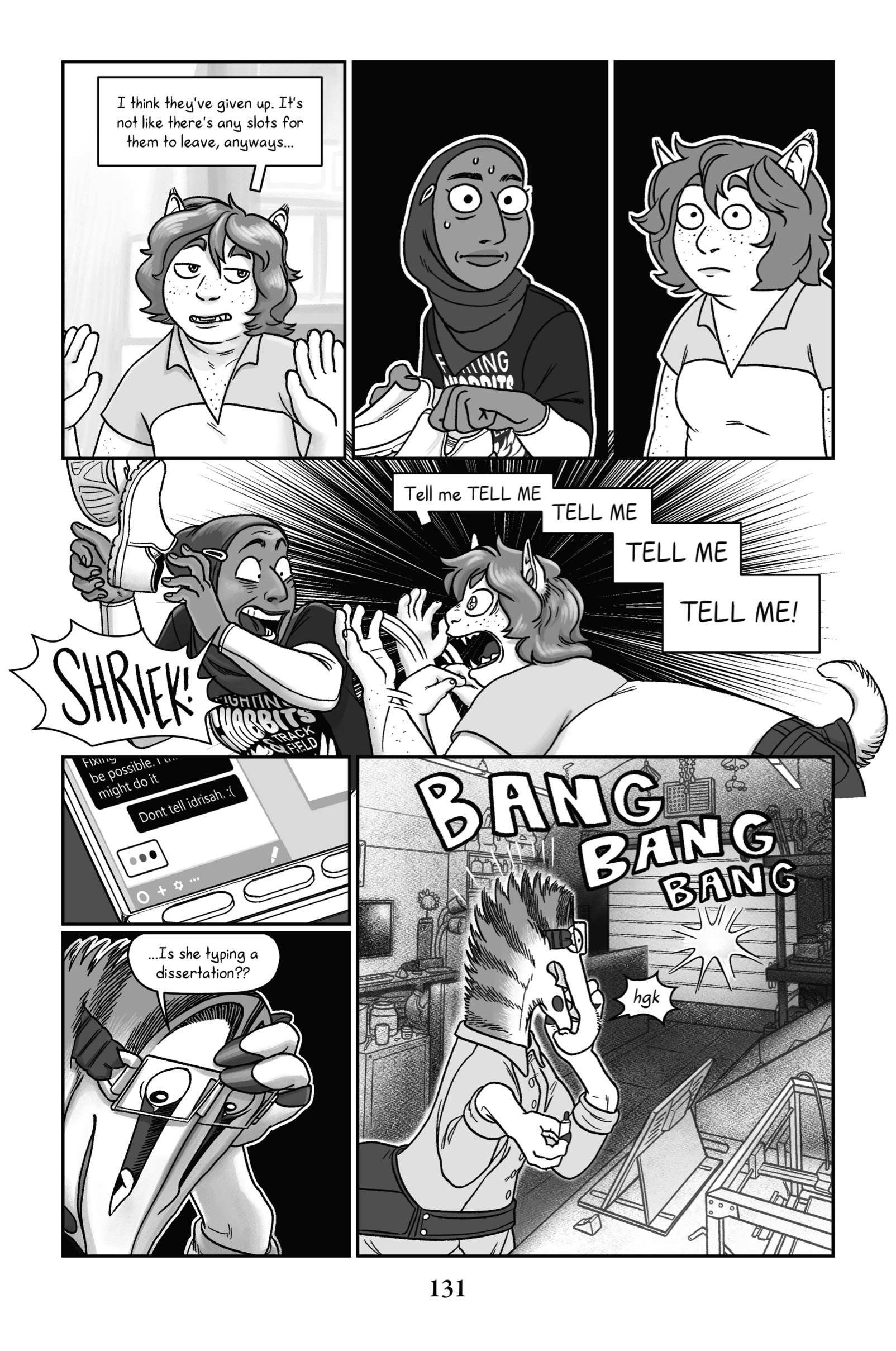
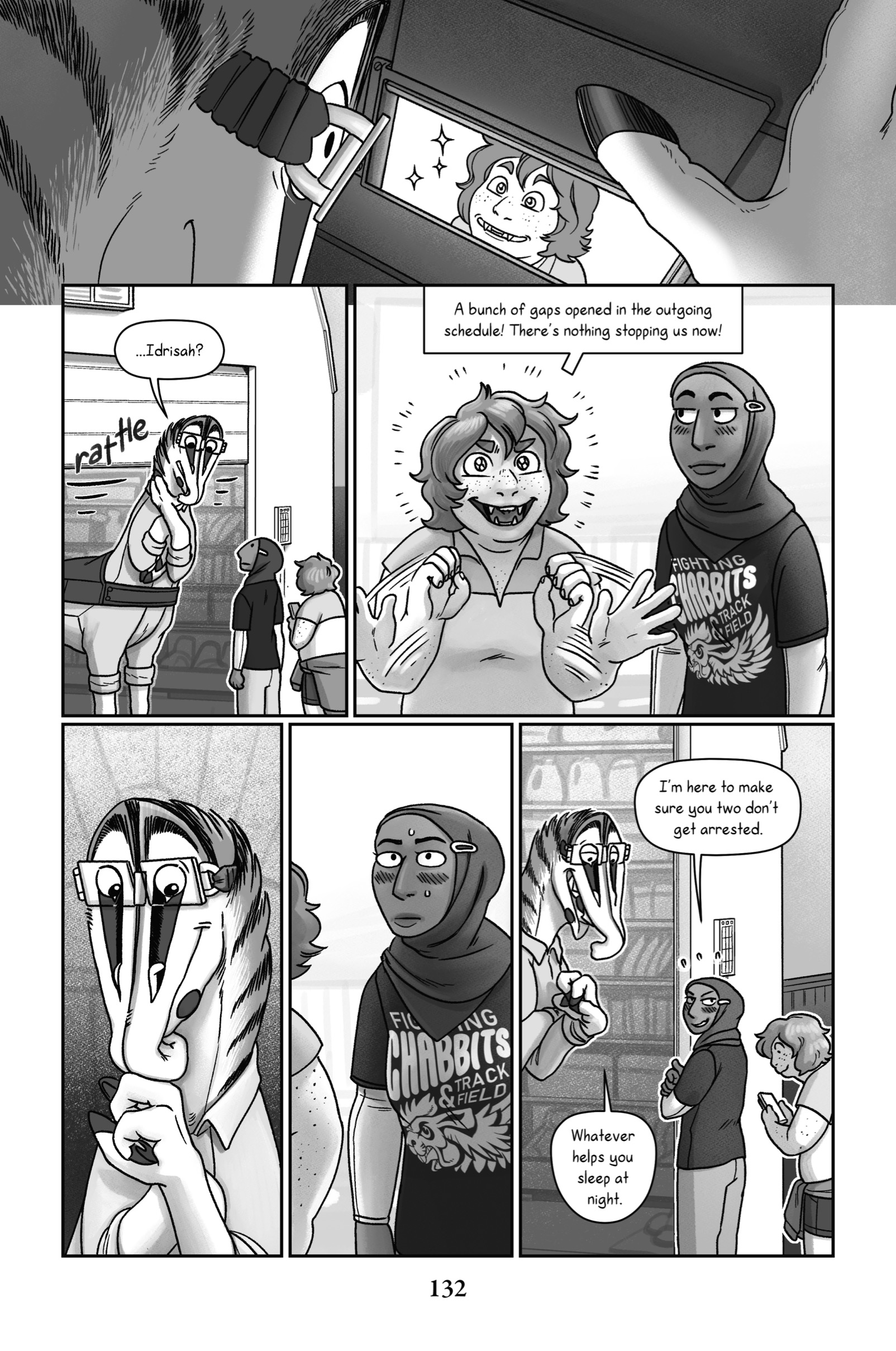
You can read our full Q&A with Jay Eaton below, and we also have a look at the cover art, preview pages, and official press release with additional details. To learn more about Runaway to the Stars, visit:
Thank you for taking the time to answer questions for us, Jay, and congratulations on your new graphic novel Runaway to the Stars! When did you initially come up with the idea for this story?
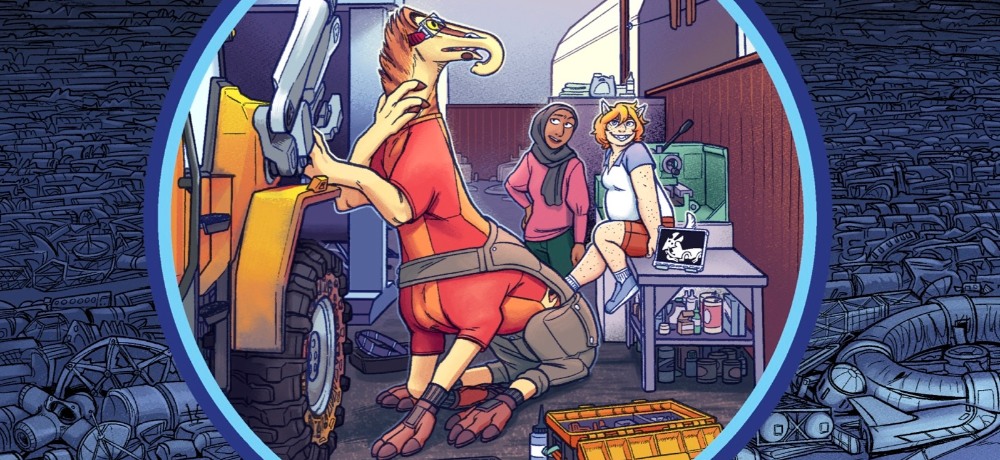
Jay Eaton: Runaway to the Stars started as an excuse to design some aliens and dump my science fiction ideas into a single pot. At the time I was mostly doing worldbuilding for fantasy stories, but the tables really turned there, because now my sci-fi side project is my full time job and my first graphic novel. I’m always coming up with characters and finding stories when I design settings, so the plot emerged pretty much simultaneously to the worldbuilding. Since I wanted to write about the complications of humans and aliens living together, the protagonist I decided on was born from those complications: Talita is a centaur alien raised by humans from infancy, who’s now an adult and doesn’t feel like she really belongs anywhere. She struggles to connect with people who look like her, but struggles to physically fit into the human-majority place she calls home.
I love following the adventure of the main character in this story, centaur and aerospace engineer Talita. How much time did you spend fleshing out the character of Talita and designing her unique appearance?
Jay Eaton: Talita was always going to be a trans-species foster kid. Her appearance has changed quite a bit in the last decade, though. Centaur aliens in the beginning were still endoskeletal fuzzy mammaloid things, but their proportions used to be much more mantis-like. However, because I already had a skinny-limbed insectoid alien (bug ferrets), I ended up pushing the design more into a megafauna kind of bodytype. They are a bit moose, a bit big cat, a bit eagle owl. Talita in particular I decided would be into body building–first of all, because I love drawing muscular anatomy, second of all, because the concept of someone 3 meters tall and built like a draft horse deliberately training to become stronger is amazing, and third of all, Talita’s a meek engineering nerd who has trouble standing up for herself, so her being shredded is a really funny contrast. She works out when she’s anxious, and she is often anxious.
Runaway to the Stars features an eclectic cast of characters from different species and all walks of life. How important was it for you to include so many diverse and unique perspectives through your characters in this graphic novel?
Jay Eaton: Including a lot of different perspectives lets me tell the reader about more of the world! I can communicate so much wordless information about a fictional society by introducing characters who are doing a poor job of fitting into it.
One of the key components of Runaway to the Stars is Talita’s friendship with the enigmatic AI pirate known as Bip. Did the continued rise of real-world technology and AI advancements influence how you portrayed Bip while working on this story?
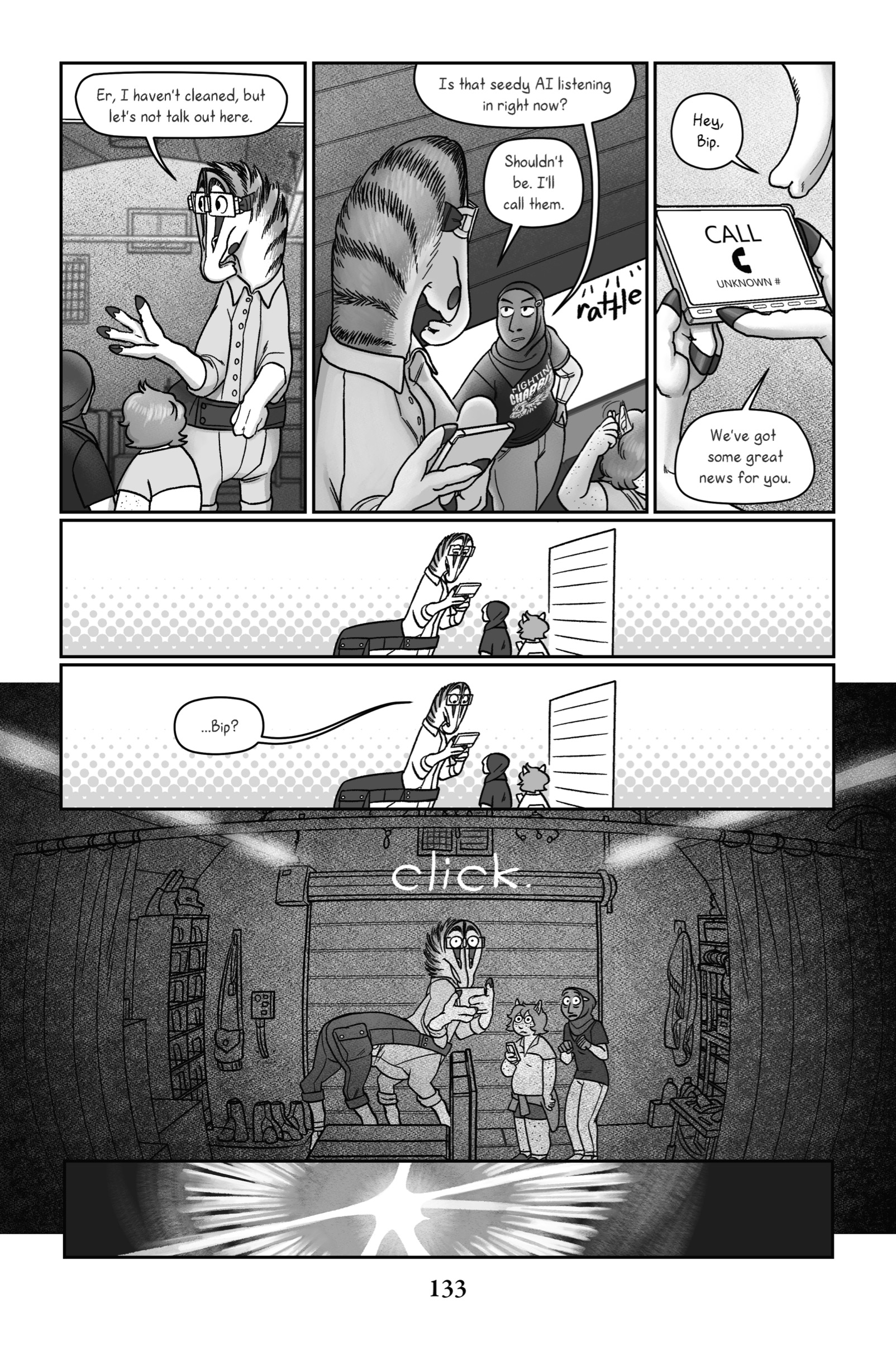
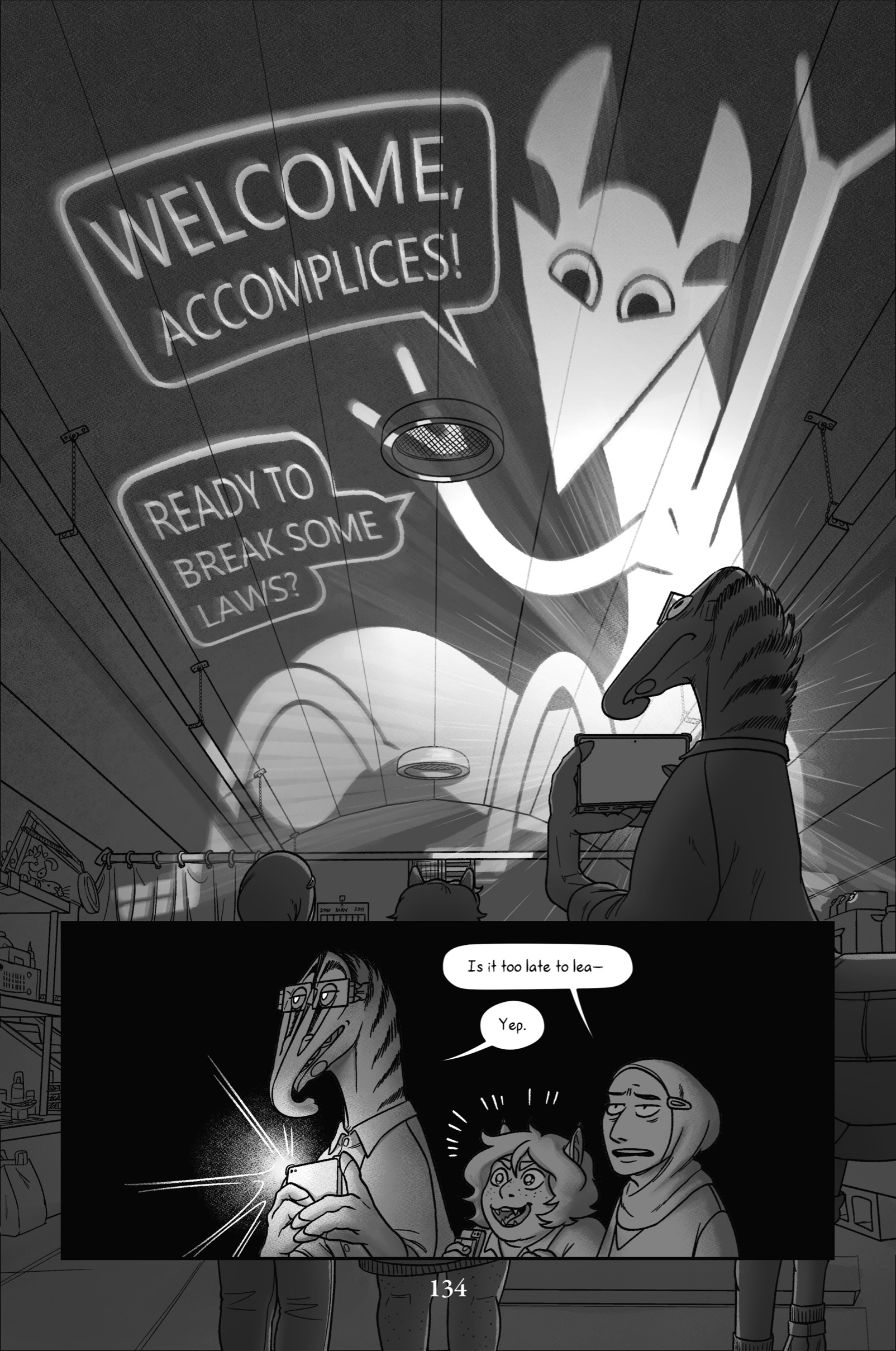
Jay Eaton: I developed Bip long before the current tech bubble around generative AI started. To me it has mostly been annoying to see the word for an established science fiction concept get co-opted as the buzzword of the year for any software that does anything that could vaguely be described as a decision. Sapient AI in Runaway to the Stars were primarily designed as people who have entirely prosthetic bodies. Since their encoded brain and quantum neural processes are massive, usually requiring a server room to host, containing it all in a mobile "android" body the size of an organic sophont is impossible. I wanted to figure out how a person like that would interface with the world. Bip uses a vector animated puppet and synthesized voice to communicate on computer screens, interacts with other characters using a variety of remote-controlled drones, and physically controls the processes of the spaceship their servers are fixed into.
In addition to being an empathetic story of humanity, Runaway to the Stars is also steeped in a hard sci-fi setting. How important was it for you to tell an emotional tale while also being as scientifically accurate as possible?
Jay Eaton: Mostly the scientific accuracy comes from me hating having to draw something if I don’t know how it works. But honestly, I think the two facets support each other. Realistic science makes the setting feel grounded, which makes the lives and emotions of the characters feel more real.
Were you influenced or inspired by any other films, TV series, comic books, movies, or video games while working on Runaway to the Stars?
Jay Eaton: Oh, yeah. Both positively and negatively inspired, haha. I wanted to write about an alien protagonist who in no way resembled a human in stage makeup, because I keep getting frustrated by sci-fi media that balks when it comes to asking the viewer to empathize with someone who doesn’t look like them. With alien design literally anything is on the table, so when I can tell whether or not I’m supposed to care about a character based on how much they look like me, it feels patronizing. I wanted to bring some of the intense creativity that I see in purely worldbuilding-focused speculative biology projects, like Life on the Planet Furaha, Snaiad, and Wayne Barlowe’s Expedition, and channel it into a story with complex and expressive characters.
Runaway to the Stars will be launching in a Kickstarter campaign from C. Spike Trotman’s Iron Circus Comics. What types of goodies can supporters of the campaign look forward to, and what has it been like to team up with C. Spike Trotman to help bring Runaway to the Stars to fruition?
Jay Eaton: We will have a bookplate and a bundle of other Iron Circus comics that I like for a discount, and the stretch goals include a cover upgrade and a compilation of some of the short comics I’ve drawn of the characters responding to reader questions. It’s been great working with Iron Circus. I'm extremely lucky that Spike enjoyed my worldbuilding blog and solicited a comic pitch packet from me, because her company was my first pick for proposing a book to, anyways. They publish more niche and queer titles with an older audience, which I usually write for.
Ultimately, what do you hope readers take away from Runaway to the Stars?
Jay Eaton: I hope that seeing people’s mundane lives in a vibrantly detailed fictional world helps them see beauty in the mundanity of our real world. I hope seeing people with very different bodies, cultures, and experiences learning to communicate and connect inspires empathy for people that they would otherwise feel are too strange to relate to.
Do you have plans to continue Talita’s adventures in future graphic novels?
Jay Eaton: Yep, definitely. I have several more books planned that follow Talita’s story. One thing at a time though, we have to publish the first one first.
What advice would you give to comic book artists or writers who are just getting started?
Jay Eaton: If you want to print it, figure out the print dimensions before making any finished pages. Start with a couple short stories before tackling the 1000-page epic you’ve been planning since high school, because completing things is a much more difficult skill to hone than ideation. And write about what you care about most. Be embarrassingly invested in it. It will turn out better that way.
In addition to Runaway to the Stars, what other projects do you have coming up, and where can our readers go online to keep up to date on your work?
Jay Eaton: I am a co-editor for Almost Real, an anthology magazine of speculative biology inspired by things like Zoobooks and National Geographic, and we are releasing the 6th volume on Kickstarter this summer. So keep an eye out for that. You can keep up with me on my Tumblr, Bluesky, webcomic site, or janky hand-coded personal website.
---
From the Press Release: Iron Circus — the premiere publisher of award-winning, critically-acclaimed graphic novels in the American Midwest, which has raised nearly 5 million dollars via crowdfunding — is proud to announce its latest campaign for RUNAWAY TO THE STARS, a hard sci-fi slice-of-life graphic novel from cartoonist Jay Eaton that will immerse readers in a universe at once intriguingly alien and painfully familiar. The main storyline follows Talita, a centaur aerospace engineer and cross-species foster kid, as she befriends a shipwrecked AI pirate named Bip who convinces Talita to help it escape the planet of Dirtball. Focused on communication, accommodation, and everyday life in co-species spaces, the intricate and meticulously built world of RUNAWAY TO THE STARS will travel to readers on this planet via Kickstarter this spring. Head to Kickstarter to support the the campaign.
"This book is the culmination of over a decade of chipping away at a science fiction setting and the interesting people living there, and I'm very excited to finally be able to share this labor of love with the world and introduce everyone to these characters,” said cartoonist Jay Eaton. “It continually delights me how many different people have seen their lives reflected in the fictional struggles and triumphs of Talita and her friends. Whether you're a 3-meter tall alien woman, a GMO catgirl, a sapient quantum computer, or a human being, I think there is something to find of yourself in RUNAWAY TO THE STARS."
Abandoned as an infant on the doorstep of the Nexus Jovia youth foster care facility in a cat carrier, centaur and aerospace engineer Talita has no idea where she came from. She’s spent the vast majority of her life around humans, has very little familiarity with her own species’ cultures, and has always had trouble connecting with anyone — other than sentient AI beings, that is. So when Talita discovers a damaged Centaur spaceship in the Ixion Recycling Plant’s salvage yard with a pirate AI onboard named Bip, she quickly becomes drawn into its plans to escape the planet of Dirtball. But her two human friends, Idrisah and Gillie, aren’t about to let her commit crimes on behalf of a shady AI... not without their help, of course! Because Bip, the pilot of the Runaway, is definitely not telling Talita everything about what happened to the ship's now-deceased centaur crew, or what mission they might have been on. But despite Bip’s suspiciously shady past, the AI is a charmer and quickly gets the team on board to help. Now all they have to do is secretly repair the ship and get all the clearances needed to file a flight plan… Of course, they just can’t get caught doing it.
“This story is for everyone who's ever felt displaced, othered, or unheard — and every reader that loves a good sci-fi story and is intrigued by what secrets a sentient pirate AI might be hiding,” said Iron Circus Publisher C. Spike Trotman. “One of the (many) things that makes RUNAWAY TO THE STARS so great is Jay’s attention to the complexities of communication. We have Gillie, a genetically-modified human who is Deaf, forced to deal with clunky and ineffective tech in her efforts to communicate; Idrisah, a professional xenolinguist who can communicate with double-larynxed alien Avians, but can’t fluently speak in either of her family’s languages; and Talita, whose social anxiety and fear of inconveniencing others gets her taken advantage of, despite her towering height and fearsome appearance. This singular graphic novel is a testament to the fact that our all-too-human faults and anxieties are universal concerns — no matter your point of origin!”
RUNAWAY TO THE STARS’ intricately-built primary story is supplemented with immersive appendices and overflowing with additional context. The campaign will also feature extras such as an exclusive bookplate and a discounted bundle of Iron Circus titles hand-picked by cartoonist Jay Eaton.
To support the campaign for RUNAWAY TO THE STARS, head to Kickstarter: https://www.kickstarter.com/projects/ironspike/runaway-to-the-stars?ref=8kc3dw
For updates, follow Iron Circus Comics on X, Facebook, Bluesky, and Instagram.

Raised on a steady diet of R.L. Stine’s Goosebumps books and Are You Afraid of the Dark?, Derek has been fascinated with fear since he first saw ForeverWare being used on an episode of Eerie, Indiana.
When he’s not writing about horror as the Managing Editor of Daily Dead, Derek can be found daydreaming about the Santa Carla Boardwalk from The Lost Boys or reading Stephen King and Brian Keene novels.
Raised on a steady diet of R.L. Stine’s Goosebumps books and Are You Afraid of the Dark?, Derek has been fascinated with fear since he first saw ForeverWare being used on an episode of Eerie, Indiana.
When he’s not writing about horror as the Managing Editor of Daily Dead, Derek can be found daydreaming about the Santa Carla Boardwalk from The Lost Boys or reading Stephen King and Brian Keene novels.












![[Guest Article] Maggots On Your Body Of Work: Clay McLeod Chapman On Finding His Own Muses](https://dailydead.com/wp-content/uploads/2026/03/Bodies-of-work-1000-180x83.jpg)

![[Editorial] AI of the Living Dead: Why Have So Many Already Accepted the Simulation?](https://dailydead.com/wp-content/uploads/2025/09/M3GAN-180x83.jpg)