



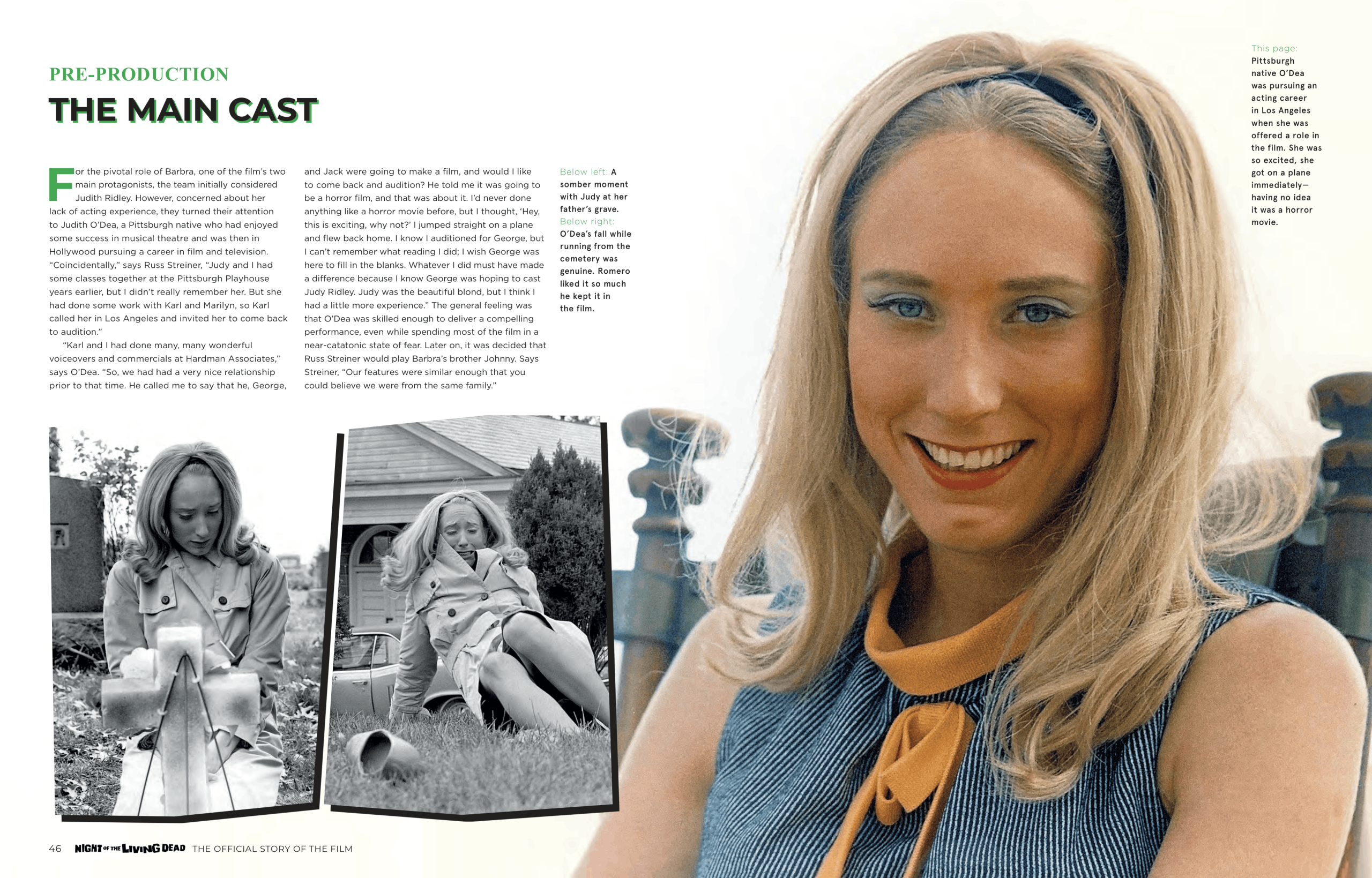
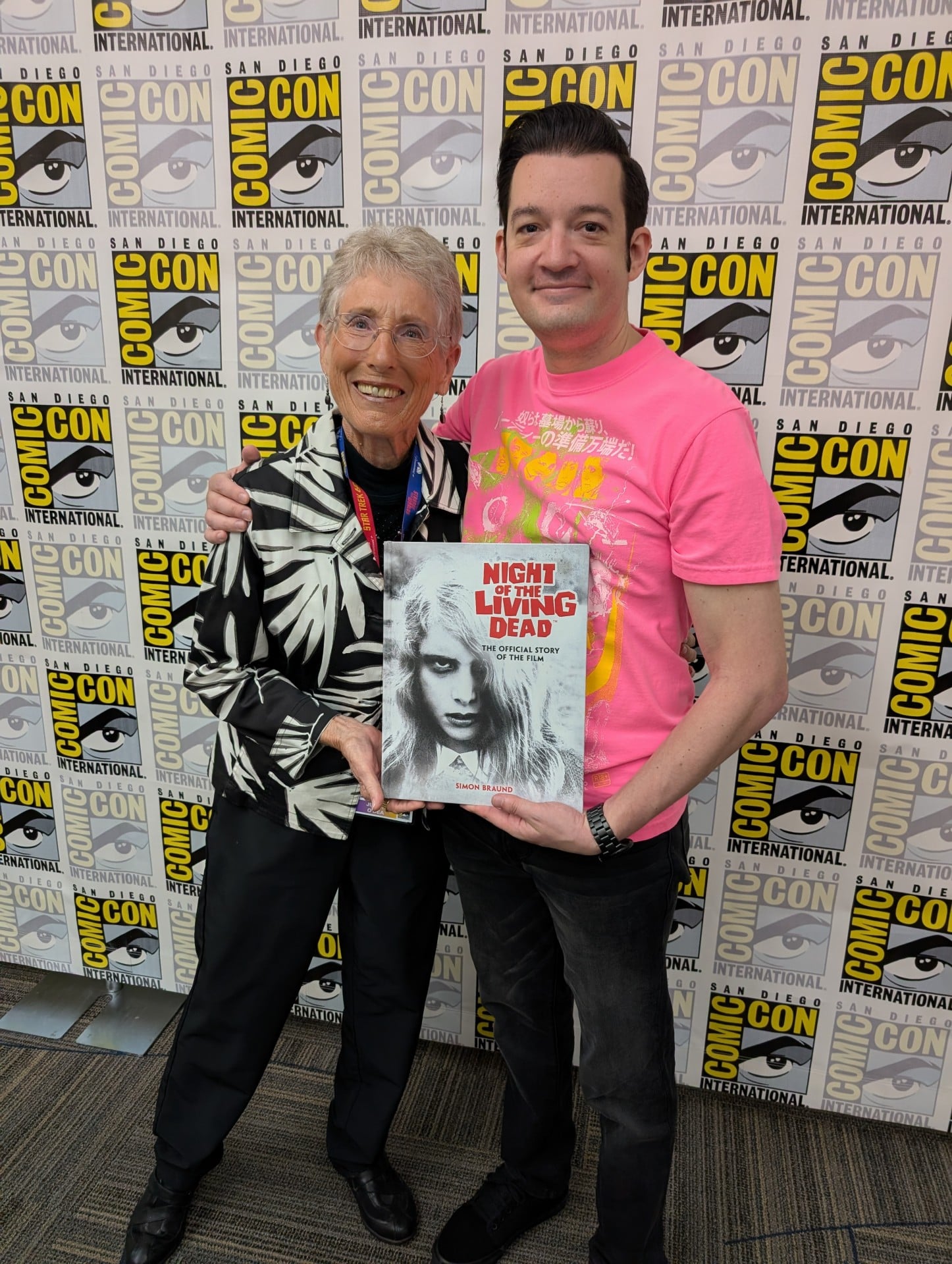
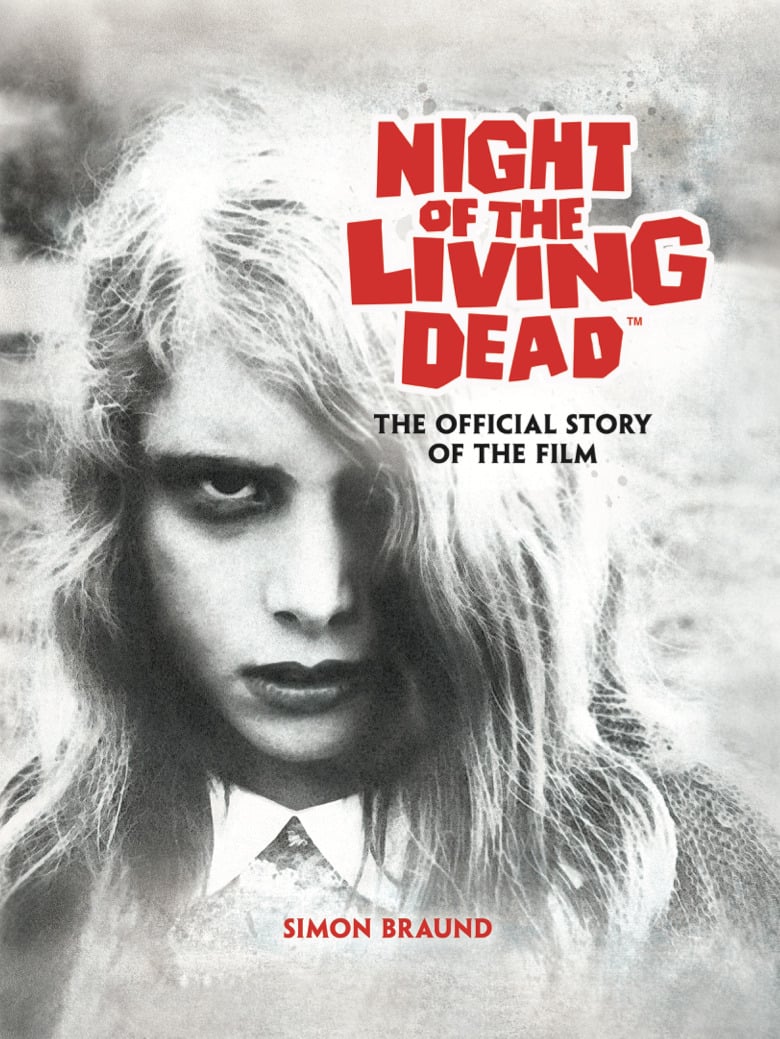
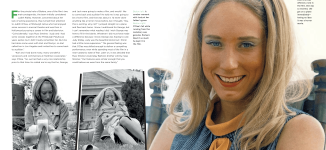
Now available from Titan Books is Night of the Living Dead: The Official Story of the Film. From Simon Braund, it's an absolutely incredible deep dive into the making of one of the greatest films of all time and is packed with behind-the-scenes photos. It truly is a must read for any NOTLD fan! During San Diego Comic-Con last month, Titan Books had Judith O'Dea on-hand for book signings and interviews. I haven't caught up with her for nearly 15 years since I hosted a panel with her at a Walker Stalker convention, and it was so great to have a deep dive discussion with her about the making of the movie, working with the cast and crew, its importance in her life, and much more. And, just for Daily Dead readers, we've also been provided with an exclusive look at some of the wonderful photos and pages from the book!
This book is a true gift to people who have been watching Night of the Living Dead for decades, but even people who are brand-new to watching the movie now have a collection of all of these wonderful photos and stories. One of the things I love about the film is that it doesn't get old. It's timeless. There's going to be people 100 years from now watching this movie.
Judith O'Dea: The storyline seems to fit, doesn't it now, with the struggles we're going through.
It's such an important story. George Romero was so ahead of his time and the story is just as relevant today. I was at the Monroeville Mall a couple of months back...
Judith O'Dea: I remember when it opened. And the thought that they were going to take it down already. [That you got to go before it closed] is just... amazing.
We haven't caught up in almost fifteen years since we did that panel together. But I remember you talking about how much the film meant to you and how much it changed your life. Obviously, you didn't know Night of the Living Dead was going to become...
Judith O'Dea: Never. And you bring up: Is it relevant today? That's one of the biggest questions that I will put to people I meet at conventions. Does the storyline hold you today? And they say, "Oh, yes, it seems very relevant." Which makes me feel good because people seem to be able to relate as well today as they did back then. It surprises me. It thrills me.
It's all about the human condition. And the tell of a great story is if you swap the "ghouls" for aliens or vampires, does it still work? And it very much still works.
Judith O'Dea: It's about survival. The uniqueness for us was that everyone dies at the end, and, unfortunately in life, that happens. But the struggle to survive is such a big thing in this film. You see how hard people do try, and then with the click of a finger, the one person who remains is gone. It's more powerful to me to see that ending today than it ever was back then.
I can imagine that a lot of people, even when that movie was made—and even when I saw this almost 40 years ago—thought that the world was going to be in a different, more positive, place than it is today. Decades ago, so many of us hoped that racism and sexism would be a thing of the past...
Judith O'Dea: You'd think.
So, in a sense, it's unfortunate that Night of the Living Dead is still just as relevant... we should be further along as a society. But that also makes the film a powerful statement and a reminder that the same societal struggles of decades ago are still pertinent today. It's a reminder of how important it is that we continue to fight.
Judith O'Dea: Yes. We seemed to take three steps forward and you think, "Oh, this is so good." We've got the Civil Rights Bill, and then we take steps back when the Supreme Court can get rid of [anything they want]. Humanity... I marvel at what we don't learn from the past.
What's important about stories like Night of the Living Dead is that it can dive into societal topics and put them in the realm of the fantastical. It clicks with people in a different way, like The Twilight Zone.
Judith O'Dea: Those were wonderful stories from Rod Serling.
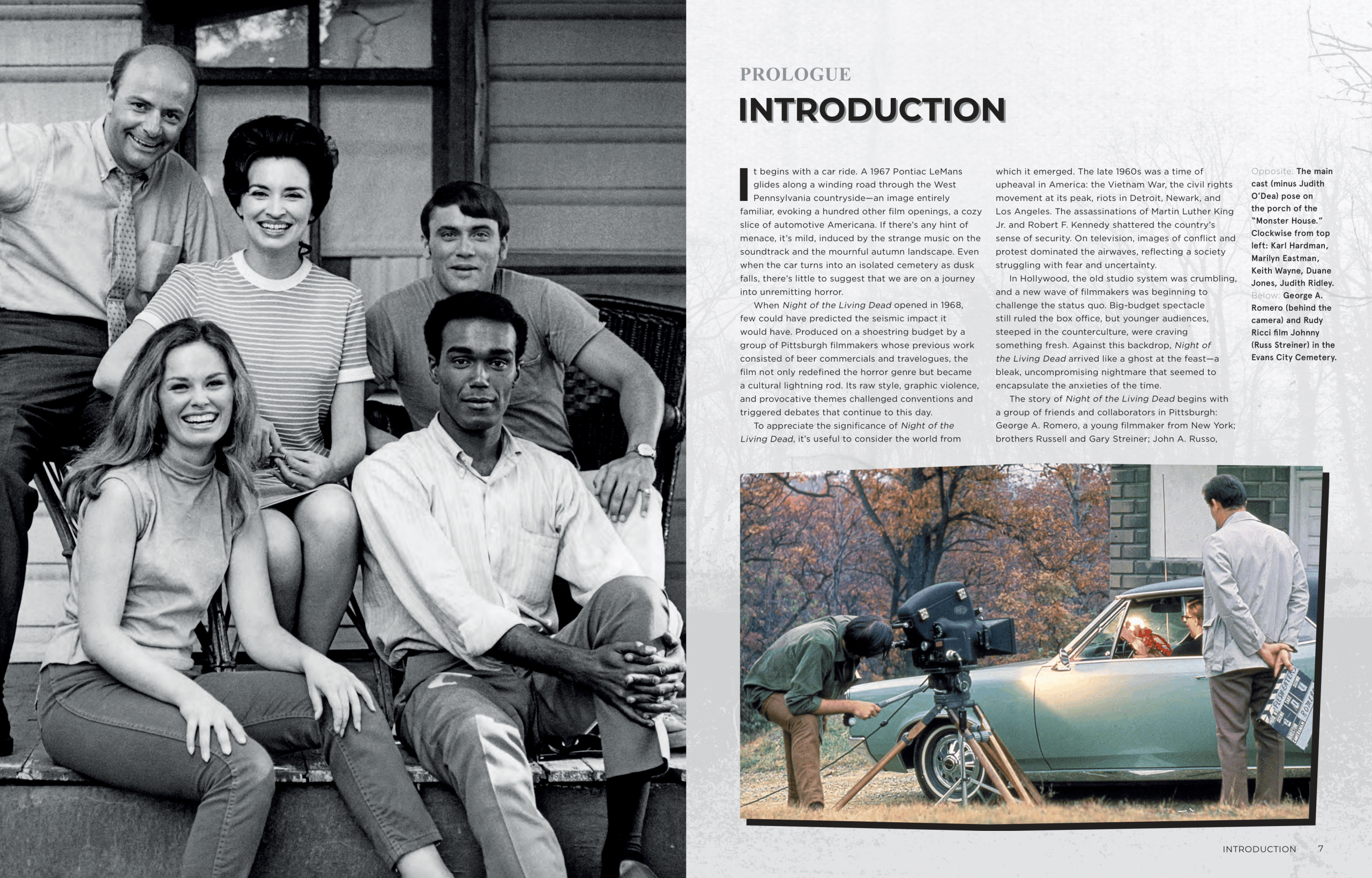
So, as we look at these photos together, what are stories or memories that jump out to you?
Judith O'Dea: Looking at that iconic picture of the farmhouse, it had such a feeling to it inside. We were filming in the heart of summer, and yet you could go into that house and there was a coldness about it. In fact, I can remember George coming down with a terrible cold because he was working 24/7. I didn't always have a night-for-night shoot, but it had an atmosphere, a being of its own. And that they've torn it down... it's sort of sad. I wish they could have kept it the way they did the chapel in the cemetery. It had a life of its own. I remember that distinctly.
I remember very powerfully how much everybody did everything. Whether it's moving a light stand or putting makeup on somebody, everybody involved in our initial little group did it. We did it all. Marilyn [Eastman] was great with makeup. She put on my false eyelashes in the morning. It really was a team effort because we didn't have the luxury of hundreds of staff to help. We had to lug water to go to the john upstairs because it doesn't flush. You had to pick up the water from the little river. Those were good moments.
I can remember too, when they were doing other scenes, I'd [go out and] walk. It was such a huge area [near the farmhouse], and then the massive area that we used with the posse. Just to be able to walk and look back and see the activity. To be my age then, which was 22, 23, and to know that I'm in a feature film. I didn't even stop to think of where it would go. Just the fact that I was a part of that production means more to me... It even means more to me today.
Oh, God, the kid's going to well up. Ask me a funny question, will you?
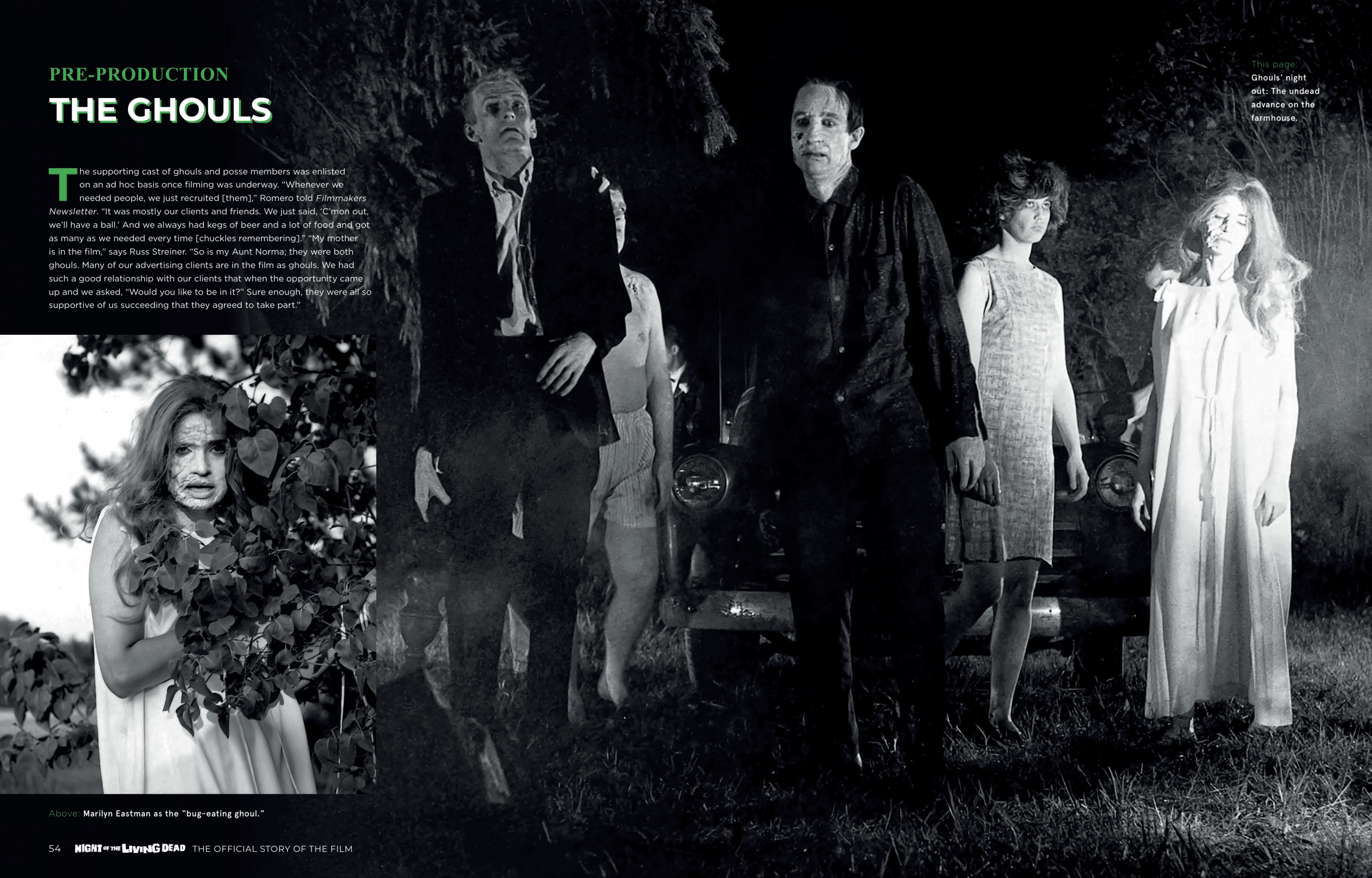
How did they teach the zombies to walk? Did they teach them how ghouls are supposed to move? Was there ghoul training? With The Walking Dead, they had the zombie actors go through a bit of "zombie school."
Judith O'Dea: Bill Heinzman. He's the number one zombie, or we can call him: "Number One Ghoul." Bill set the bar when we first shot. Nobody knew what a zombie was going to do or what a ghoul was going to do. But it was Bill... that was his walk. It was the way he perceived a ghoul to be. Therefore, it wasn't going to ghoul school. It was just watching Bill. Everybody just took their lessons from him.
And to meet him offstage... he was just the nicest, most wonderful fellow. When George would say, "Action," Bill could scare the living bejesus out of you because he was so relentless. He'd come at you. When he grabbed you, he really grabbed you. It was so exciting, really, to work with someone like that.
One of the things that really struck me as well when I was at the Monroeville Mall was hearing from all of the local zombies and them really bringing to life just how much Night of the Living Dead and Dawn of the Dead changed their lives. Many of them only did one film, but they stayed in touch with each other. They were part of a community. I always believe in that echo effect or that butterfly effect, and it changed their lives forever.
Judith O'Dea: It changed Pittsburgh. They're noted for the home of Night of the Living Dead. It did change our lives. Certainly changed my life. It gave me a legacy I never dreamed of. But yeah, you're right... talking to some of the people who just had a ghoul role or a posse role, and to see how they were treated as time went on. "You were that ghoul?" It really did make a difference in so many of our lives.
When did you know that Night of the Living Dead was bigger than any of you had ever imagined? Is there a moment, whether it's a fan interaction, a convention, a newspaper review? What was it that you knew: "Hey, this is huge. This is going to be watched forever."
Judith O'Dea: It was the 25th anniversary. The Zombie Jamboree was what it was called. I flew in because I was out West. Even though Pittsburgh was my home, I was out West when I got the call to come back to audition. And then once the film was made and a year or so later, I went back out West. So I didn't really know all the things that were happening locally. Things were growing. There were conventions. I had no idea conventions took place because I wasn't invited, but I was invited to come back for the 25th. When I saw how many people were there and what that film meant to them, I said, "My gosh, we're still here. And it's growing." That's when I knew.
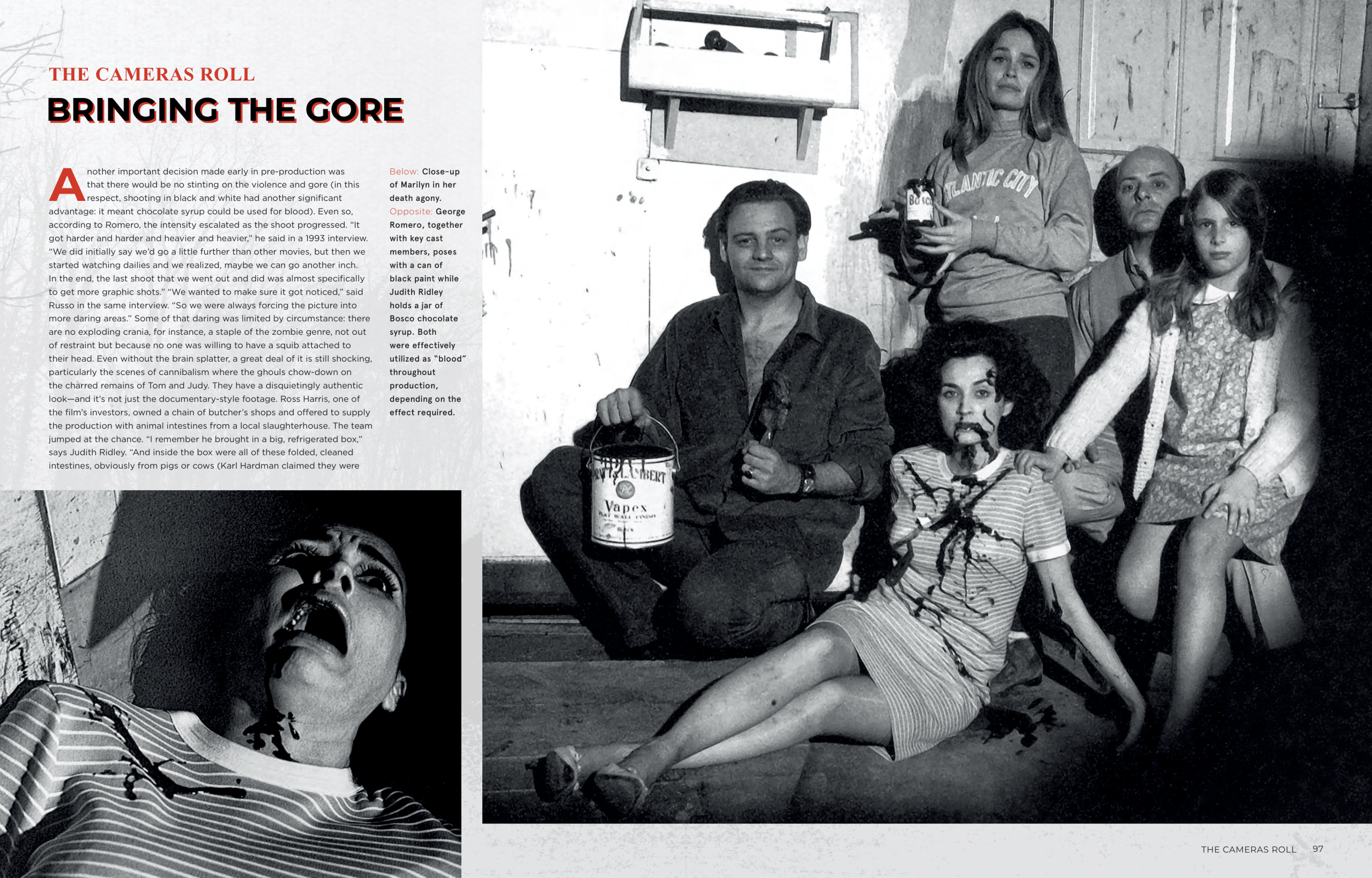
What do you remember about working and what stands out about working with Duane Jones throughout the film, since the two of you are tied so together for so much of it?
Judith O'Dea: Gary Streiner did the sound for us as well as many other things. Jack [John A. Russo], of course, worked with George writing the screenplay. But I can remember when we shot the scene where Barbara and Ben are relating what happened to them both; that was not scripted. That was improvisation. George said, "Include something about the candy. Say something about that. Say something about this." And then we just went for it. Gary was running sound and that scene was so powerful for me that the first time we did it, I can remember snot running up my nose. It was really powerful for me. When we finished, Gary said, "Oh, I don't know if we got it."
Oh, no. You had to do it all over again?
Judith O'Dea: We did it again. But the cool thing is: he did get it and they used that original take. Because we didn't have many takes because we couldn't waste film stock. But I remember that one.
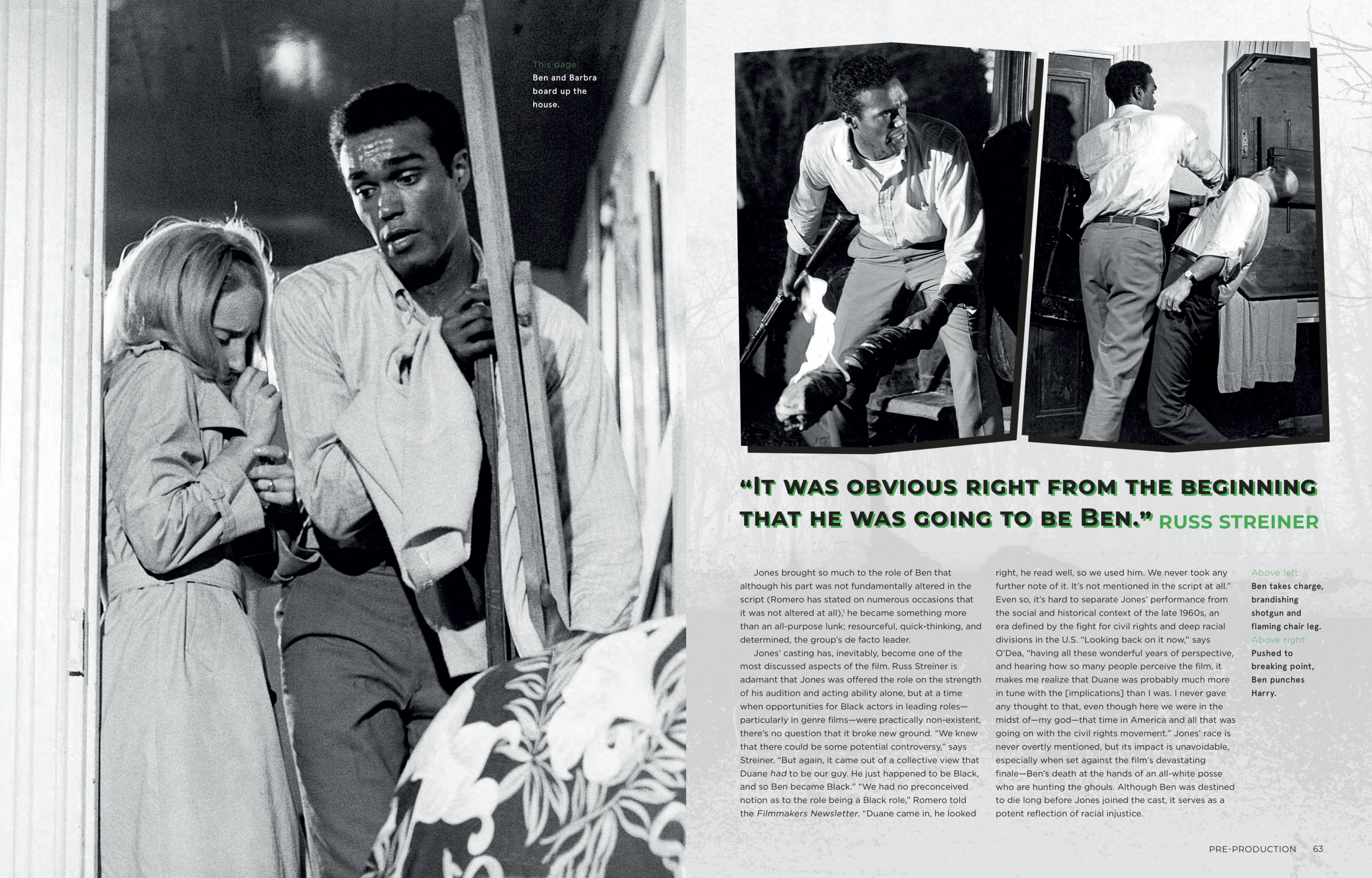
And personally, what was Duane like when on and off set?
Judith O'Dea: Intellectual comes to mind every time I think of him. Very focused, very serious. Intellectual. Loved his craft. Really did. Yeah. He and I did not have much of a relationship offscreen. His relationship was more with Karl Hardman. They had a wonderful friendship. Karl [Hardman] and he had humor that I never had with Duane. Mine was really just basically on set with Duane. But I see in my mind when we weren't shooting, Duane was usually sitting under a tree with a book, smoking a cigarette. He and Karl were, as was George, avid smokers. But that was Duane for me: focused, intellectual, intense.
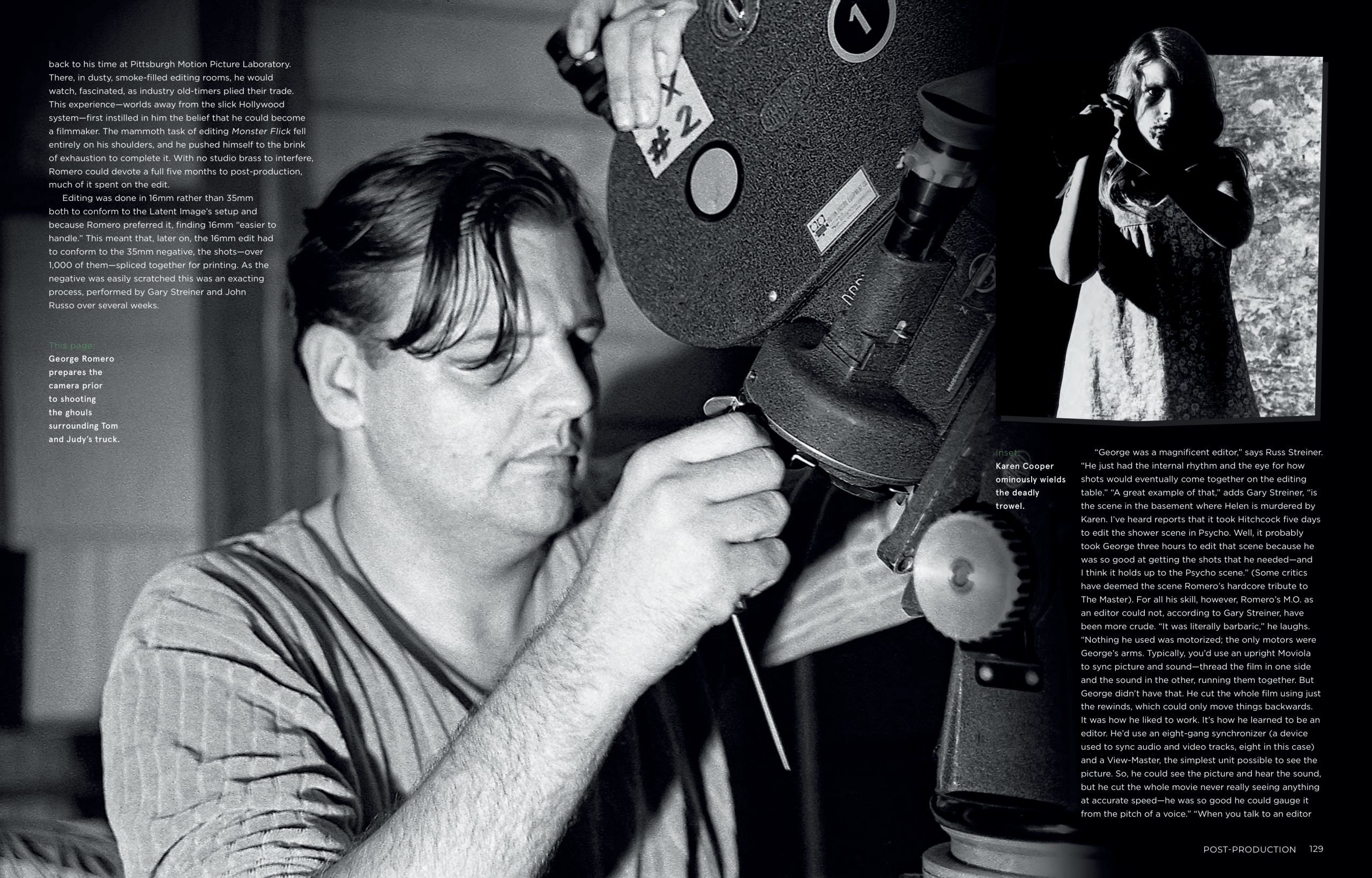
What did you learn from George while filming?
Judith O'Dea: Do you know what George taught me? He taught me how to load film stock in a bag onto the cassettes. And as I said, we didn't have a lot of film stock to waste, so you had to get it right. Boy, I was so nervous. When I do that, I just pray that I did it right so that when they loaded up that new cassette, it would work. But he taught me how to do that.
And I'd watch him; when he wanted to get a certain lighting effect, he'd rip a piece of cardboard and he'd put it up on the stands. And then he'd put light behind it. His creativity is something that really impressed me. The shot he did of Barbara when she comes in and sees the music box, and she goes over and touches the top of the box and the little doors are open. George was down on the floor and he was shooting up. When I came in and did that, the doors opened. George caught that shot of Barbara's eyes just for a second before the doors closed again. That kind of artistic touch, a lighting effect or something like that, enhanced the film.
It would've been easy to shoot some of the films he did with a more traditional movie or TV-style cinematography, but he was always pushing boundaries. I think of Creepshow, where he's bringing the comic book panels to life and introducing those bright colors. He was always experimenting.
Judith O'Dea: And you know he's a wonderful artist. He did his own comic book drawings. In fact, he was putting a comic book together just before he passed.
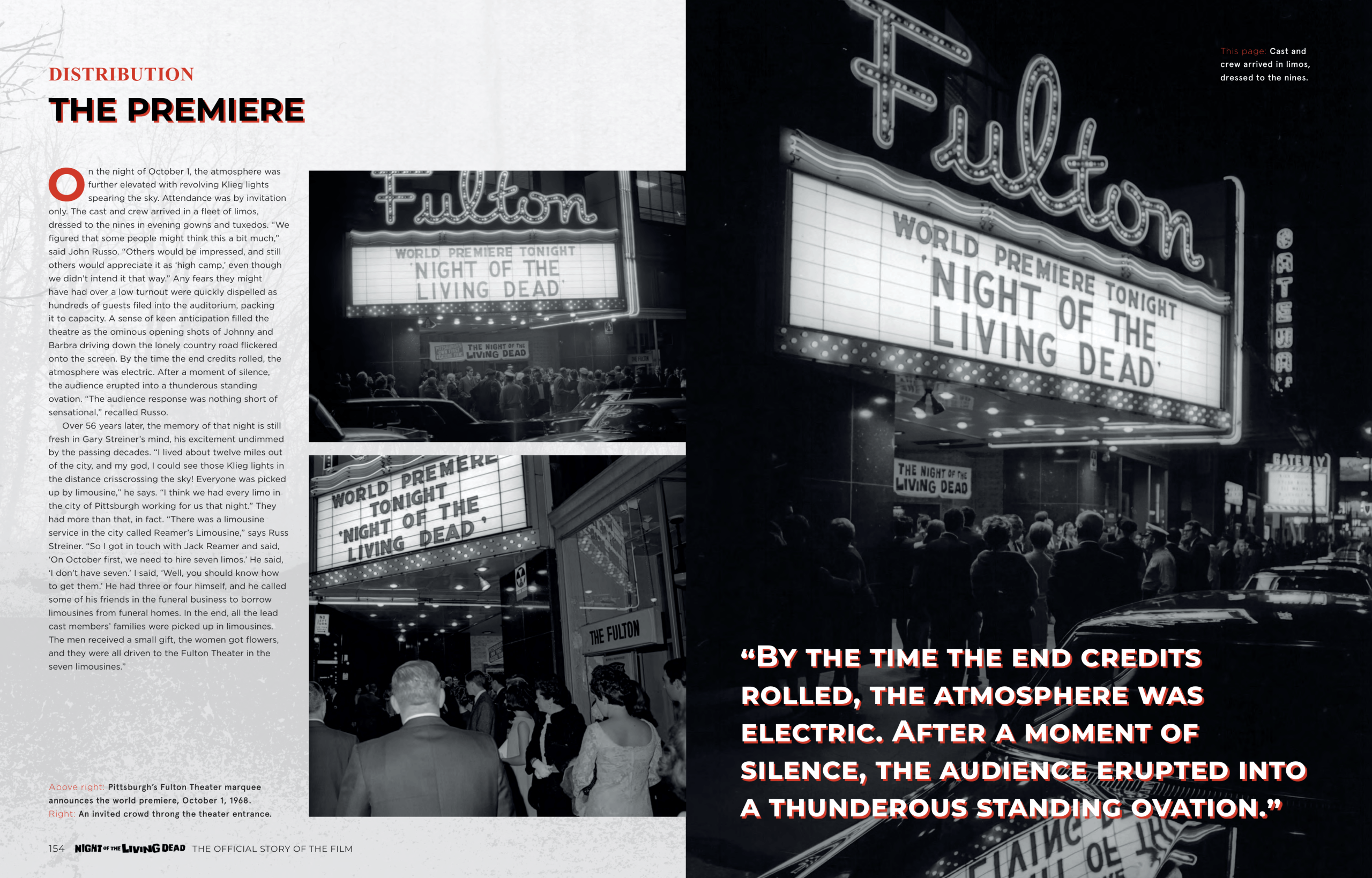
When was the first time you saw Night of the Living Dead? Did you see it before it screened? Or was the first time at the premiere?
Judith O'Dea: It was at the premiere.
What was it like seeing it for the first time with an audience?
Judith O'Dea: Wow! It was a magic night. They sent a limo. We all had a limo to pick us up in my little apartment. Going into that theater and to see "Night of the Living Dead" on the marquee... as a young girl who loved the theater and wanted so to be in film, the sight of the marquee was magic. Then, sitting down, it was the first time I had ever seen [the movie] together.
And sure, the first time you see yourself up on that screen, I thought, "Oh Jesus!" But, then, instead of picking myself apart, I remember really getting more involved in the storyline and watching Barbara outside of myself... just being a visitor, watching this person do what she did. Of course, it was exciting to see.
Anytime I was in front of the camera with George, I wanted to be believable. Anything I did, I wanted to be believable. We all did. And we didn't have much money. What, $114,000, was the total for the making of that film? But the most important thing was we wanted to make the best we could do with what we had. And that's oftentimes quoted. Russ will say it, and I've said it. But that was true. I just got lost watching. And I thought, "This grabs you." It was a thrill.
And it's so immersive because it doesn't set up the world. It doesn't explain things to the audience. You're the eyes for the audience. We're experiencing what you're experiencing, and you don't know what's happening at the start. And you don't know the world outside of the house. Your performance and role is so key and crucial. You're able to bring us in. You make us believe that everything that's happening is real. And it's still just as impressive as it was when you filmed it.
Judith O'Dea: I'm so glad to hear that. I didn't know what to expect [at San Diego Comic-Con]. It was just so lovely to be able to share some of those stories. Thank you.
----
To learn more about Night of the Living Dead: The Official Story of the Film and purchase a copy, visit: https://titanbooks.com/72612-night-of-the-living-dead-the-official-story-of-the-film/
"Released in 1968, George A. Romero’s Night of the Living Dead revolutionized horror, redefining the zombie subgenre and influencing filmmakers for generations.
This official retrospective tells the full story of how the film was made by a small group of people at the outset of their film-making careers. Interviews with cast and production company members explore the genesis of the movie, from persuading friends and family to become investors, finding the perfect run-down farmhouse in rural western Pennsylvania for the central location, assembling a cast of extras to portray “flesh-eating ghouls”, including the ground-breaking casting of a black actor in a leading role—Duane Jones as Ben—to the rough-and-tumble guerilla-style shoot.
The book explores how Night of the Living Dead went from controversial to iconic over the years, gaining critical acclaim and a hardcore cult following. And how zombies—as envisioned by Romero and his co-creators—now permeate everything from video games to literature, all tracing back to the unparalleled original.
Illustrated with movie stills, memorabilia, and unpublished on-set photos never previously seen, and including analysis of the original shooting script annotated by George A. Romero, this book is a must-have for horror fans."
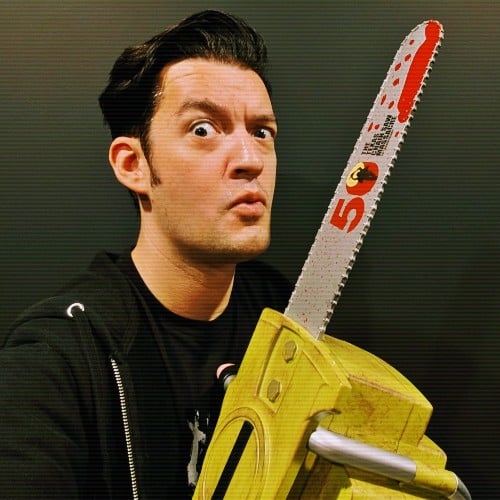
After more than a decade as a consultant in the entertainment industry, Jonathan James launched Daily Dead in 2010 to share his passion for horror. He takes immense pride in Daily Dead's talented team of writers, who passionately explore and celebrate horror as a respected art form capable of telling complex, character-driven stories with deep emotional and cultural impact.
Over the course of his career, Jonathan has written more than 10,000 articles and hosted panels at major conventions, including New York Comic Con and San Diego Comic-Con. He is also consulted with as an expert on horror and pop culture, offering insights on horror history and the latest trends through media outlets, film festivals, and conventions.
After more than a decade as a consultant in the entertainment industry, Jonathan James launched Daily Dead in 2010 to share his passion for horror. He takes immense pride in Daily Dead's talented team of writers, who passionately explore and celebrate horror as a respected art form capable of telling complex, character-driven stories with deep emotional and cultural impact.
Over the course of his career, Jonathan has written more than 10,000 articles and hosted panels at major conventions, including New York Comic Con and San Diego Comic-Con. He is also consulted with as an expert on horror and pop culture, offering insights on horror history and the latest trends through media outlets, film festivals, and conventions.


![[Guest Article] Maggots On Your Body Of Work: Clay McLeod Chapman On Finding His Own Muses](https://dailydead.com/wp-content/uploads/2026/03/Bodies-of-work-1000-180x83.jpg)
![[Editorial] AI of the Living Dead: Why Have So Many Already Accepted the Simulation?](https://dailydead.com/wp-content/uploads/2025/09/M3GAN-180x83.jpg)