





Everybody dies, so why not make a profit? Ron Murphy's darkly comedic slice-of-life feature, Back in Black, explores the economics of the dead. The Trailer Park Boys and Wynonna Earp director flips a cheery sitcom town upside down as citizens start dropping like flies, but not with a dreadful gaze. Back in Black is less about the horrors of dying and more about the funeral parlor that's raking in the dough. It's schmaltzy, satirically saccharine, and corny on purpose, trying to find sunshiny humor in random acts of violence—which is accomplished moderately well.
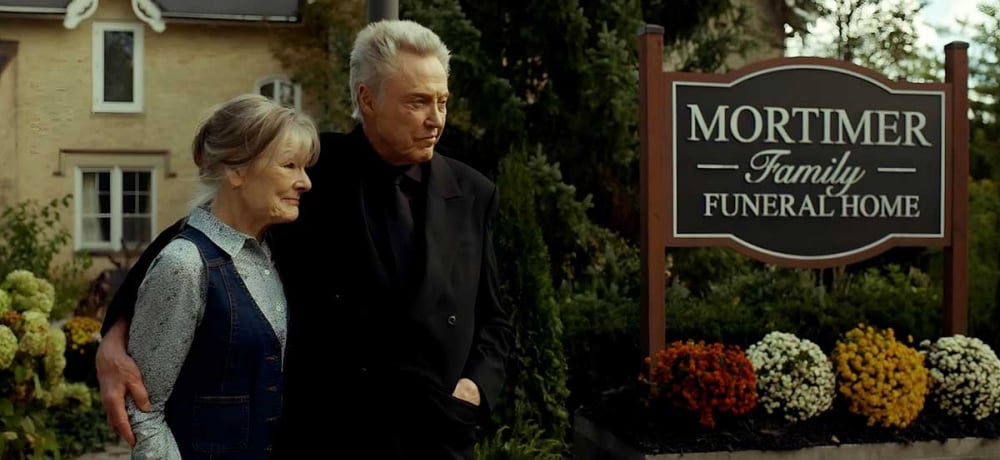
Christopher Walken stars as Clyde Mortimer, North Everett's legacy funeral parlor director who's staring down bankruptcy. People just aren't dying like they used to, which means fewer customers and angry bank associates. Clyde's granddaughter, Samantha or Sam (Ella Ballentine), hatches a scheme to drive spending back to the family business. With a few loosened screws, stolen warning signs, and frayed wires, townsfolk start croaking in freak accidents. Sheriff Wiley (Tony Nappo) doesn't suspect any wrongdoing, but Deputy Donna (Louise Lambert) starts connecting the incidents. As long as Sam doesn't get sloppy, everyone wins … except the corpses.
The concept relies heavily on sweet-as-a-mouse, and also inexplicably non-verbal Sam getting away with literal murder. North Everett is the prototypical sleepy and hospitable community where everyone knows your name, and no one suspects evildoers—not to say Sam is evil. But when you're willing to sacrifice neighbors so grandpa's thriving once again, morality begs to differ. That's why Murphy has so little wiggle room with the film's lighthearted yet deceptive tone—the Andy Griffith Show on the surface, small-time Dexter underneath.
Murphy and co-writer Nick Torokvei are clever enough when it comes to knowing when to exaggerate charming suburban lifestyles, and when to lay on the absurdity. As Sam increases the stakes of each fatal trap, the dangers get more ridiculous. We're talking escaped circus animals, entire building explosions, multiple swimming pool electrocutions, and more surprises. The juxtaposition of hacked-up body parts with head-scratching officers helps us stomach the extreme hokiness of everything. The film knows Sam shouldn't be getting away with her plan and doesn't care, leaning into the "aw shucks" nature of it all.
Even more successful, Back in Black pokes fun at the financial difficulties rural funeral parlors face. Walken's foul-mouthed Cyrus puts on quite the salesman's confidence when upcharging for the finest artisan coffins and meal plans, then unleashes scathing tirades to Sam about the stingy, cheapskate Everettonians who opt for Costco sandwich platters and cut-rate wooden boxes. Tying dead civilians to the Mortimers' family wealth sneaks a capitalist ickiness to it all, while still painting Cyrus, Sam, and Cyrus' picture-perfect wife Autumn (Jane Curtin) as humble mom-and-pop shopkeepers. Stylistically, everything's at odds in the movie—which is why we can laugh at idiosyncrasies and detect mounting tension.
However, as a straightforward comedy, Back in Black can't bat its cute lil' eyes through every scene. Ballentine's alluring, hypnotic stare and petite presence fit Sam's silent-killer type, but the no-speaking choice does get old. German visitor Kevin (Giamo Alfredi) is the motormouth contrast to Sam, whose dynamic of being chattily awkward also becomes tiresome. There's a solid 60/40 ratio of jokes that land to duds that fall flat, as Murphy wrestles with the comedy-heavy stylings of his not-so-thrilling thriller. It's one of those experiences where you take the good with the bad, because the overall presentation isn't offensive. Still, it's aggressively obvious what segments get away from Murphy in terms of balancing chewed-up body parts and sweet old men with sensitive stomachs.
That said, Back in Black’s ensemble holds strong enough to sell the ordeal. Beyond Ballentine and Walken, Curtain is an absolute doll as the parlor's matriarchal cosmetologist. Watson Rose slides into frame as Autumn's understudy, and endears herself to the Mortimer household with wholesome results. A giddiness runs through everything as Clyde's mood improves with each ceremony, contrasting with the traumas each family endures. But it's never a sad movie, especially as Sam explores her plentiful romantic options. Then the third act kicks in, and all the gears fit into place—whether expected or out of left field.
Back in Black is an unsuspecting tale about death and survival, but not in the ways you'd expect. Sure, Sam might be staging Final Destination set pieces—but the focus is never on who dies, or how grisly. Murphy's more interested in who benefits when someone passes, and the choices loved ones are forced to make. Laughter and silliness bubble to the surface in these profoundly sad moments. There are funnier, darker, more grounded, and nastier takes on the same themes, but that's what makes Back in Black such a curious little nugget—the smile it forces throughout.
Movie Score: 3/5
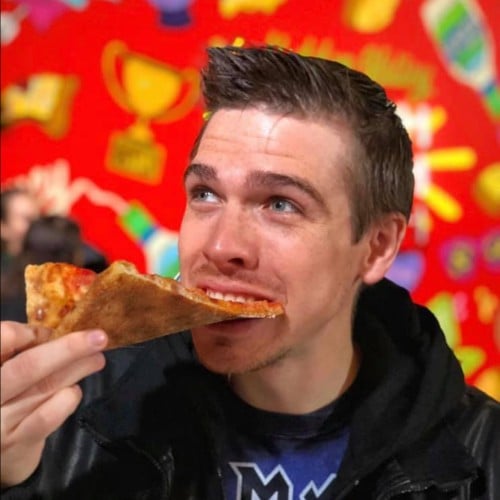
Matt Donato is a Los Angeles-based film critic currently published on SlashFilm, Fangoria, Bloody Disgusting, and anywhere else he’s allowed to spread the gospel of Demon Wind. He is also a member of the Critics Choice Association. Definitely don’t feed him after midnight.
Matt Donato is a Los Angeles-based film critic currently published on SlashFilm, Fangoria, Bloody Disgusting, and anywhere else he’s allowed to spread the gospel of Demon Wind. He is also a member of the Critics Choice Association. Definitely don’t feed him after midnight.










![[Guest Article] Maggots On Your Body Of Work: Clay McLeod Chapman On Finding His Own Muses](https://dailydead.com/wp-content/uploads/2026/03/Bodies-of-work-1000-180x83.jpg)
![[Editorial] AI of the Living Dead: Why Have So Many Already Accepted the Simulation?](https://dailydead.com/wp-content/uploads/2025/09/M3GAN-180x83.jpg)