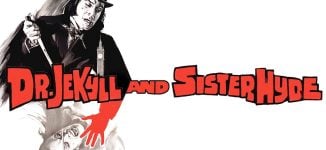



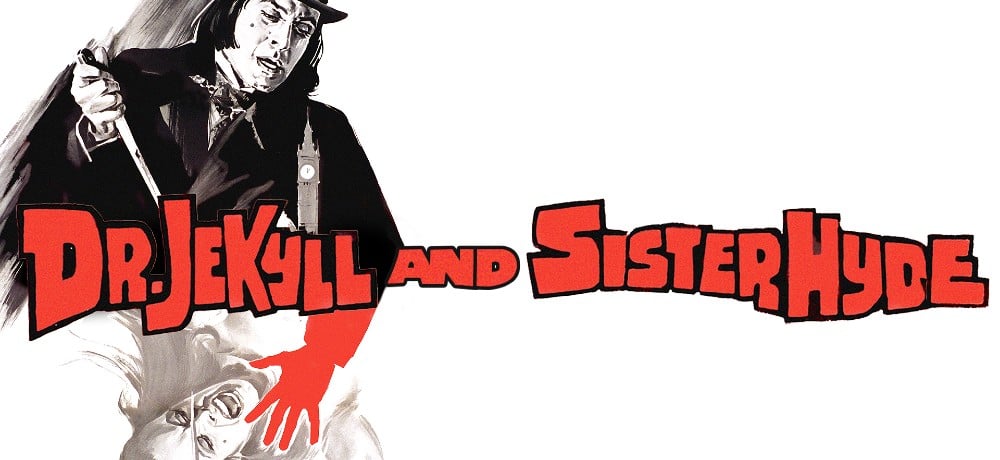
Steeped in the soup of 1880’s Whitechapel, a lady of the evening is butchered by a man with a knife wearing a black hat and a dark cape. The man makes his escape to his dwelling, cleans up, and climbs the stairs to write in his journal, revealing himself to be… Dr. Henry Jekyll? Thus begins Hammer Horror’s Dr. Jekyll and Sister Hyde, a 1971 update on Robert Louis Stevenson’s 1886 novella Strange Case of Dr. Jekyll and Mr. Hyde that adds Jack the Ripper, Burke and Hare, and a strong streak of self-truth seeking.
Released by EMI Films in November for the UK with an April ‘72 rollout in North America by American International Pictures, Sister Hyde did well, teaming up with The Return of Count Yorga to haunt drive-ins and movie houses for months. It received good notices as well, with Variety calling it "highly imaginative," and it was acknowledged for the clever script from Brian Clemens (former The Avengers writer and upcoming Hammer talent) and visually inventive direction from Hammer legend Roy Ward Baker (Asylum).
Picking up with his journal, Henry (Ralph Bates) takes us back a year or so to when the wheels of his fate were set in motion with the arrival of new upstairs neighbors, The Spencers: Howard (Lewis Fiander), his sister Susan (Susan Brodrick), and their mother (Dorothy Alison). At the same time, Henry’s best friend Professor Robertson (Gerald Sim) pops by for a visit to see what Henry is working on; while watching Susan move in, Robertson is told of an antivirus made with female hormones meant to cure several illnesses. (Henry mentions that females have superior genetics.)
Henry’s hormone cocktail turns his test fly from male to female, and once his friend leaves, Henry tries the formula on himself. It works exactly as it should in a film like this; after much gagging and flailing around his bachelor pad, Henry is transformed into the beguiling Martine Beswick (Thunderball), who he passes off to his upstairs neighbors as his sister, the widowed Mrs. Edwina Hyde.
(About that formula: Henry needs female hormones, so as is his wont as a mad scientist, he starts using the mortician’s corpses, then he moves on to using Burke and Hare’s graverobbing and killing services, and then when they’re caught, he takes up the mantle and begins carving up street walkers, morphing into his role as a different kind of killer.)
In the midst of the bloodshed, Henry becomes attracted to Susan, and Howard lusts after Edwina. Impossible to arrange a double date, Henry angers Susan by skipping out, and Howard is itching to get to know Edwina better. The professor suspects something is amiss–all the dead women are missing the same internal organ that Henry needs for his experiments. (We never find out what the organ is, and I suppose that’s fine, as it’s not really a “how-to” for performing surgery. Not a successful one, anyway.)
As he continues his secret rampage–all in the name of science–Edwina begins to take control, pushing Henry further back and indulging her own bloodlust. Can the professor and Scotland Yard stop him/her/them before they kill again?
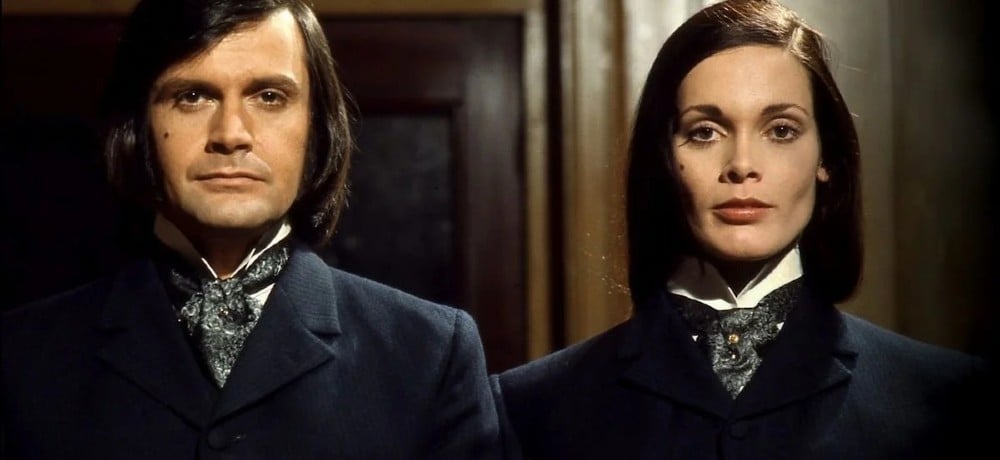
Dr. Jekyll and Sister Hyde happily invites several readings due to Clemens’ smart script. Hammer were more risqué by the ‘70s (they had to oblige the market with nudity and stronger violence), and the most straightforward is the standard “duality of man” of other adaptations (with a layer of exploitation through the nudity of Beswick). This quickly falls apart because we’re introducing gender into the mix, and the “monster in us all” becomes a personal journey of breaking through repression. Specifically, Henry’s.
It’s possible that Henry is secretly gay or bisexual; he is attracted to Susan, but there’s also a moment later in the film when Henry touches Howard’s face while sighing his name and you can take that as Edwina battling for control or Henry trying to be free. Or maybe Henry is trans, literally fighting to find his true self. These are all valid opinions, as long as one doesn’t attribute the murders to their gender; Henry/Edwina are simply murderous assholes regardless of the body inhabited. (On a totally related note, Henry seems very much at ease while he’s Edwina.)
Director Baker and writer Clemens have fun with their shrouded Whitechapel; vendors selling hot potatoes and offering knife sharpening give the film the artifice of an old cheery Disney musical in between the multiple stabbings from our killer(s). The transformations happen behind stained glass, offering cheap solutions to in-camera effects, and combining the lore of Jekyll with the real-life cases (even if the timelines don’t match and who cares) of the Ripper and Burke and Hare gives Sister Hyde more to work with–a bloodier playground with richer characters. Well, mostly. Other than Jekyll, Hyde, and Burke and Hare, the rest aren’t as compelling; not the actors’ fault, they’re just a bit underwritten.
But Bates and Beswicke, together, feel and look like a fluid, single entity by the film’s end, and their death is a reminder that one’s survival depends on being one’s true self. Or to at least have the chance to get there.
Dr. Jekyll and Sister Hyde is available on Blu-ray from Shout! Factory.
Next: Read Earlier Installments of This Series!
Scott Drebit lives and works in Calgary, Alberta, Canada. He is happily married (back off ladies) with 2 grown kids. He has had a life-long, torrid, love affair with Horror films. He grew up watching Horror on VHS, and still tries to rewind his Blu-rays. Some of his favourite horror films include Phantasm, Alien, Burnt Offerings, Phantasm, Zombie, Halloween, and Black Christmas. Oh, and Phantasm.
Scott Drebit lives and works in Calgary, Alberta, Canada. He is happily married (back off ladies) with 2 grown kids. He has had a life-long, torrid, love affair with Horror films. He grew up watching Horror on VHS, and still tries to rewind his Blu-rays. Some of his favourite horror films include Phantasm, Alien, Burnt Offerings, Phantasm, Zombie, Halloween, and Black Christmas. Oh, and Phantasm.