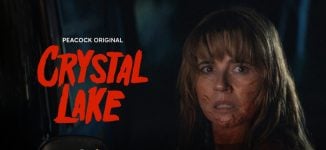



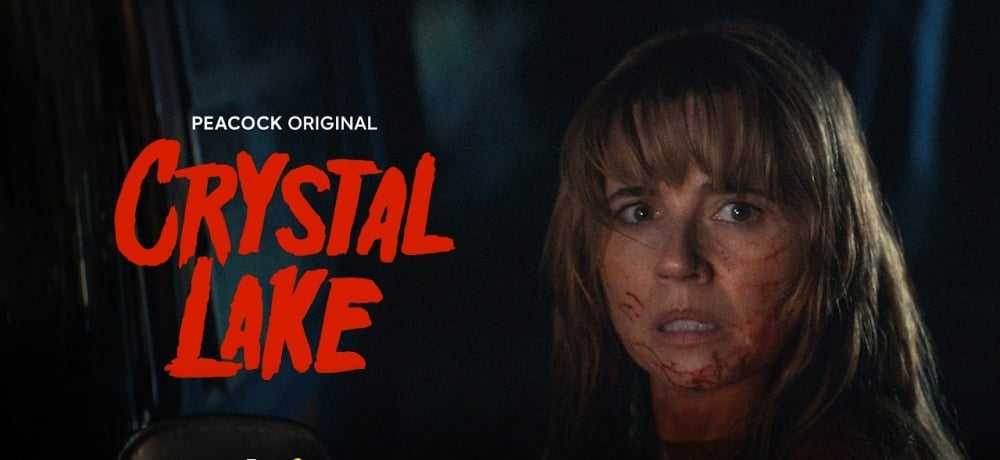
Brad Caleb Kane is no stranger to adapting sacred text in horror. He previously produced Welcome to Derry, based on Stephen King’s “It,” with real panache. Again, he returns to the past with a new addition to the Friday the 13th franchise with Crystal Lake. For Kane, it’s not about nostalgia – it’s about the here and now, telling a story that’s new.
Kane and the team behind Crystal Lake show the emotional pain, not only the carnage, that Pamela Voorhees (Linda Cardellini) experiences and unleashes. The show doesn’t skimp on blood, delivering plenty of it. Recently, during a spoiler interview, Kane spoke with Daily Dead about some of the emotional, physical, and political carnage in Crystal Lake.
[Editor's Note: Spoilers for all episodes of Crystal Lake ahead]
---
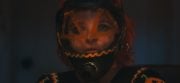
The eye gouge in the finale came together nicely. Did you talk to the VFX artists about how it would actually happen, with the eye popping out and the head collapsing?
Brad Caleb Kane: Yeah, absolutely. I wanted the head to collapse. I wanted the patricide to be as brutal as humanly possible. Dave Presto, all of our special effects makeup people, they really paid close attention to detail and the physics of every kill to make sure that it felt authentic, to make sure that it would be exactly the way it would happen. They were very detail-oriented. So yeah, that's where the eye gouge came from.
From the beginning of writing the show, did you always know that was the ending you were building toward? What did you want the finale to achieve?
Brad Caleb Kane: Well, I definitely wanted it to be an emotional catharsis. At the end of the day, you want it to be satisfying. You know what Elias has done to his wife, you know what he's done to his son, you know that success and money meant more to him than the people he's ostensibly supposed to be caring for and loving.
At the end of the day, once you have that reunion, I mean, it's not a Friday the 13th movie unless Jason is killing people. Who better for him to kill than the father who turned him into this unstoppable monster? And defending his mother in the process and making sure the two of them don't continue into an experimental hell.
I just wanted it to be satisfying. It was very satisfying to see how Hamish played that. Hamish Linklater, who plays Jason's dad, wanted it to be as brutal as possible and as emotional as possible. And when you get actors like Hamish playing Jason Voorhees' dad, you want to take it to the farthest emotional extreme.
Linda Cardellini has this facial twitch alone that reaches an emotional extreme. She always plays an unwavering love for Jason. How important was that to the both of you in regard to her actions through the show?
Brad Caleb Kane: We discussed it a lot. For Linda, when she talks about playing all of these very emotional scenes, she says it all goes back to Jason, her love for Jason, and her dedication to Jason. Also, her regret and her shame at telling him, "I'll never let anything happen to you again," and then letting him drown in the lake, her sense of responsibility for that. Then her absolute relief and desperation to find him when she realizes he might still be alive and I was not responsible for his death.
And then her realization that, oh, maybe my son is not exactly the same boy who went into that lake because of everything that happened. She's playing all of those feelings, but it all comes down to her love and her dedication to this boy.
So yeah, we talked about it a lot, that every emotion she's going to play and every turn in her character arc comes down to how she's feeling about Jason in the moment.
A good example is when she's killing the hippies, just mowing right through them. Delightful.
Brad Caleb Kane: [Laughs] When she's mowing down the hippies, that's really the moment where she finds true catharsis and delight and leans into, without... This is a way that it's put earlier, but finally taking off all of the masks that she's put on to fit into polite society and allowing herself to go full Friday the 13th and be the person that she is inside. Really, she’s letting herself enjoy murdering these people who could ostensibly corrupt or hurt her Jason surrogate, which is Grace. She's again going into protective mama bear mode, and she takes absolute delight in it.
Character-driven carnage.
Brad Caleb Kane: Always. It's got to be.
Your VFX department did such a great job, and it feels old-school but also modern at the same time. What was the look and feel that you and the team wanted to strike with the blood and gore?
Brad Caleb Kane: We wanted it to be gory as hell, absolutely, because you want to pay homage to the movies. We also wanted the look to harken back to those great '70s paranoid thrillers, to have a sun-dappled, almost washed-out feel. It's really a nostalgic feel because the way we feel about these movies is we have a feeling of pleasure and nostalgia.
Most of us saw these movies when we were way too young. And when we watch them again now, qualitatively, they're sort of all over the place. But no matter which one we watch, it sucks us right back to that feeling of being kids and the sense of watching something forbidden and shocking and being somewhere we shouldn't be. And that's what's so great about those movies.
We wanted to evoke that same quality in their tone and in their look, and we went back to all those movies of the mid- and late '70s to really get that tone. We had a lot of conversations with the directors, with our DP, with our costume designer, with my composer, Giosuè Greco, just so that it would all collectively form this piece that feels like it's from this lost time.
I'm a Jason Lives guy. That's my favorite of the franchise.
Brad Caleb Kane: It's great. Oh, Part Six, the best. That's the best one.
There’s such a wide range of opinions among Friday the 13th fans. In the writing room or on the crew, did you want an eclectic set of Friday fans?
Brad Caleb Kane: I just hired the best people who understand how to get the effect that I wanted to put over. I mean, I am, to some degree. I don't know if I'm the most diverse fan base because I like all the movies for different reasons. You know what I mean? I'm even a Part Five apologist.
The only one that I don't love, even though the opening is a banger, is Jason Goes to Hell. I think we all feel sort of weird about that. It's interesting and it's entertaining in its own way, but tonally, it's so different than all the other movies.
I like all of them for different reasons. I really just wanted to not necessarily imitate any of them, but have an integrity of tone that felt like this is its own thing, this is its own story. It evokes the time period. It gives context for certain things that we know in those first couple of movies, but it's not necessarily trying to be those movies. It's trying to be its own thing.
When you're adapting or dealing with IP, like Crystal Lake and Welcome to Derry, what is sacred to you as a storyteller, and where is there room for invention?
Brad Caleb Kane: There's only one sacred thing for me, especially when it comes to these kinds of things, whether it's It or whether it's Friday the 13th, and that's to make sure that certain aspects of whether it's the book or the movies or whatever still come through in the television show.
That doesn't mean they have to take over the show. I wasn't trying to do an imitation of a Friday the 13th movie, but what was sacred to me is that a certain segment of the fans feel like I was doing a loving homage to the movies, especially when I recreate scenes shot for shot.
I just recontextualize those things so it fits into the context of the story that we're telling in the series, but it still hearkens back to those movies. You can look at those and go, oh, the person who's doing this show, he's a real fan of the movies because he's trying to give us a certain amount of candy. He's trying to create a certain dopamine hit from seeing these things, reminding us of those movies that we love.
Besides that, to me, nothing is sacred because you have to create something new and something fresh. A project needs to justify itself. Otherwise, you can just go back and watch the movies that exist, and there's a lot of them.
But if you're just going to do another one that's just like those and just have Jason fight some other specific enemy, some gimmicky enemy, you have to do something truly new and fresh, especially when you get an actor of the caliber of Linda Cardellini.
It needs to be character-rich, it needs to be emotionally resonant, and it needs to comment somehow on the time that these movies were made in or the decade that these movies came out of. But then at the same time, at a certain point, you gotta go full Friday the 13th, and I feel like we did that at a certain point in the show.
My favorite episode is the penultimate episode, the backstory, which I'm looking forward to talking about with Friday the 13th fans.
Brad Caleb Kane: I know it's going to be very controversial, and people are going to be talking.
That's interesting, though.
Brad Caleb Kane: Good, I'll take it.
How’d that backstory originate?
Brad Caleb Kane: I saw all of these movies in theaters starting at number three. I've never sat in one of them where somebody didn't jump up at the end of the movie, or multiple people yelling, "That's bullshit. That sucked. That was terrible, man. Bullshit. I want my money back."
So, people have big opinions in this fandom, but now in retrospect, all of the movies are sacrosanct and all of them are canon and blah, blah, blah. You need to take big swings and big risks, and I think the franchise can withstand it.
It’s just a good hour of television, though. How did you and the writing team land on this backstory for Jason?
Brad Caleb Kane: The important thing to me was, obviously, a lot of people have their different theories and pieces of lore that they like from the different Friday the 13th things that they consider to be canon, whether it's the Necronomicon or whether it's that the lake was cursed and he came out of that.
I wanted, for a TV show, for this to be rooted in real-world things, to be rooted in reality. So I had to go back to the time period in which Jason was conceived and what he came out of. A very relatable thing is trying to get pregnant, wanting a child and having trouble conceiving. A lot of people have been through it. I've certainly been through it.
When you do finally conceive and there's a threat to the fetus and you could potentially miscarry and someone's telling you, we have a way to make sure that you bring that baby to term safely, especially in the '60s, the late '50s, early '60s, you're going to trust your doctor, you're going to trust your husband.
That was America. The woman puts her trust in the patriarchal reasoning, and it felt like that was ripe for the start of a Jason origin.
They were doing this kind of stuff at that time. The government was doing it, corporations were doing it. There's a very famous study in the '40s where women, pregnant women, were given supplements that they were told were to fortify their fetuses. But at the end of the day, those supplements were actually high doses of radioactive isotopes because the doctors wanted to see whether or not a fetus could withstand that stuff.
I really pulled this right out of reality. None of this stuff is science fiction anymore. The Terminator isn't science fiction anymore. We're heading towards these places, and I wanted to root it in reality, and I wanted to do an episode that felt like, because we're going back in time, a Douglas Sirk meets David Cronenberg episode, this old '50s, '60s melodrama with body horror, scientific body horror.
[Laughs] So All That Heaven Allows with the Voorhees family.
Brad Caleb Kane: [Laughs] All That Heaven Allows and The Brood, man.
It's a good combo. So you looked back to American history for Jason’s backstory. How’d today’s horrors, what’s happening now, influence Crystal Lake?
Brad Caleb Kane: This is a story about mistrust of institutions, and very much the time that this is set in, the early '70s, we were coming out of... We started off in the '50s and '60s trusting our government, trusting our institutions, believing in marriage, believing in the idea of the American dream.
Then the civil rights movement started, then Vietnam happened, then Nixon lied to us about everything. As a country, we went through a real identity crisis. Who are we? Who are we going to be on the flip side of all of these betrayals?
We're in that identity crisis right now. I wanted the identity crisis of the country in the time that this show is set to mirror the identity crisis and the journey that Pam takes from, if I'm not a protective mother anymore because my son is gone, who am I going to become? Who am I now that I don't have this unique boy to protect? She goes on that journey to figure that out, and ultimately on the other side of that, she realizes that I'm a psychotic killer, and that's who she becomes.
We are not the same country we were in the '90s or even the early 2000s. We are deeply divided and we're trying to figure out who we're going to be collectively as a nation going forward. Just in that, the show and the time period in which it's set has relevance.
I think you can feel that even in the structure of the show. Again, it goes back to King, so many things like when innocence is destroyed or those turning points. It almost always seems to happen at this age that you focus on.
Who are you going to become once all of your old constructs fall away and you can't rely on them anymore? That confusion and that sort of unlimited choice is dizzying, and that's what Pam goes through, and that's what the country was going through at the time in the '70s, and we're going through it right now. I think it has extreme relevance.
---
A film journalist with over a decade of experience writing for Slash Film, The Credits, and High Times Magazine.
A film journalist with over a decade of experience writing for Slash Film, The Credits, and High Times Magazine.