



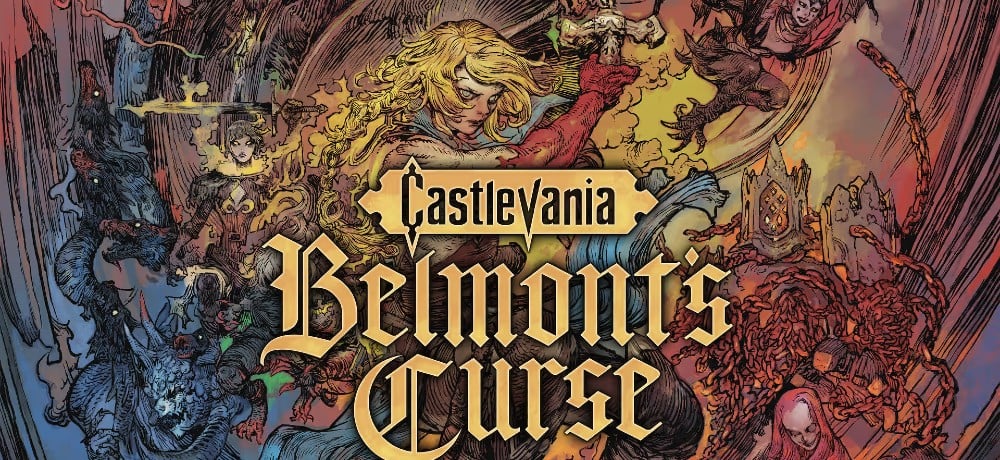
As the boat drifts toward a Paris harbor, carrying the legendary Trevor Belmont and his daughter, Rose, the colossal Notre Dame Cathedral rises in the distance. Set in 1499, the game has you playing as Rose as she fights her way through the city streets, plowing through ghouls and vampires. What begins as a simple scouting mission while she waits for her father quickly turns into a grand hero’s journey full of painful yet addictive trial and error gameplay, beautiful art direction, and truly ingenious level design.
Rose begins the game with a curse that spreads across her arm, similar to the one in Hellblade (2017). As you progress, you feel the threat that the curse could win out at some point. But the curse is also your greatest weapon, and that is where the bosses come in.
There’s a bevy of bosses in this game, some familiar names and some new ones, and the curse gives you one extremely useful perk: the ability to consume a boss’s abilities after you defeat it. It is worth noting that you can only equip one boss ability at a time. Once you consume a boss’s soul, that boss becomes a part of you and guides you along the rest of your journey. Whether you follow their advice is one of the game’s most distinctive and charming qualities. This Metroidvania gives you a choice.
Each boss begins as a black tarot card in your menu, and as you uncover clues around Paris, the card starts to form a face, giving you insight into who the boss is and where you’ll find them. You will want to scour the map for as many of those clues as you can find, because they unlock some powerful weapons that can help you in the fights ahead. The game has a good share of optional bosses, but it is imperative that you take the time to explore and fight most of them. They are worth the time and the challenge, since they help you with story progression as well as combat.
Of course, it would not be a video game worth playing if the gameplay were not enjoyable, and I can assure you that Castlevania: Belmont’s Curse has snappy, punchy, and explosive combat. You can feel yourself getting stronger the more levels you climb and the more boss abilities you collect. The game is very challenging, like any other Castlevania. You will die a lot. I died over and over in lots of platforming sections. This Castlevania grants you the ability to hook onto things with your whip, a fitting evolution of the iconic whip from the original games. And man, do I love a good grappling hook. It comes with its own grievances, though. It takes time to get used to, and there were numerous occasions where the hook did not latch when I felt it should have. But when you master it, you will fly through areas feeling superhero-esque.
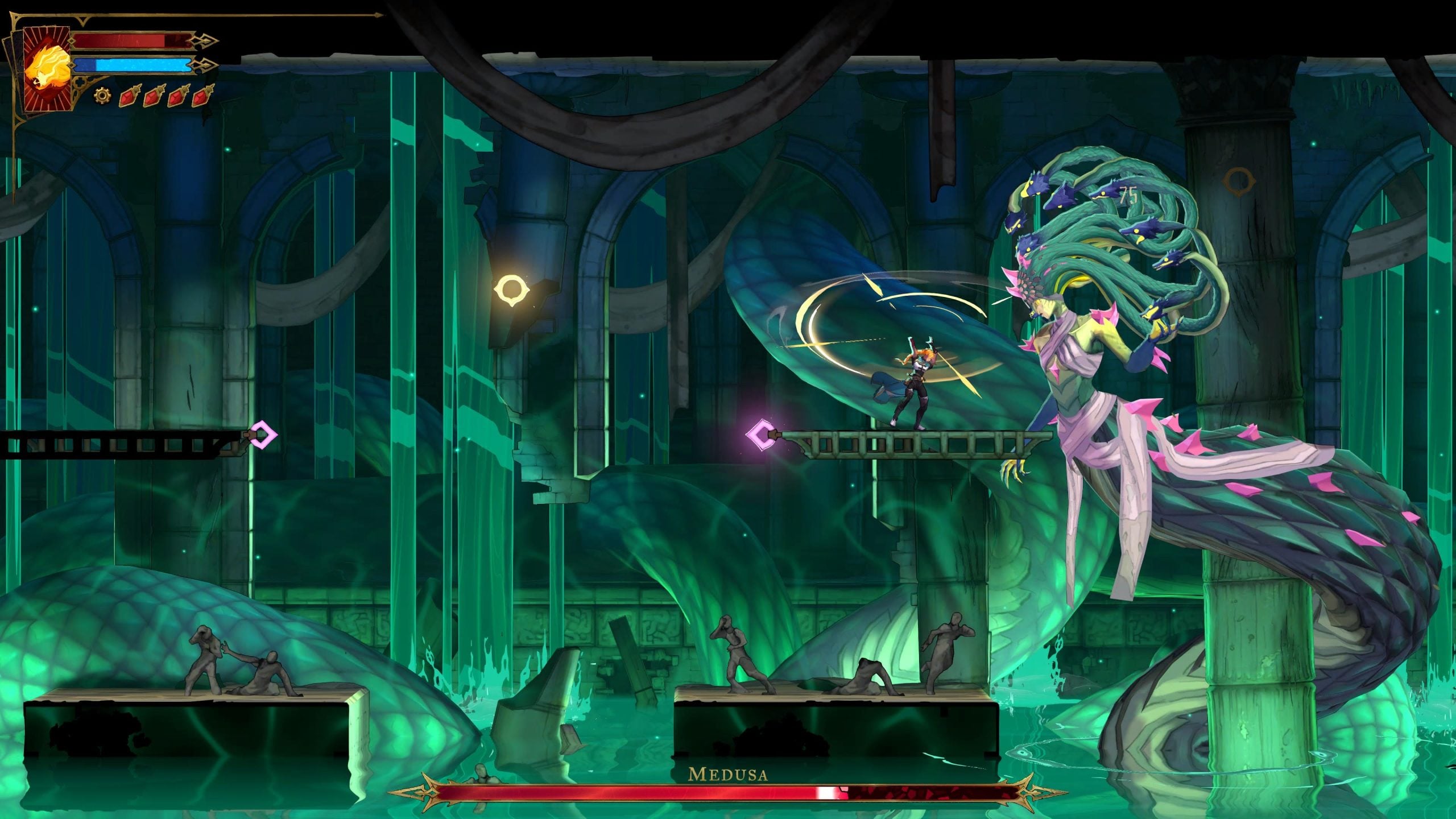
You can’t kill demons, let alone bosses, without a solid weapon. Weapons are divided into categories including whips, heavy swords, twin blades, and even fisticuffs, because sometimes a vampire hunter just wants to throw hands. Each type comes in four tiers that deal 25, 50, 75, and 100 damage, which adds up to 28 unique weapons and a constant drive to track down the strongest version of each. I typically gravitate toward heavy weapons, but with how fast Rose swings and dashes, I discovered a new love for twin blades. You can unlock some weapons by beating bosses, but the real gems are in the gold chests hidden all over the map. Picking up and testing a new weapon kept the game feeling fresh from start to finish.
For anyone who doesn’t want to bang their head against a wall or buy a new controller, there’s a robust settings menu reminiscent of something like NBA 2K’s MyPlayer, where you can turn your damage slider up and the enemy slider down. You can even prevent death altogether. I feel that may be a little cheap, but I do think it is a great option. It’s not mandatory, yet it’s something even my mom and dad, who know nothing about gaming, could find some enjoyment in. With this being the first Castlevania in 12 years, I think the difficulty sliders are necessary to bring the franchise to a new generation.
The world is stunning and colorful while still managing to give off the eerie tone of the originals. Some purists may take issue with the vibrant art style, and I did too. I find I gravitate toward darker games, which hints at why I review games for a site called Daily Dead, but a few minutes into playing, I was impressed. Each zone, whether it’s the Paris Streets, the Catacombs, or even Dracula’s Castle, has its own hue of genius, with a “step-out moment” that makes you take your thumbs off the sticks to admire its beauty every time. This is truly top-tier 2D art. The game also captures some of the mood of Bloodborne (2015), where everything seems dead and the world feels lost, but with Rose and Trevor decimating demon after demon, there may be hope of resurrecting this dying yet lush world.
Altogether, this mix of color and horror adds some flavor and bravado to the game. It is certainly more common in film these days to see bright and lively settings mixed with dread and death, like Joe Begos’ vampire flick, Bliss, but it’s a nice change to see a game get so creepy without relying on the dark and the grotesque.
Exploration is required in any Metroidvania, but this game makes it so rewarding. The hidden doors are clever, the platforming is brutal but fun. This is one of the biggest Metroidvanias I have played, with four main areas that just keep digging deeper and deeper. I kept checking the map, which I would consider fairly detailed, and wondering how I still hadn’t explored all of it. Dracula’s Castle alone is big enough to be an entire game map, yet Evil Empire gives you three other sizable areas to explore before you even reach it. With a world this big, getting around could have been a chore, so I was glad to see the Ferryman return in this latest entry as a fast travel system between the four primary sections. Like most things in this game, he isn’t always in an obvious spot, so good luck finding him, but once you do, his boat shortens travel time dramatically.
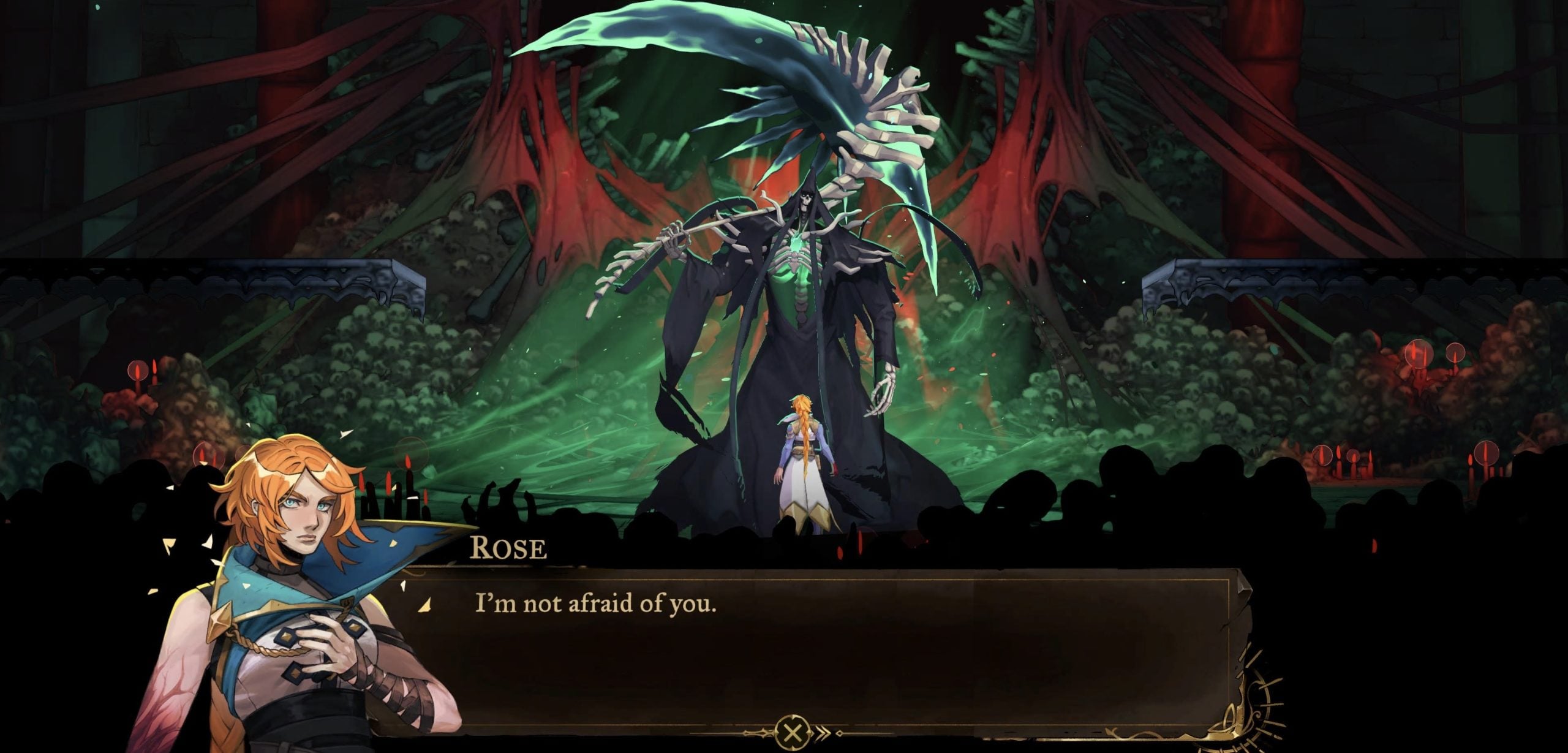
It is clear very early on that Rose wants to prove herself worthy of the Belmont name. She pushes on and faces foes well beyond her level, much to the dismay of a couple of bosses who double as guides and try to talk some sense into her. Yet none of this feels forced or unbelievable. It feels right, because she is clearly strong but still young, and she hasn’t slain nearly as many demons as her father has. It is up to you, the player, to grind levels, explore everything, and fight as many bosses as you can discover so that Rose is ready for the darkest foe of them all.
I say this because once you reach a certain part of the game, you are given three options to “beat the game.” My first ending felt abrupt, like I had messed up, and that’s because the game will punish you for rushing progression and skipping parts of the map. Thankfully, you can jump back in after the credits roll. This game is all about the hero’s journey: building your strength and heeding the good advice you receive along the way. If grinding and exploring aren’t your thing, this game might not be for you.
For me, Castlevania: Belmont’s Curse is the game I didn’t know I wanted, but I am so glad I played it. I adored every minute. It played smoothly and kept me wanting to explore and grow stronger long after that abrupt first ending. This is undoubtedly one of the best games I have played this year, and I highly recommend it. Sure, neon colors and lo-fi beats are not the norm for the series, but the creativity, the unmatched level design, and the addictive vampire slaying all remain. Developer Evil Empire nailed this attempt at a Castlevania game, and after the long 12-year wait, fans should be thrilled to jump back into this iconic series for a new ride.
Game Score: 5/5

Garrett is a writer and video game enthusiast from Louisville, Kentucky. Since his first playthrough of Shadow of the Colossus, he has been hooked on the beautiful mix of art and storytelling that is within the vast library of gaming. Pair that with his fascination of films such as Child’s Play and Scream at a very young age, and you have an ultimate fanatic of all things horror video games.
Garrett is a writer and video game enthusiast from Louisville, Kentucky. Since his first playthrough of Shadow of the Colossus, he has been hooked on the beautiful mix of art and storytelling that is within the vast library of gaming. Pair that with his fascination of films such as Child’s Play and Scream at a very young age, and you have an ultimate fanatic of all things horror video games.











![[Guest Article] Maggots On Your Body Of Work: Clay McLeod Chapman On Finding His Own Muses](https://dailydead.com/wp-content/uploads/2026/03/Bodies-of-work-1000-180x83.jpg)

![[Editorial] AI of the Living Dead: Why Have So Many Already Accepted the Simulation?](https://dailydead.com/wp-content/uploads/2025/09/M3GAN-180x83.jpg)