




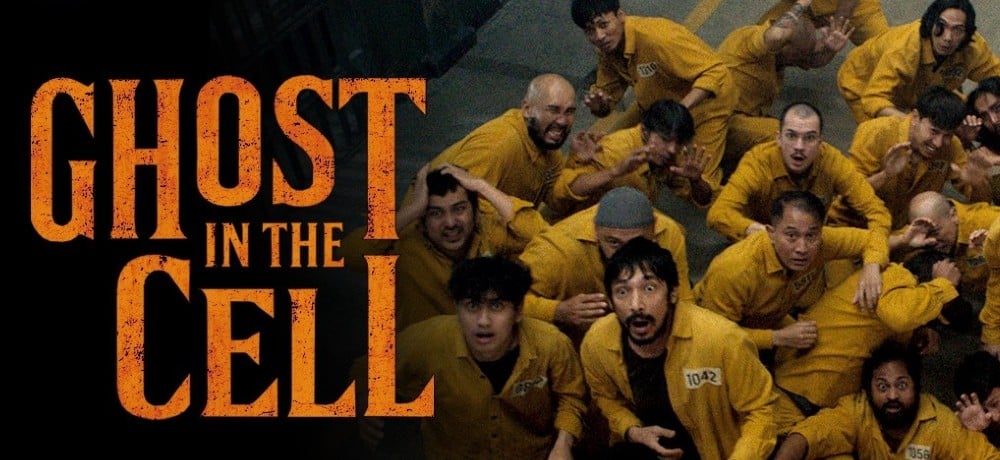
I walked out of Joko Anwar’s Ghost in the Cell at 2 AM charged with enough energy to wrestle King Kong off the Empire State Building. Anwar’s scared us senseless with Indonesian imports like Santa’s Slaves, Impetigore, and Grave Torture, but Ghost in the Cell reveals another weapon in the filmmaker’s arsenal: laugh-out-loud comedy. Not sure which happens more: viewers busting a gut at genuinely hilarious bloody-buddy antics, or Anwar busting the guts of inmates stalked by a sadistic demon, turning them into grotesque art pieces.
The plot revolves around Dimas (Endy Arfian), a journalist framed for mutilating his boss and fixing his corpse to his office’s overhead fan. In Jakartan jail, the wimpy writer is pitied by Anggoro (Abimana Aryasatya), who steps in as his bodyguard. Little does Anggoro know, Dimas isn’t alone—he’s tethered to a malevolent entity who feeds off red auras (anger and frustration). When prison inmates and guards start dying, turned into graphic museum exhibits of the damned, Block C enters lockdown. Until Anggoro and his crew determine who or what Dimas’ tethered is seeking, they must abstain from emanating even the slightest red aura—if only others would listen.
Anwar establishes a pitch-perfect concept: hardened criminals must refrain from bad attitudes—by dancing, praying, or making art—lest they be disemboweled and fashioned into Clive Barker-y flesh statues. The silliness of Anggoro pausing mid-fight to whip out dance moves, or the panning shot of inmates practicing all kinds of “soft” behavior in their locked cells, is a personality-flipped riot. But what makes the lighthearted gags hit even harder is how viciously Anwar treats violence, from a ghost that will ruin the nights of trypophobiacs. For every uproarious bit, the ghost counters by (nearly) mimicking its victim and becoming the Michelangelo of Massacres, rearranging human parts into a morbid anatomy statue.
Filmmakers often fail to balance humor and horror, yet Anwar is a natural. Ghost in the Cell is exquisitely entertaining from start to finish, as the bleakness of inescapable evil draws a community of thugs and gangsters together; alpha wolf lunatics must learn to cooperate with a smile. Performances are exaggerated to emphasize outlandish reactions to gory, staged abominations ready for The New Yorker’s critique, or to sell the absurdity of out-of-character actions. But best of all, you can tell Anwar is having an absolute blast behind the camera. An out-of-pocket shower scene where the camera ogles soapy beefcake cheeks, scored by cheesy faux-porn music; a thumbs-up to the audience when fighters fall flat on their face; other wink-and-giggle examples. Anwar relishes the opportunity to craft something expressively crowd-pleasing, and doesn’t stop himself from getting in on the fun.
Yet all this talk about comedy and buffoonery shouldn’t distract from the fact that Ghost in the Cell is a murderous masterpiece of shock-and-awe goregasms. Anwar stays practical as much as possible; Magistus Miftah’s Stiletto-wearing dance instructor is the only one to fall prey to a digital death sequence, given the effects required to tear him apart during a fully choreographed tango. It’s reminiscent of Random Acts of Violence or House of 1000 Corpses, where bodies are rearranged and sculpted into revolting poses like Lady Justice or the Crucifixion, or built into / around faucets and kitchen burners. Anwar holds nothing back as his villain tears a particularly nasty prisoner crotch-down Terrifier-style, or removes multiple organs from a wailing individual; Ical Tanjung’s cinematography never blurs nor looks away. Tanjung’s shots are confident because they can be; Anwar’s ghost story features more spectacular slaughters than even the most vile slashers.
Through it all, Ghost in the Cell sneaks in commentary about Indonesia’s systemic corruption while making peace across religions. Anggoro’s virtuous deeds and generous protections lend to a larger discussion about good men sentenced for fighting back against governing bodies. On “Judgment Field,” the prison’s yard, you meet the small-timers and push-backers locked up for opposing crooked rules. It’s why Dimas is there—he broke a story about a forest-killing nickel mine in Borneo where wrongful deaths are piling up. Anwar roasts the seedy politicians and business folk who, at worst, watch television in their luxury white-collar cells, protected by inmates who want to make a dime. Themes of classism and widespread malfeasance bring Anggoro’s struggling class together not only against a shapeshifting companion, but also against Indonesian bureaucracy at large.
Ghost in the Cell is a genre feast fit for a king that’ll leave you stuffed and still craving more. Anwar’s rollercoaster from hell never hits a lull; a tonal anomaly firing on all cylinders. It’s a near-perfect horror comedy that should be studied for its ability to elicit screams of terror and fits of laughter with equal proficiency. Chemistry between castmates is flawless, displays of supernatural brutality belong in the underworld’s equivalent of the Louvre, and the slapstick, goofball nature of pure comedic energy never feels out of place. Anwar hits every nail on the head and keeps banging on; Ghost in the Cell is the horror-comedy other horror-comedies dream about becoming.
Movie Score: 4.5/5

Matt Donato is a Los Angeles-based film critic currently published on SlashFilm, Fangoria, Bloody Disgusting, and anywhere else he’s allowed to spread the gospel of Demon Wind. He is also a member of the Critics Choice Association. Definitely don’t feed him after midnight.
Matt Donato is a Los Angeles-based film critic currently published on SlashFilm, Fangoria, Bloody Disgusting, and anywhere else he’s allowed to spread the gospel of Demon Wind. He is also a member of the Critics Choice Association. Definitely don’t feed him after midnight.














![[Guest Article] Maggots On Your Body Of Work: Clay McLeod Chapman On Finding His Own Muses](https://dailydead.com/wp-content/uploads/2026/03/Bodies-of-work-1000-180x83.jpg)

![[Editorial] AI of the Living Dead: Why Have So Many Already Accepted the Simulation?](https://dailydead.com/wp-content/uploads/2025/09/M3GAN-180x83.jpg)