



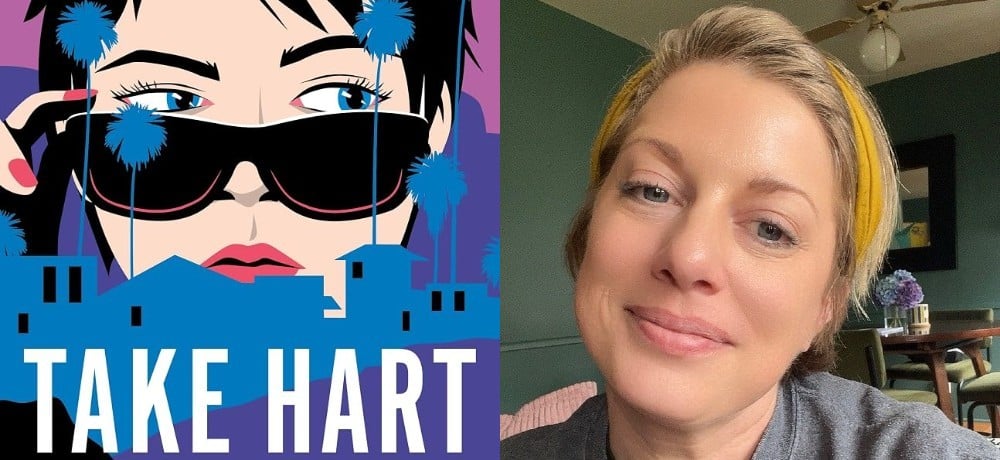
[Editor's Note: We're excited to have Jaime Parker Stickle as our special guest author for an essay discussing the intersections and distinctions of horror and the mystery-thriller.]
The Kids Love Horror but Live for the Thrill
I had the privilege of sending my kid to a week of sketch writing camp that culminated in a live show that the students had written on their own. His age group is 10 to 13-year-olds and to be honest I know my kid can have a dark sense of humor, but part of me believed that was unique to him. Boy, was I wrong. The show was twenty-six minutes of horror and mystery-thriller titled, “Oooh, That’s a Lot of Missing Kids.” It culminated in a Scooby Doo reveal (the original thriller/mystery/horror combo for kids) with a surprise “Serial Unalive-r” revealing herself as the true villain (not the talking bunny who planned the kidnappings or the warlock that would have eaten the teens had the Sherlock Holmes-esque detective not found them first.)
The audience, an auditorium filled with parents behind their cellphones recording for posterity, and younger siblings laughing at the dark jokes. They howled gleefully at the sixth grade girl when she announced that she was the true Serial Unalive-r and wanted to “unalive” her classmates for being…boring. The show featured a parade of character impersonations from Wednesday Addams to Regina George and an AI robot modeled after the Terminator, and it made me realize that we have really blurred the line between today’s mystery-thriller and horror genres. They’ve always shared a salt and pepper shaker, as a friend once said, but I think they also share the same table. Some would argue that the two genres have merged, but I posit that horror and mystery-thriller are telling the same story, but are doing so with different rules.
I wondered if any of the other parents noticed the clearly mature and occasionally macabre themes our kids were broaching, if not reckoning with on the stage. The ideas of murderers and missing children capture attention so easily, it almost feels like a cheat, one that so many have discovered and exploited before the Dramamaniacs summer camp show. And while I’m certain these pre-teens haven’t all read Stephen King or Gillian Flynn, it sure feels like they’ve been well versed in the zeitgeist those creators have contributed to.
The mystery-thriller bears the threat of horror looming over it, and horror starts with a thrilling mystery. Fear rules both genres. What is it about these threatening characters that draw us in? What if, in horror, we create these fictional boogeymen in order to explore the fear experienced by victims of true crime? Or in mystery-thriller, to therapize ourselves out of the fear of these things happening to us? I could argue that thrillers create the same fear using human monsters, or interior psychological monsters, which in many instances are scarier than Pennywise, Freddy Krueger, or the Demogorgon. As Stephen King said in Danse Macabre, “What’s behind the door or lurking at the top of the stairs is never as frightening as the door or the staircase itself.” Isn’t that true for both thriller and horror? Whether the unknown boogeyman turns out to be a human monster, or an interior monster of the mind, or a giant spider, once it is identified it ceases to terrify without limit. It becomes a challenge that can be faced and conquered by a Final Girl; by a detective; by a survivor.
Both genres feature a version of The Final Girl – she’s often the victim and star of both. In horror, we know her as the girl who gets away, as all of her compatriots fall around her. She remains alive to tell the story… Think about it, in a mystery-thriller, she’s the star witness, the one that got away, the one testifying to the monster’s atrocities. We don’t generally think of the Final Girl in mystery-thrillers, even though the trope is frequently leaned upon. She is actively seeking vengeance on her tormentor and justice for their victims. In horror, once the monster attacks, the Final Girl is revealed to be not so different from a protagonist detective. They observe the threat, learn about it, and ultimately defeat it. The key similarity is they both face down the monster, and they are the only ones who can do it successfully.
While we have seen the two genres merge and overlap in this way, there is still room for distinction between the two. Maybe the difference between the mystery-thriller and horror isn’t the monster, but the promise the author makes to the reader (or viewer). In a mystery-thriller the promise is that you’ll solve it. And for the mystery-thriller audience, each step towards the solution is so deeply satisfying, like pieces of a puzzle lining up, an image coming into focus. The mystery-thriller writer is on the hook to provide that satisfaction: there will be an answer…the hero will just have to go through hell to find it before time runs out for the victim/s, the missing, or the detective that is always racing against a clock…(go through hell? That sounds an awful lot like horror.)
In horror, a different promise is made. There may be no answer at all, but our protagonist will survive at all costs, and those costs are definitely high. Because the horror audience comes to the table seeking a different cathartic experience. This audience opens the book or comes to the theater seeking the visceral experience of fear; the thrill of being chased; and the ultimate catharsis of escape. Both genres are page turning, don’t-stop-until-it’s-done rushes for readers and viewers. In each, the emotional experience is fueled by adrenaline, excitement, and anxiety but achieves relief by only slightly different means: discovery of the monster, or defeating it.
I write mystery, but horror still looms large for my protagonist Corey Tracey-Lieberman. There are the practical horrors of the crimes she investigates…murders, arson, disappearances. But for Corey the greater horror comes from within. The true terror she experiences is in the form of her post-partum panic disorder, which keeps her in a perpetual state of fight or flight, fearing disaster at every turn, and with the life of her baby son in her trembling hands. For Corey an ordinary instance of spotting a plastic bag left on the floor, or a sharp knife existing anywhere in her home, opens the mental floodgate to a world of terrifying outcomes that leave her gasping for breath or even unconscious at the wheel of her car. Sometimes the monster we fear the most is the one that lives inside us, and when it is unmasked (whether by a benevolent psychologist, or a bunch of meddling kids,) it can be faced and conquered.
---
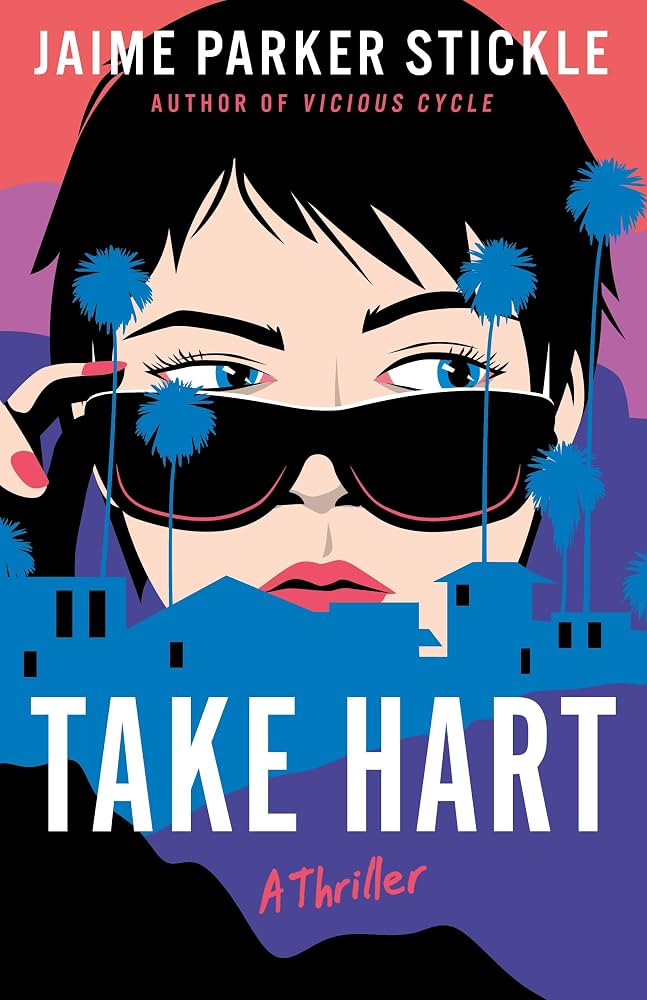
About Jaime Parker Stickle and Take Hart: "Acclaimed novelist, actor, professor, and popular podcast host Jaime Parker Stickle is a natural storyteller. Her series of timely, relevant, and relatable "Corey in Los Angeles" crime novels is putting LA’s trendy Highland Park neighborhood on the map of iconic crime neighborhoods in fiction. And now her latest novel, Take Hart, is primed to introduce even more readers to their new favorite private investigator. Corey Tracey-Lieberman is a former television journalist who’s determined to bring justice to her corner of Los Angeles, while balancing an increasingly challenging modem day-to-day reality: consulting for the LAPD; coping with the anxiety of parenthood; filing stories for an indie news blog; processing the failures of her marriage; meeting with her therapist; and navigating the romantic feelings for her crime-fighting partner, all while solving the mystery of yet another missing woman in the city of angels. Reader, it’s a lot.
Corey Tracey-Lieberman is barely keeping it together. And then a mother named Sonja Hart vanishes in her neighborhood, and the case is all but ignored. Sparked by maternal fury, Corey’s investigative instincts come roaring back to life in the second "Corey in Los Angeles" series, following the release of the series debut, Vicious Cycle.
In order to see the truth clearly, Corey must stop taking the meds that keep her anxiety at bay. Strapping her fourteen-month-old son Jacob to her chest, she follows a trail that leads from a suspicious house fire to the furtive activities of new neighbors. The more Corey digs, the more she uncovers about the secret toll of gentrification—and the closer she comes to the verge of a breakdown. And the horror dawns that the killer she’s been chasing has been watching her all along . . .
Jaime Parker Stickle’s prose packs a punch and her insights about motherhood and marriage come from her own lived experience, as a mother who was diagnosed with Postpartum Panic Disorder after the birth of her own son. In addition to writing novels and essays, teaching film and television at Montclair State University, and acting, Jaime Parker Stickle produces and hosts not one but two podcasts, including The Girl with the Same Name, a popular true-crime show that investigates the unsolved murder of a woman… named Jaime Stickle.
'I am often asked why I write in the crime genre and it throws me off, because I don't consider myself a genre writer,' said Jaime Parker Stickle. 'I write about the human experience. When a tragedy strikes, the victim and the community left behind so often have no voice to tell their story. That's what my books and the podcast are about - giving a voice to all humans involved.'
Sometimes comedic, sometimes satirical and always laser-focused on the inequities of life in urban America, Jaime Parker Stickle’s stories deftly balance truth with fiction. Like Aimee Molloy’s The Perfect Mother, Gillian Flynn’s Sharp Objects, and Maria Hummel’s Still Lives, Jaime Parker Stickle’s novels are compulsively readable, taut thrillers that linger in your mind long after you’ve finished the story."
Take Hart is now available via Thomas & Mercer, ahead of the new season of The Girl with the Same Name debuting later this year. For more information, follow Jaime Parker Stickle on Instagram and TikTok.





![[Guest Article] Maggots On Your Body Of Work: Clay McLeod Chapman On Finding His Own Muses](https://dailydead.com/wp-content/uploads/2026/03/Bodies-of-work-1000-180x83.jpg)
![[Editorial] AI of the Living Dead: Why Have So Many Already Accepted the Simulation?](https://dailydead.com/wp-content/uploads/2025/09/M3GAN-180x83.jpg)