




If you’ve read Surely You Can’t Be Serious: The True Story of Airplane! By David Zucker, Jim Abrahams, and Jerry Zucker, you may recall there is a fascinating story within about the sequel to that seminal comedy that ultimately never got made.
After the enormous success of the 1980 film, the ZAZ braintrust found themselves facing the problem that eventually confronts anyone who makes something unexpectedly successful: What do you do next? The obvious answer from the studio’s standpoint was Airplane II. The less obvious question was what Airplane II should actually be.
The ZAZ team had already mined the disaster movie for jokes. They had sent up Airport, Zero Hour!, and every other earnest, sweaty-palm aviation thriller they could find. As Abrahams later explained, they had essentially run out of good airplane jokes. So they came up with an idea that sounds ridiculous until you think about it for a minute.
They would make Airplane II: The Godfather. No, seriously.
The premise was that Ted and Elaine would get married, and he would travel to meet Elaine's family, who naturally would turn out to be a mafia family a la the Corleones. The characters from Airplane! would remain the characters we knew, but they would suddenly find themselves living inside a completely different movie.
The Zuckers and Abrahams were proposing something more interesting than a conventional sequel. They had no interest in making Airplane! again. They were trying to take the same characters, the same comedic sensibility, and the same relationship with the audience and drop them into an entirely different genre.
Quite unfortunately, it didn't happen. Francis Ford Coppola allegedly objected to the idea, and the eventual Airplane II: The Sequel went back to the airplane-disaster formula with diminishing results, creatively and financially speaking. But the rejected concept contains a surprisingly sophisticated idea about sequels.
A sequel doesn't necessarily have to repeat the original movie's concept. Sometimes it can take the characters somewhere else. William Peter Blatty, creator of The Exorcist, had essentially the same idea.
The Movies After The Exorcist
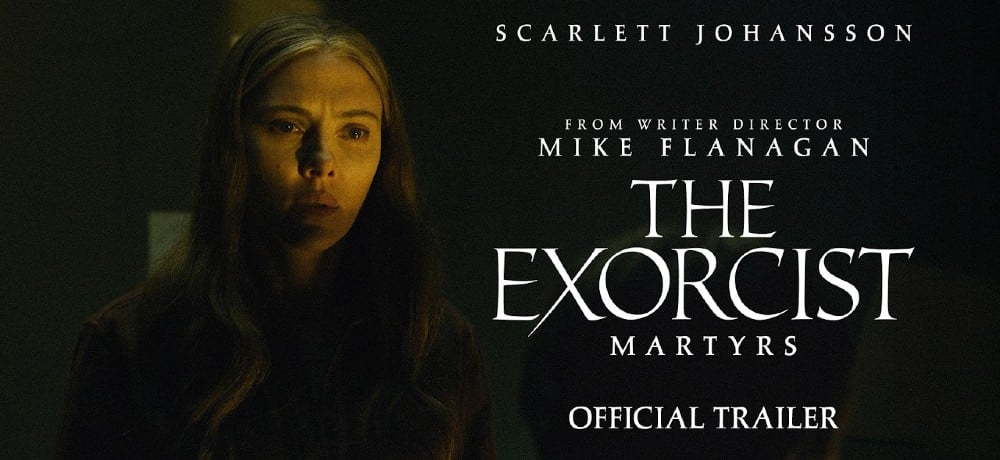
There was probably no more difficult movie in the history of horror to follow than The Exorcist. The original had become much more than a successful movie. It had become a cultural event and a shorthand for an entire category of fear. It introduced the tropes of a child possessed by a demon, a family confronted by something impossible, priests brought into the house, and Catholic rituals in the confrontation between faith and evil. The first sequel, 1977’s Blatty-free Exorcist II: The Heretic, notoriously flopped and angered its fanbase, so a third film had a lot to overcome.
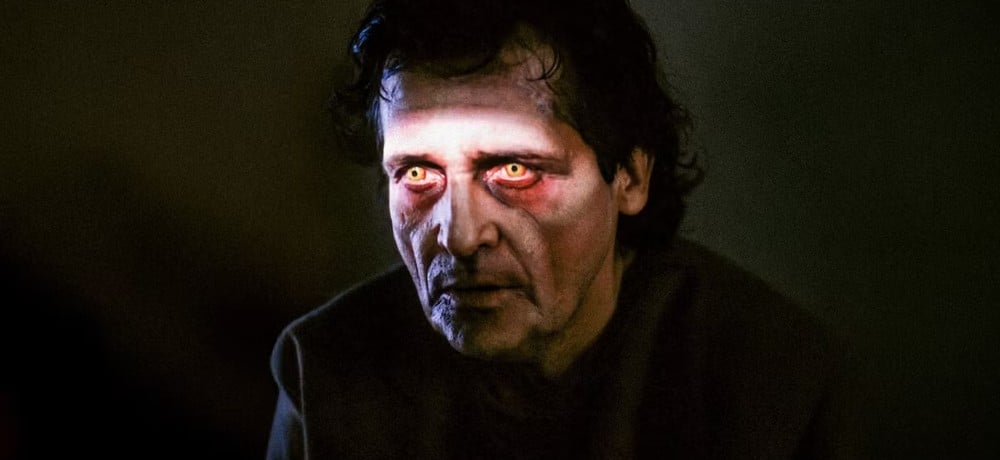
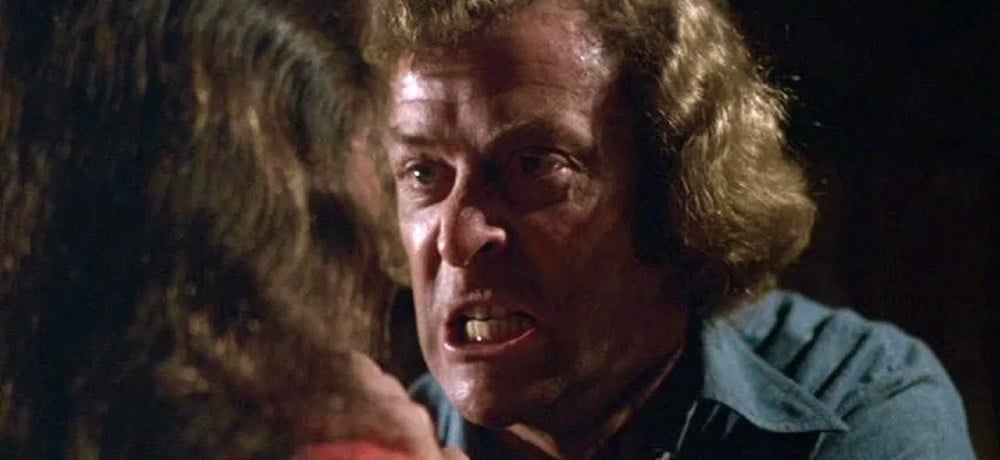
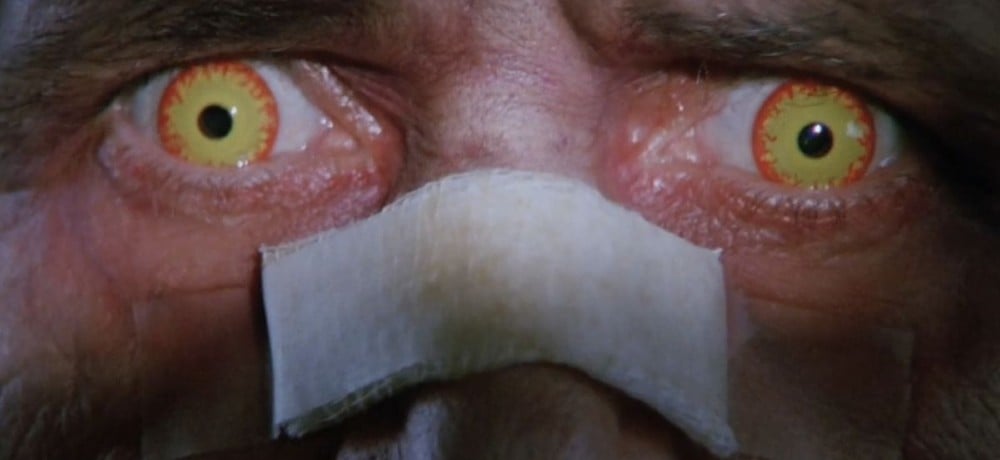
When William Peter Blatty wrote his follow-up novel called Legion, he bypassed this insurmountable challenge by not making another possession story. Instead, he took Lieutenant William Kinderman, the detective from The Exorcist, and made him the protagonist of a murder mystery. Suddenly, the story was about a series of brutal killings and an investigation that begins to point toward the Gemini Killer, a serial murderer who supposedly died years earlier. Kinderman starts following clues, interviewing suspects, and trying to understand a pattern that seems increasingly impossible. While The Exorcist is fundamentally a possession story, Legion is a police procedural wrapped around a supernatural mystery.
The question is no longer simply, How do we get the demon out?
It becomes, Who is doing this?
And perhaps more importantly, What exactly are we looking at?
That is a completely different kind of horror.
When Legion was published in 1983, it was by all measures a success. The novel's first printing of 75,000 copies was followed by another 25,000 within weeks, and by late August nearly 87,000 copies had been shipped to booksellers. It appeared on several bestseller lists, although its absence from The New York Times list sparked a controversy that eventually led Blatty to sue the newspaper before the novel finally appeared at number 15. Critical reaction, however, was far more divided. Some reviewers criticized the book for its philosophical digressions and for lacking the visceral horror of The Exorcist, while others praised its suspense, ambition and willingness to move beyond the conventions of its predecessor. In other words, Legion was successful enough commercially, but it wasn't universally embraced on its own terms, perhaps because those terms were so different from what readers had been taught to expect from Blatty's most famous work.*
The Same Evil, Seen Through a Different Lens
This is what makes Legion such an interesting sequel. Blatty didn't abandon the ideas that made The Exorcist compelling; he simply changed the way he approached them. The original novel was deeply concerned with the nature of evil, the existence of God, faith, suffering and the possibility that there are forces in the universe that exist beyond our understanding.
Those questions don't disappear in Legion - they simply move into a different genre. Instead of the audience watching someone confront a demonic force, we're watching someone try to determine whether there is a rational explanation for something that increasingly refuses to behave rationally. The result is almost like Columbo by way of The Exorcist.
The detective story gives the audience a framework. There are clues. There are suspects. There is a puzzle to solve. We instinctively believe that if we pay enough attention, we'll eventually understand what is happening. But Blatty uses that expectation against us. Because what if there isn't a rational answer? What if the mystery itself is the real horror?
This Is What the ZAZ Team Understood
This is where Airplane II: The Godfather becomes more than an amusing Hollywood anecdote. The ZAZ team understood that there was a danger in simply making another Airplane!. They knew the audience already understood the joke.
It was the earnestness of the source material and the rigid plot patterns to which most of these airline terror stories slavishly adhered. Once you've done that, doing it again risks becoming an imitation of yourself or an exercise in diminishing returns, not unlike the Airport movies they parodied.
Their proposed solution was almost elegantly simple: Keep the characters and change the genre. Ted and Elaine are the same characters, and the audience still understands and loves who these people are. But now they're surrounded by mobsters, and suddenly every familiar character trait becomes funny in a new context. The joke doesn't have to be repeated verbatim because the environment has changed.
And Blatty had done essentially the same thing. Kinderman is still Kinderman. Perhaps a bit crustier and more salty since the original story, but he still loves film matinees, hates the carp living in his bathtub, and makes time to see classics with Father Dyer, the character from the original story with whom he forged a genuine friendship. The world of The Exorcist is still the world of The Exorcist. The questions about faith and evil are still there, but the genre has shifted underneath them.
Then Hollywood Had to Sell It
Now things get complicated, because changing the genre is creatively exciting, but marketing it is much harder. If you make a sequel to The Exorcist and call it Legion, you have a problem. The audience doesn't immediately know what relationship this story has to the movie they remember.
If you call it The Exorcist III, you solve that problem instantly. Everyone knows what it is, or, at least, everyone thinks they know what it is. The title establishes continuity and an unholy level of expectation. The audience sees that title and already has a movie in its head. But Blatty's story was interested in something else.
When the Brand Becomes a Creative Constraint
It is tempting to tell the story as a simple battle between an artist who understood his material and a studio that didn't. The reality is likely more interesting.
The Exorcist was an enormous brand. If you were spending the money required to make an Exorcist movie, you had every reason to want audiences to feel that they were getting an Exorcist movie.
And Legion didn't necessarily give them that feeling. The film was a murder investigation. It was psychological, philosophical, and atmospheric. It was interested in evil as an idea as much as evil as a monster. Blatty himself complicated the oft-repeated story that the studio simply forced an exorcism into a script that had never contained one. In a 1989 interview with the Los Angeles Times, he said that he had included an exorcism in his screenplay, but that the important question was what significance the scene had within the story.
The Exorcism Has to Be Somewhere
The result was the movie we eventually got.
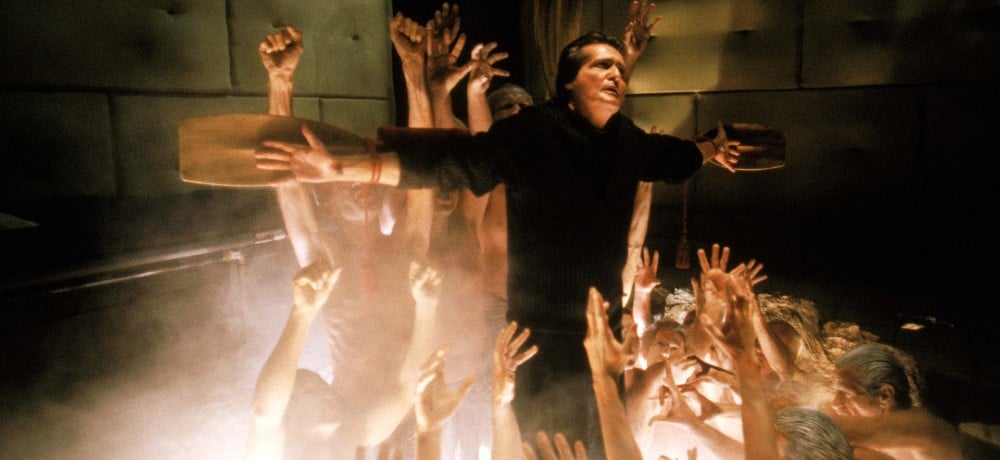
Legion became The Exorcist III, and the production underwent significant changes intended to make the film more explicitly connected to its predecessor. The ending became more overtly supernatural, and an exorcism involving Father Morning was incorporated into the final film. It is one of the great ironies of the movie that the sequence the audience might most expect from an Exorcist sequel is arguably the least interesting thing about The Exorcist III.
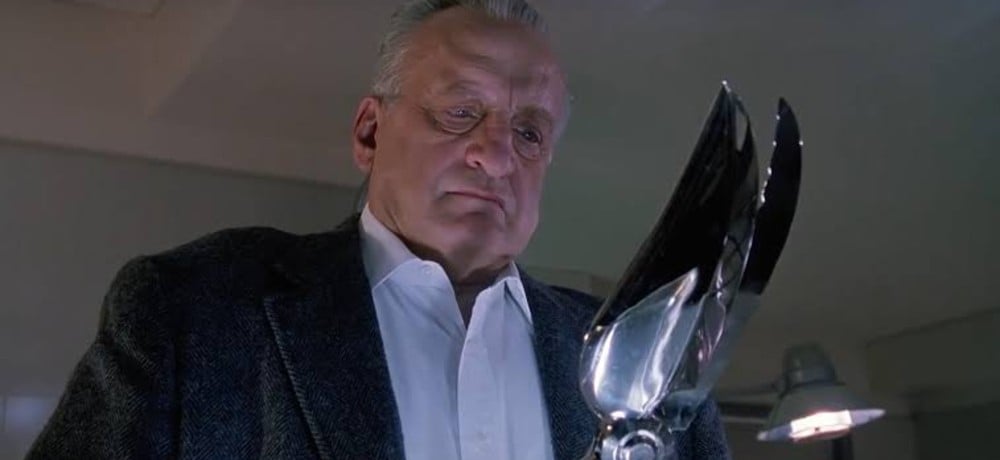
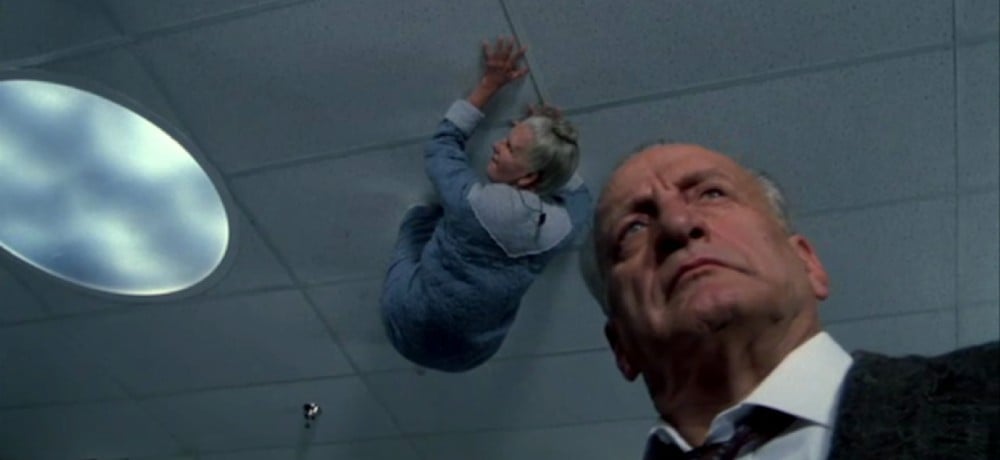
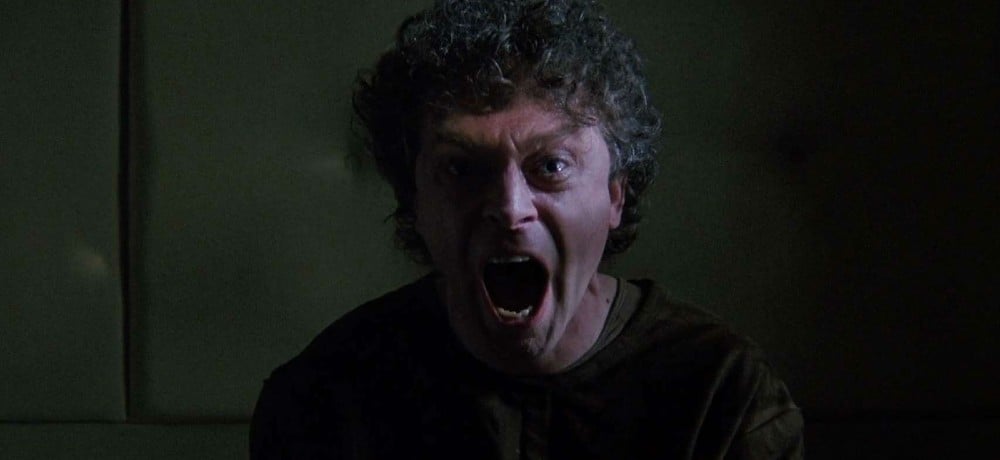
The movie's real identity comes from elsewhere: George C. Scott's fiery, complicated take on Kinderman, the murder investigation, the strange philosophical conversations, and the growing sense that something is profoundly wrong without the movie immediately telling us why. And, of course, there is the legendary hospital corridor scene, often referred to as the greatest executed jump scare of all time. Hard to argue. That extraordinary sequence is almost a perfect demonstration of what Blatty was doing differently. There is no elaborate supernatural set piece, no spectacle; just a camera, a corridor, a character moving through the frame, and the creeping realization that we may have misunderstood what we're watching. The fear comes from anticipation and uncertainty, from knowing something terrible may be about to happen and making us wait for it. That's not the fear of The Exorcist. It's a different kind of fear, and that's precisely why it works.
The Problem With Selling a Franchise
Entertainment marketing has a fundamental problem with established franchises: the larger the brand becomes, the more precisely audiences believe they understand what that brand is supposed to be. A successful movie creates expectations, and those expectations are incredibly valuable to marketers because they make the next movie easier to sell. But they can also become creative handcuffs. The Exorcist means possession. Jurassic Park means dinosaurs. Die Hard means an isolated hero fighting terrorists. Alien means a space creature hunting people in a spaceship. Those associations are useful, but they aren't necessarily the essence of the property; they're the surface expression of it.
The deeper essence is often something more universal. For The Exorcist, it might be the confrontation with evil. For Alien, it might be the helplessness of facing an incomprehensible predator in the vast emptiness of space. Once you understand that deeper idea, you can change the genre without necessarily betraying the property. You can move the characters into a different kind of story while preserving the emotional experience that made audiences care about them in the first place. That's what Blatty was doing with Legion. He absolutely wasn't abandoning The Exorcist, he was asking what else a story in that universe about evil could be.
Sell the Familiarity. Sell the Surprise.
Imagine if Airplane II: The Godfather had actually been made, because the title itself, had it stuck, would have done something brilliant.
Airplane II tells you that the characters and comedic world you love are back, while The Godfather subtitle tells you what they're going to be doing this time. It sells the familiarity and the surprise simultaneously. You know what you're buying, but you don't know exactly what it's going to look like.
There is a strange assumption built into a lot of sequel marketing that audiences want the same experience again. But the ACTUAL Airplane II we got proved that they don't. They want the feeling they had the first time. Nobody who loved The Exorcist necessarily needs another movie in which a child is possessed by a demon.
What they want is to feel unsettled, frightened, and to feel that the evil in the world of the story has suddenly become more pervasive than they thought it was. There are countless ways to accomplish that, but Blatty chose a murder investigation, and a supporting character from the original story to anchor it. That's the creative opportunity that gets lost when marketing becomes too literal - the audience doesn't need you to reproduce the machinery of the original. They want you to reproduce the emotional promise.
Don't Sell the Label
The Exorcist III opened on August 17, 1990, in 1,288 theaters and debuted at number one with $9.31 million over its opening weekend. Not too shabby. Its second weekend, however, fell by 60.7 percent, dropping to just $3.66 million, and by the end of its fourth weekend, the film had reached only about $22.7 million domestically, trailing behind even the savagely maligned Exorcist II: The Heretic’s final box office haul of $30.7 million. Ouch.
Decades later, the genre shift that polarized audiences in 1990 has become the movie's greatest asset. The Exorcist III has developed a passionate cult following, with its reputation growing long after its theatrical run was over. The movie that struggled to satisfy the expectations attached to the Exorcist name is now celebrated for the things that made it unlike the other movies in the franchise.
Because if the first movie succeeded by giving audiences something they hadn't experienced before, simply giving them more of the same isn't necessarily the safest way to honor it. It may actually be the fastest way to make the experience feel too familiar. Sometimes the most faithful sequel is the one willing to say: You remember these characters and this world, now let's show you something you don't remember.
That was the promise of Airplane II: The Godfather. That was, in its own strange way, the promise of Legion. And perhaps that's the real lesson for anyone trying to sell horror, comedy, or any other kind of entertainment: don't sell the label. Sell the experience.
The label gets people through the door. The experience is what makes them stay. And sometimes, the very thing that makes a movie difficult to sell in the moment is the thing that gives it a life long after the marketing campaign is over. The Exorcist III may have failed to deliver the Exorcist audiences expected, but eventually, they discovered something else there. They discovered a terrifying and wholly original movie worth remembering.

Kris Longo is the CEO and Publisher of PANICK Entertainment LLC, a horror-focused entertainment company dedicated to developing bold, creator-driven stories across comics, games, and multimedia. He is also the Co-Founder of Modern Fanatic, a fandom-focused marketing agency that helps brands, creators, and entertainment companies build authentic connections with passionate fan communities.
Kris Longo is the CEO and Publisher of PANICK Entertainment LLC, a horror-focused entertainment company dedicated to developing bold, creator-driven stories across comics, games, and multimedia. He is also the Co-Founder of Modern Fanatic, a fandom-focused marketing agency that helps brands, creators, and entertainment companies build authentic connections with passionate fan communities.










![[Guest Article] Maggots On Your Body Of Work: Clay McLeod Chapman On Finding His Own Muses](https://dailydead.com/wp-content/uploads/2026/03/Bodies-of-work-1000-180x83.jpg)
![[Editorial] AI of the Living Dead: Why Have So Many Already Accepted the Simulation?](https://dailydead.com/wp-content/uploads/2025/09/M3GAN-180x83.jpg)