



Growing up in Northern New Jersey in the early '90s, there were two kinds of Rocky Horror Picture Show fans: there were the performers, and there were the lurkers. I was perfectly happy to be the latter.
By then, Rocky was a ritual for people who felt like they were a little different than the masses. A speakeasy. A passport into a wonderfully weird community. I never felt the need to climb onstage to be part of it. I was perfectly content sitting in the audience, watching people who loved this thing with every fiber of their being. There was something almost anthropological about it. The movie happened on the screen, sure, but the real entertainment was unfolding in the theater around me.
In 1990, I gleefully bought a Rocky Horror T-shirt at an overpriced mall record store. Thirty-six years later, it's faded, cracked, and hanging together through what I can only assume is sheer force of will. I still wear it, not because it is holding up particularly well anymore, but because some pieces of pop culture stop being merchandise and become part of your identity.
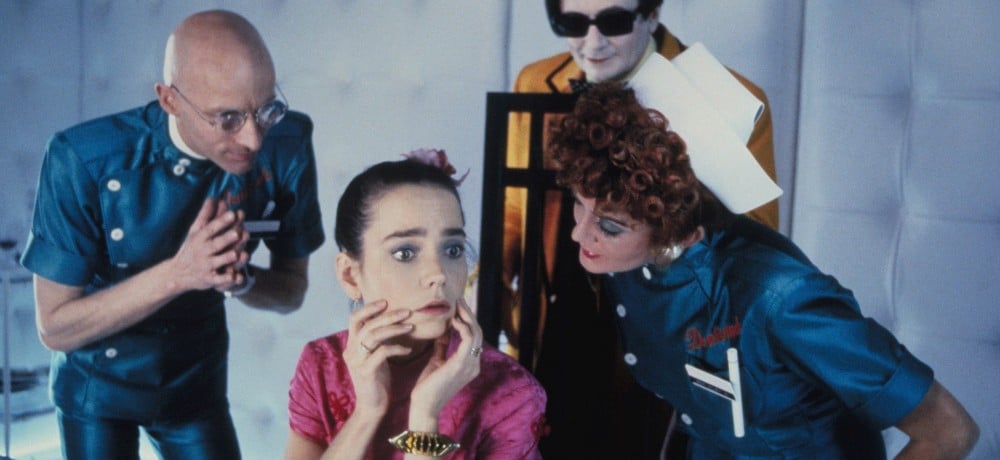
Like most fans back then, I assumed I knew the whole Rocky Horror story. Then I found Shock Treatment. Or maybe Shock Treatment found me. At least the soundtrack did, sitting with a fine layer of dust on the spine in a long-ignored vinyl cut-out bin at my local Sam Goody, with a depressing $2.00 price tag on it. I naturally bought it, as Shock Treatment in that era was kind of a white whale for Rocky fans - an out-of-print relic of a misguided effort to reproduce the mania of its predecessor. I listened to that soundtrack for a full year before I could manage to find a copy of the movie on VHS, and, suffice it to say, the movie I saw in my head while listening to that album did not align with the content of that videotape.
For ages, I'd heard the same things about Shock Treatment that everyone in the Rocky Horror community had: It's not as good, but it’s oddly compelling. It's really weird, but not fun-weird like the original. It simply isn't Rocky Horror 2.
Those statements are all technically true. They're also why I think the movie has been misunderstood for more than forty years. While Shock Treatment was actively trying to reverse engineer a cult sensation and make an automatic midnight movie, it did so without trying to be a genuine sequel. It was actually trying to warn us about the future. And somewhere along the way, that warning got buried beneath everyone's expectations that the sequel should simply do the Time Warp again.
The Fear They Sold You
Released in 1981, Shock Treatment reunited creator Richard O'Brien with many of the creative forces behind Rocky Horror. Brad and Janet returned, although recast. The town of Denton returned. The catchy music returned. The theatricality remained fully intact. What disappeared was the haunted castle, the myriad monster movie homages and references, and in its place was something far more ordinary.
Television.
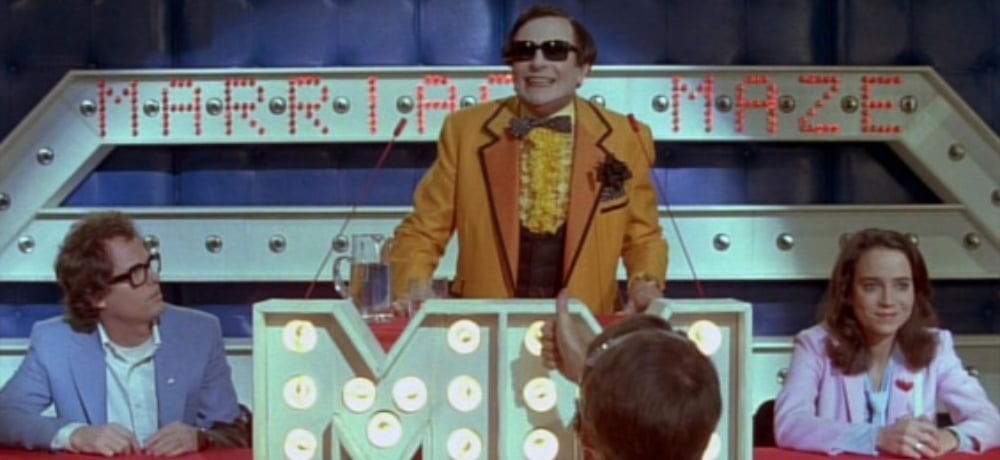
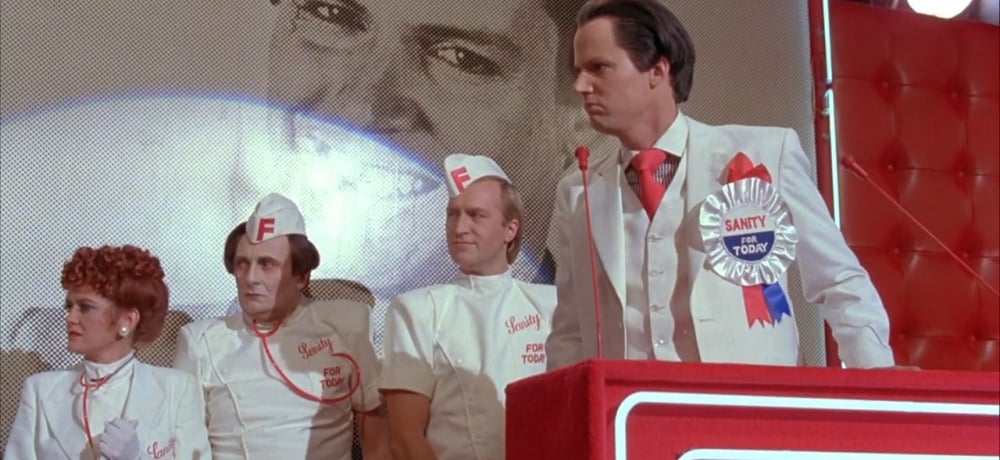
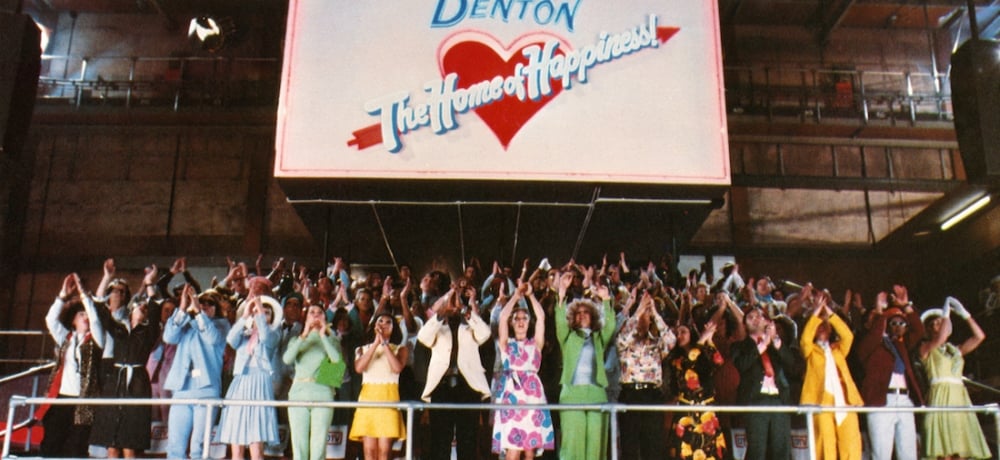
In Shock Treatment, the entire town of Denton has become one enormous television studio. Every home is wired into a broadcasting network. Every resident is simultaneously an audience member and a performer. Doctors host television shows. Courtrooms look like game shows. Therapy is entertainment. Shopping is entertainment. News is entertainment. Life itself has become programming.
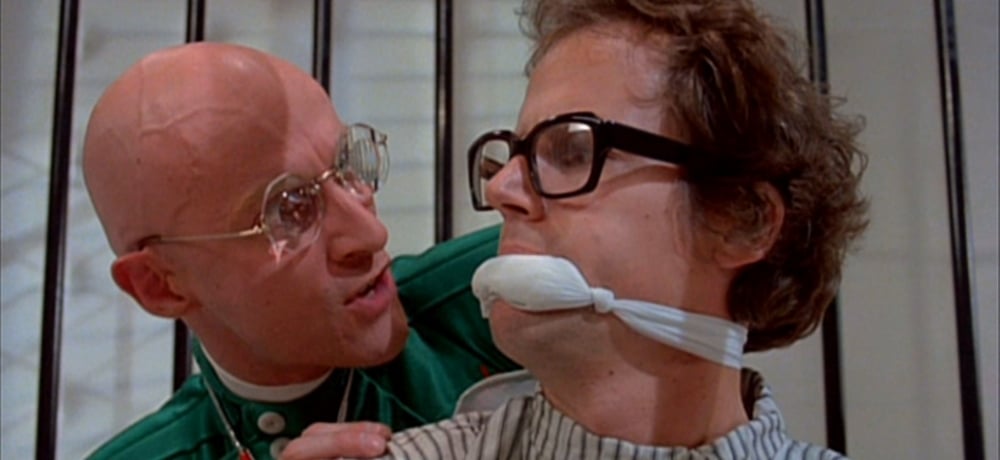
Our “hero,” Brad Majors, is now institutionalized, but not in an asylum, rather on a televised mental health program. Janet (Weiss) Majors is transformed into a reality TV celebrity almost overnight, discovering that fame is intoxicating, not merely addictive. And nobody in Denton seems especially bothered by any of this, and that's the point: You expect the horror to be coercion. But, instead, the horror is mindless, enthusiastic participation.
The Fear They Were Really Selling
One of the reasons I wanted to write this column is because we often confuse horror with monsters. Monsters are just delivery systems for our fears. The real question every horror story asks is simple:
"What are you afraid of?"
Frankenstein fears scientific arrogance. Night of the Living Dead fears societal collapse. The Texas Chain Saw Massacre fears that civilization is only a thin layer of nicety covering something much older and much hungrier.
The monster changes, but the fear remains.
So what fear was Shock Treatment selling? Not the technology of television, but performance. More specifically, the fear that one day we would stop living authentic lives and begin performing curated versions of ourselves for an invisible audience.
That wasn't a fear in 1981. Hell, it was barely even a concept. Today, it has a name. Actually, it has several.
Instagram.
TikTok.
YouTube.
Personal branding.
Influencer culture.
The creator economy.
Pick your poison.
Richard O'Brien imagined this behavior decades before Silicon Valley figured out how to monetize it, perhaps as a direct result of the unintentional fan response to his previous film. While Rocky Horror bathed you in horror trope nostalgia, Shock Treatment moved Denton decades forward in time, at least in terms of social commentary, and only now in the social media era can you watch it for the specific kind of Horror Picture Show it was intended to be. For a colossal misfire of a film, time has reframed it as some kind of pop culture Nostradamus-level prophecy with goofy musical numbers. Through that lens, it’s a remarkable achievement.
The Marketing Problem
Ironically, the film's biggest marketing challenge may have been the success of the movie that came before it.
By 1981, The Rocky Horror Picture Show had stopped being just a film and had become a participatory event. Midnight screenings had transformed ordinary movie theaters into stages where audiences threw props, shouted callbacks, dressed as their favorite characters, and turned watching a movie into a communal performance. None of that had been part of the original release strategy. It evolved organically over years, built by fans who collectively decided the film was more fun if everyone joined in.
That kind of cultural phenomenon can't be predicted. It certainly can't be replicated on command. Yet Shock Treatment was created in a world where everyone involved knew exactly what Rocky Horror had become. Richard O'Brien wasn't writing a book and lyrics in a vacuum anymore. He and director Jim Sharman understood they weren't simply making another musical; rather, they were creating a film for an audience that already existed, one that had developed its own rituals, language, and expectations. You can feel that awareness in almost every frame.
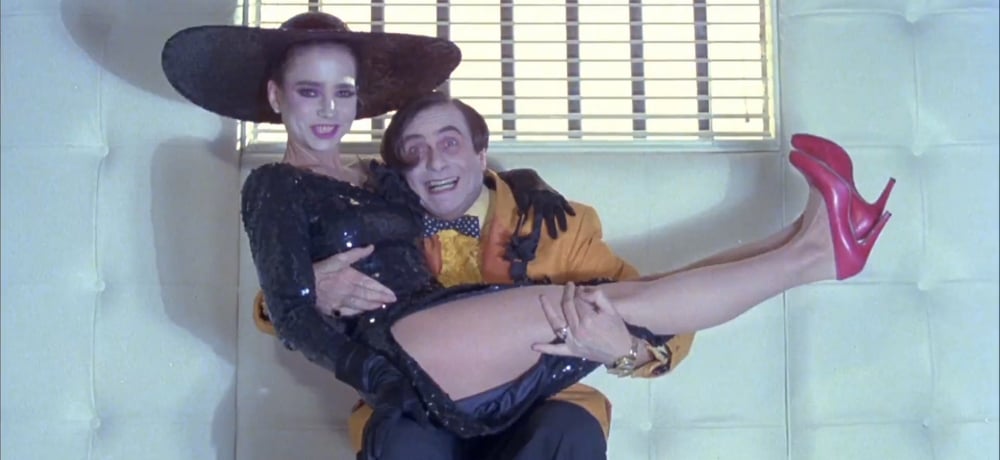
The songs are infectious and built around ridiculously catchy hooks, perhaps even more so than Rocky’s. The performances are broad and theatrical. Dialogue often lands with just enough space for the audience to respond, whether that pause was intentionally written for callbacks or simply emerged from the film's stage-inspired rhythm. Characters arrive with outsized personalities, every costume invites cosplay, and entire sequences feel as though they're waiting for a room full of fans to laugh, sing, or shout back at the screen.
Whether or not those moments were consciously engineered for audience participation is almost beside the point. The film behaves as though it expects an active, rabid audience. It feels less like a movie that hopes to become a midnight phenomenon than one that assumes it's already playing to a crowd eager to join the performance.
That assumption is fascinating because it reveals a fundamental truth about fandom and marketing: you can't manufacture a cult.
You can market a movie. You can build a community. You can even create opportunities for participation. But you cannot dictate the emotional contract between a work and its audience. The Rocky Horror Picture Show earned that relationship over years of discovery, repetition, and shared experience. Its audience invented traditions the filmmakers never could have anticipated or created on their own.
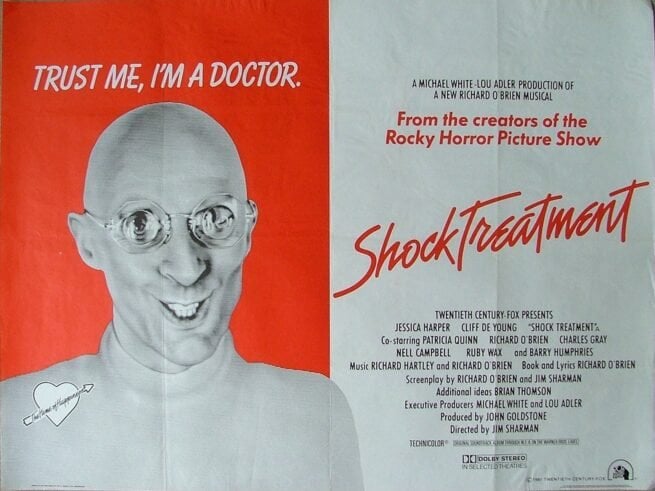
Shock Treatment inherited those expectations without inheriting the organic fandom journey. The studio understandably leaned into the obvious marketing message: "From the creators of The Rocky Horror Picture Show." From a commercial standpoint, it was the only move that made sense. But audiences don't just buy tickets. They buy expectations.
The marketing promised another Rocky Horror. The film delivered something entirely different.
Fans arrived expecting another gleefully anarchic midnight party. Instead, they found a prescient satire about media manipulation, celebrity culture, consumerism, and the quiet surrender of personal identity. Rather than inviting audiences to escape into fantasy, Shock Treatment held up a mirror to a society becoming increasingly comfortable with turning everyday life into entertainment.
In hindsight, that's an extraordinary bait and switch. Not because the marketing was dishonest, but because the culture wasn't ready for the movie Richard O'Brien had actually made. Viewed from 2026, Shock Treatment no longer feels like a failed sequel chasing Rocky Horror's success. It feels like a filmmaker trying to warn us that the line between audience and performer was about to disappear.
The remarkable thing is that he was right.
The Horror Wasn't on the Screen
What strikes me most every time I revisit Shock Treatment is what isn't there.
There is no single mastermind pulling the strings. No alien race manipulating humanity. No supernatural force corrupts the innocent. In most horror stories, the danger arrives from somewhere outside our world or the limits of our imagination. It invades. It infects. It forces ordinary people into extraordinary circumstances.
That's not what happens in Denton. At first, the citizens of "The Home of Happiness" could be mistaken for victims, but make no mistake... they're volunteers.
They line up to audition. They eagerly embrace their fifteen minutes of fame. They reinvent themselves for the cameras because life under the lights is more exciting than life offstage. Television doesn't conquer the town. The town willingly reorganizes itself around television. That distinction is everything. Richard O'Brien wasn't imagining a dystopia built through oppression. He imagined one built through participation.
Watching Shock Treatment in 2026, that's arguably the most unsettling idea in the entire film. The danger isn't that someone takes away your privacy. It's that you willingly trade it for visibility. People don't lose themselves because they're forced to. They lose themselves because being seen feels good.
That isn't the premise of a science fiction musical anymore. It's simply Tuesday.
The Campaign That Never Ended
For years, Shock Treatment was remembered as the sequel that missed the point. Too strange. Too different. Too cynical. Not enough Rocky Horror. I think history has been kinder to it than audiences initially were.
What's fascinating is that Shock Treatment eventually found the audience it had been looking for. Not because the film changed. Not because Fox launched a brilliant re-release campaign. Not because critics suddenly rediscovered it. The culture simply caught up.
Reality television normalized the idea that ordinary people could become stars simply by living in public. Social media encouraged us to document our meals, our vacations, our relationships, and eventually our identities. Platforms rewarded performance with likes, follows, comments, and watch time, teaching us that visibility itself had become a kind of currency.
Denton stopped looking absurd. It started looking familiar.
That's what makes Shock Treatment such a fascinating case study in entertainment marketing. Most campaigns are built around urgency. Buy your ticket now. Watch before someone spoils it. Be part of the conversation this weekend.
Shock Treatment did something almost unheard of - it asked a question that audiences wouldn't be able to answer for another thirty or forty years. In retrospect, Richard O'Brien wasn't simply making a sequel to The Rocky Horror Picture Show. He was making a stunningly astute cultural prediction, and the audience was rejecting it because they hadn't arrived in its world yet.
Curtain Call
I still wear that faded Rocky Horror T-shirt I bought in 1990.
Every time I pull it on, I'm reminded of those weekends in New Jersey, sitting in crowded theaters while my friends shouted callbacks from the stage. Rocky Horror taught me that movies could become communities, and that audiences weren't just consumers but participants. It celebrated performance as liberation, inviting everyone, whether they were in costume or just watching from the back row, to belong to something bigger than themselves.
Shock Treatment asks what happens after that. What happens when the performance doesn't end when the lights come up?
What happens when the audience stops gathering in theaters a few nights a month and starts performing in their homes every day? What happens when identity becomes something we produce, edit, package, and broadcast? What happens when attention becomes the measure of success?
Those questions sounded absurd in 1981. Today, they're the operating instructions for much of our tech-fueled modern life.
That's why I think of Shock Treatment as one of the most unexpectedly prescient films ever made instead of the forgotten sequel to Rocky Horror. Maybe it wasn't trying to recreate a phenomenon. Perhaps it was trying to warn us about one. And like so many great horror stories, the truly frightening part wasn't that it imagined an impossible future. It was that, eventually, we built it ourselves.
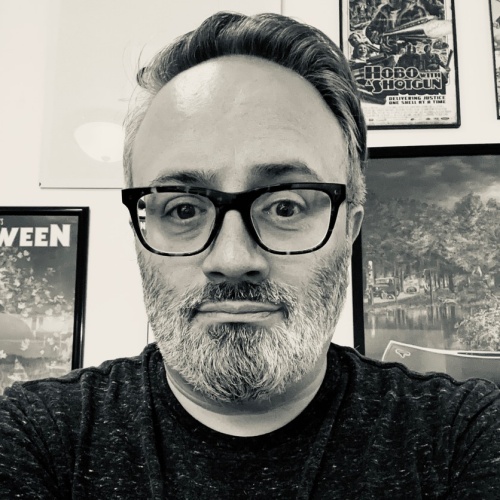
Kris Longo is the CEO and Publisher of PANICK Entertainment LLC, a horror-focused entertainment company dedicated to developing bold, creator-driven stories across comics, games, and multimedia. He is also the Co-Founder of Modern Fanatic, a fandom-focused marketing agency that helps brands, creators, and entertainment companies build authentic connections with passionate fan communities.
Kris Longo is the CEO and Publisher of PANICK Entertainment LLC, a horror-focused entertainment company dedicated to developing bold, creator-driven stories across comics, games, and multimedia. He is also the Co-Founder of Modern Fanatic, a fandom-focused marketing agency that helps brands, creators, and entertainment companies build authentic connections with passionate fan communities.




![[Guest Article] Maggots On Your Body Of Work: Clay McLeod Chapman On Finding His Own Muses](https://dailydead.com/wp-content/uploads/2026/03/Bodies-of-work-1000-180x83.jpg)
![[Editorial] AI of the Living Dead: Why Have So Many Already Accepted the Simulation?](https://dailydead.com/wp-content/uploads/2025/09/M3GAN-180x83.jpg)