



I’m Kris, a lifelong horror nerd and a career-long marketing professional. This new column, Selling The Fear, funnels my love of both into one lane and looks at how horror infects pop culture!
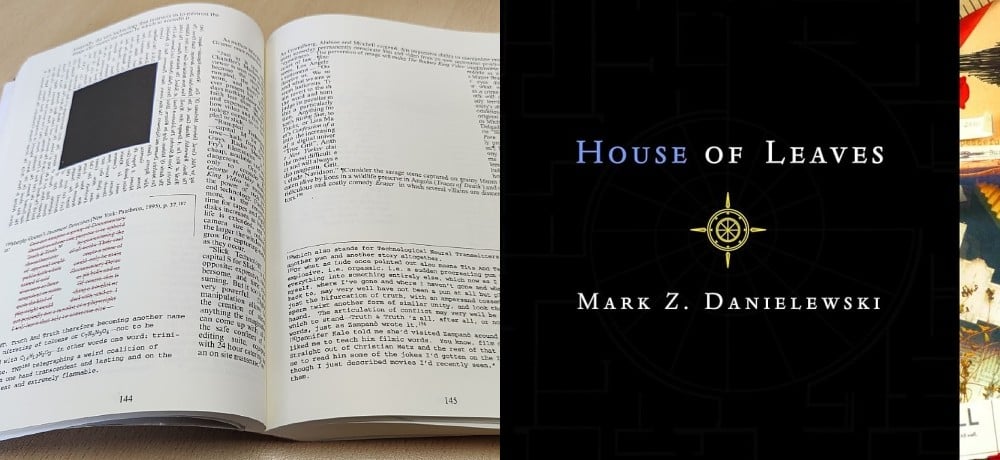
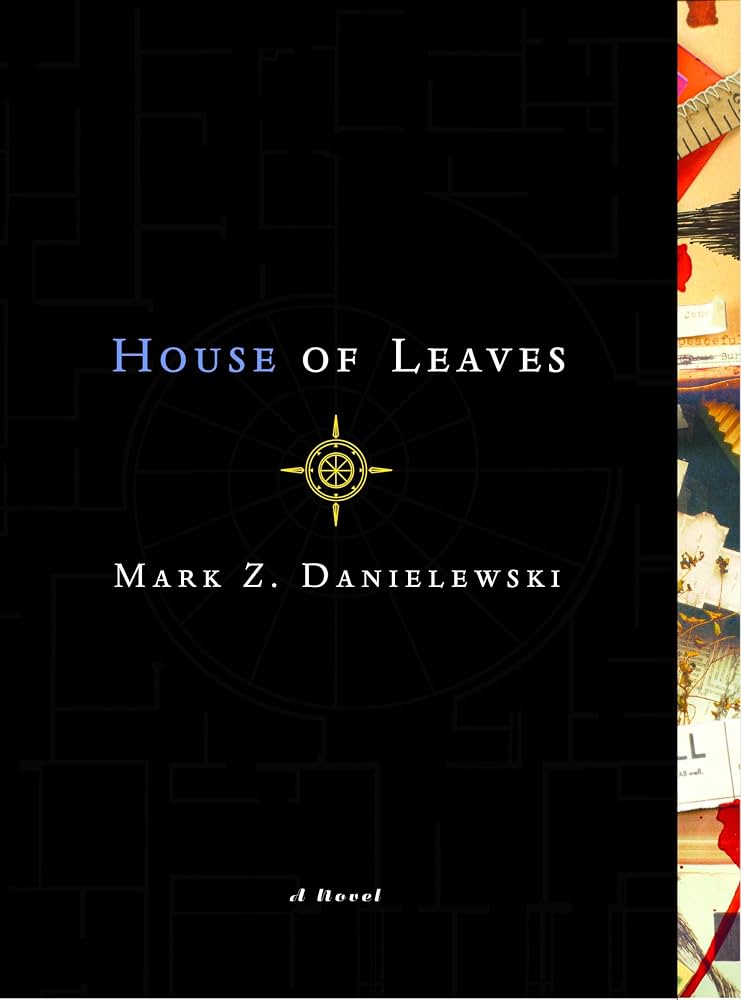
Before I ever opened Mark Z. Danielewski’s House of Leaves, I already knew something was daring and different about it. Not the plot. Not the characters. The book itself.
Shortly after its release via Pantheon Books in 2000, my late mother-in-law - a deeply quirky, often fascinating person with curiously diverse taste in books - began reading it. She would enthusiastically share details whenever I entered her home, knowing I was a serious fan of horror:
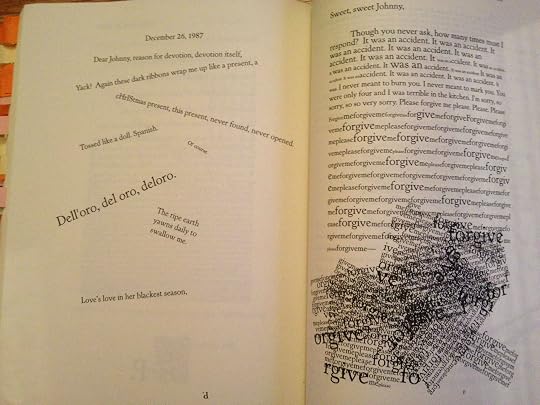
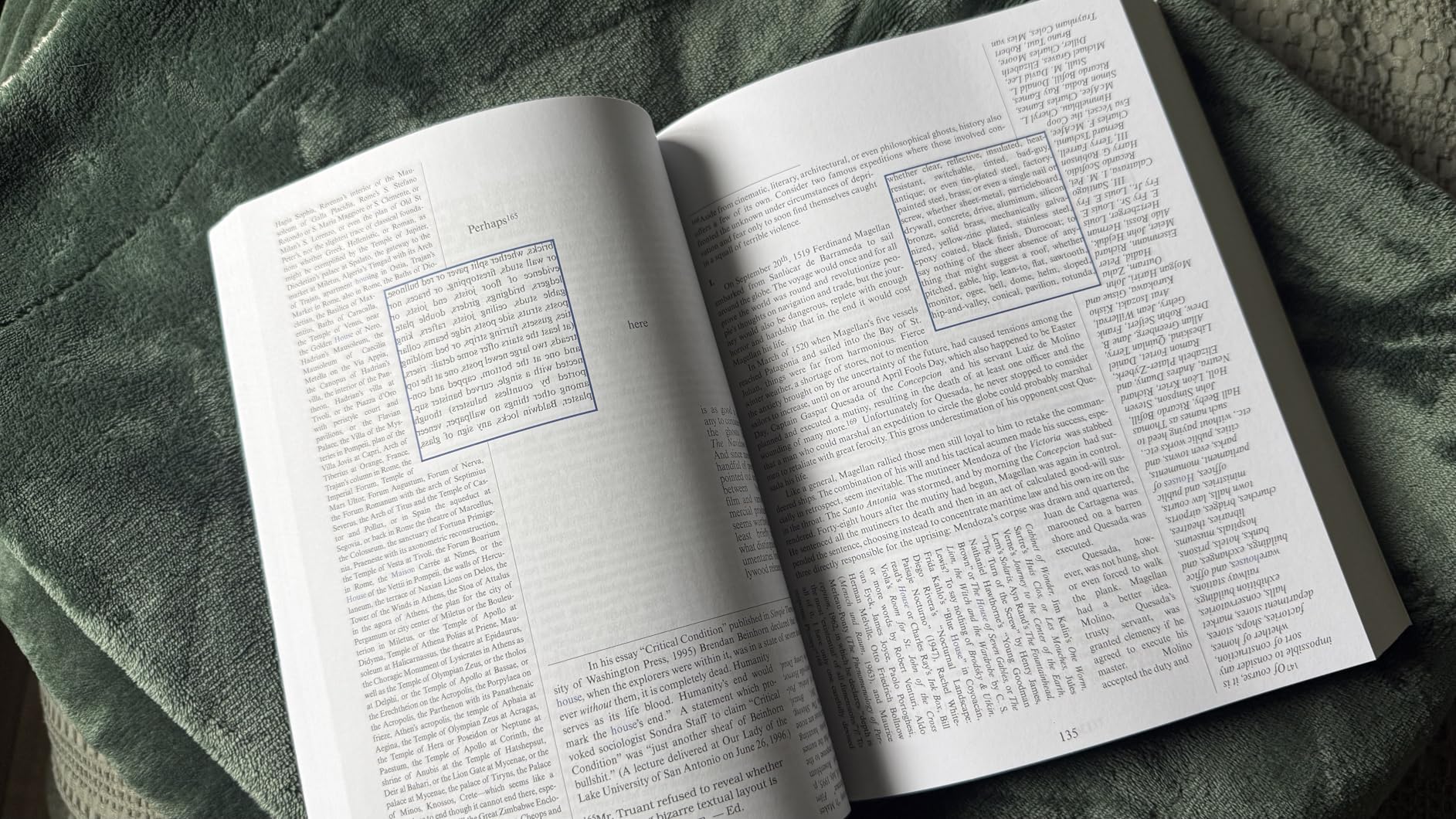
That it was the scariest novel ever written. That it was near impossible to read yet difficult to put down. That it would get inside your head. That it mixed narrators, fonts, and page layouts and did not hold your hand through these shifts.
She did not pitch it like a story I would enjoy, rather a literary and sensory experience I had to endure and synthesize. And she told me that as soon as she completed this experience herself, she was passing the colossal 700-page opus to me.
This experience was not isolated to me and my mother-in-law. That was the heart of the very unintentional but enduring marketing campaign for House of Leaves.
What the Book Actually Is (In Theory)
When I first encountered House of Leaves, the term “liminal horror” was not yet a pop culture handle. Today, with an extended cut of Backrooms in theatres now, bolstering a film that’s been in the Top 10 for 6 weeks, it’s a full-on phenomenon. Shifting the focus away from traditional monsters, killers, and demons, it thrusts its characters into vast uncertainty, time fragmentation and the uncanny feeling that something is simply…wrong. Did we stumble into something sinister, or have we always been fated to arrive here?
At its core, House of Leaves is a haunted house story, although even that feels like an oversimplification. The central narrative revolves around The Navidson Record, a documentary that may or may not actually exist, chronicling a family that moves into a house that is slightly larger on the inside than it is on the outside. This small impossibility escalates into something far more disturbing when a dark, shifting hallway appears, expanding into a vast, labyrinthine space that defies physics and logic. The deeper the characters are able to explore this house, the more it seems to respond to them, amplifying fear, isolation, and psychological strain.
This story is presented through a manuscript written by Zampanò, a blind academic who obsessively analyzes the film with dense footnotes and references, many of which may or may not be fabricated. That manuscript is then discovered and edited by Johnny Truant, a Los Angeles tattoo artist whose own mental state begins to deteriorate as he becomes consumed by the material. So the reader is not just following one story, but three layered on top of each other, each one potentially less reliable than the last.
The Fear They Sold You
Most books are marketed on clarity.
Here is what it is. Here is why you will like it.
House of Leaves took the opposite approach. It sold confusion, difficulty, and unease. It built a reputation before it built an audience. By the time readers picked it up, they were not asking, “Is this good?” They were asking, “Can I handle this?”
That shift matters. It reframes reading as a test, not a pastime. And once you are being tested, you are already emotionally invested. The core mechanism of the test is simple: anticipatory dread. You were not reacting to the book. You were reacting to what you had been told the book would do to you.
The result is a kind of psychological preconditioning. You enter the book already off-balance, already expecting to feel lost. Which means when the book disorients you, it feels earned. Even inevitable.
The Execution
Before its full release through Pantheon Books in 2000, though, House of Leaves circulated in fragments, passed around in manuscript form and early printings. This gave it an almost bootleg quality, something closer to a zine or a discovered text than a formally published novel. Early readers did the heavy lifting. College campuses, online forums, and late-night conversations turned the book into a kind of dare. It had taken on a reputation as being the prose equivalent of a found footage movie, only a year after The Blair Witch Project revolutionized movie marketing.
Upon release, there were no billboards, print ads, trailers or much traditional marketing driving the project. The author, however, plunged himself headlong into the early internet, with a robust message board on his own site designed to encourage readers to connect and share their thoughts, theories and frustrations with the narrative amongst their fellow obsessives. This spread to the early virtual community platform The Well, where an incredibly popular message board dedicated to the lore of House of Leaves almost turned the novel into an ARG, with readers piecing together their collective fragmented theories to solve the mysteries as a community. The author’s sister, singer and songwriter Poe, released a companion album of sorts later that same year called Haunted, which explored some of the same central themes and mysteries as House of Leaves, with songs like “5 ½ Minute Hallway” detailing a home that is bigger on the inside than it is the outside. A non-traditional book and album tour of Borders locations by the siblings followed, further energizing a growing base of devotees.
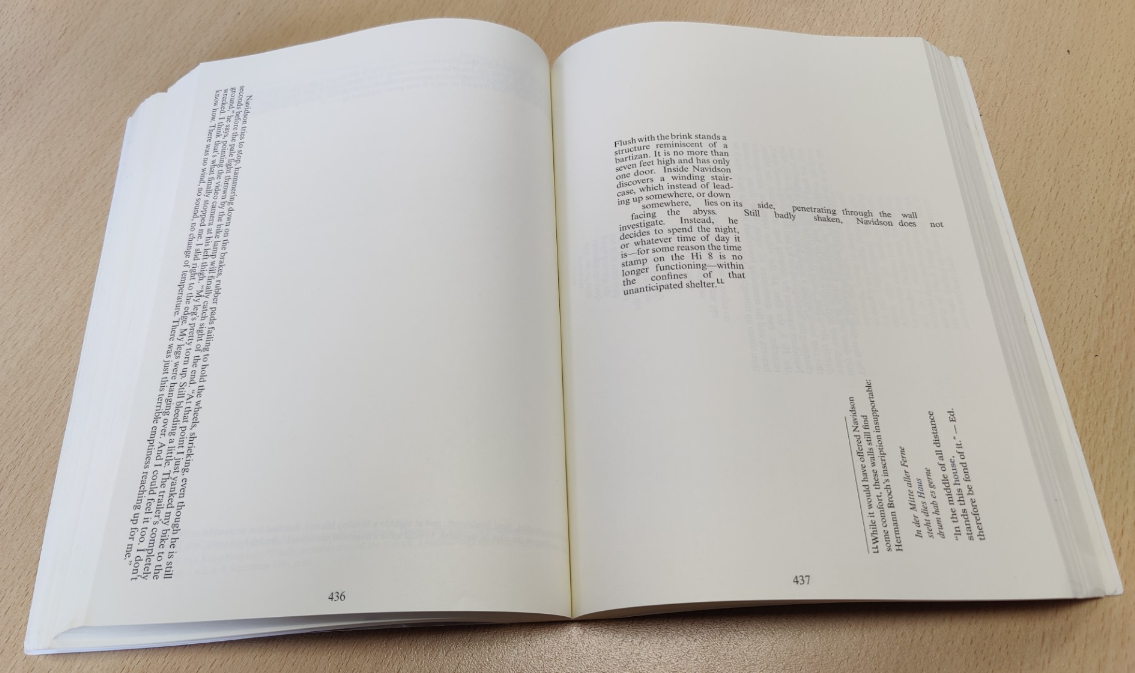
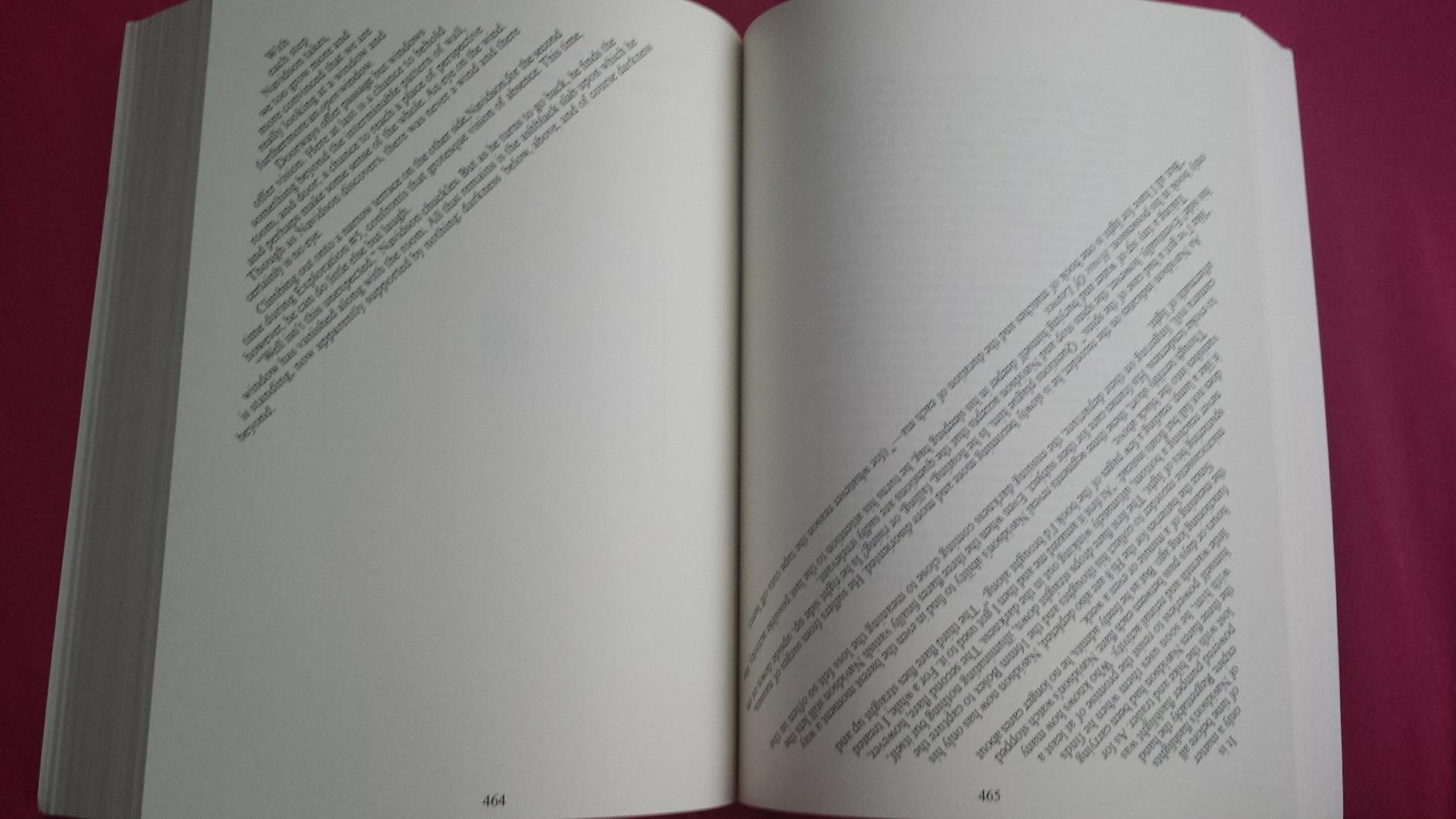
This is the same energy that powered Blair Witch, where uncertainty about what was real became the hook itself. In both cases, the audience became the distribution channel and the book’s physical design became the trailer. It was incredibly unique, inherently promotional and sensational. My mother-in-law’s warnings did not do justice to what I discovered the first time I flipped through it: Dense footnotes. Erratic layouts. Pages that require you to rotate the book or flip back and forth. It looks complicated before you read a single word.
The book does not wait to unsettle you. It starts the moment you open it. In that sense, the object itself functions like a trailer you hold in your hands. The story unfolds across multiple layers, beginning with a documentary that may not exist, into a manuscript analyzing that documentary, all while a narrator is unraveling while compiling it. Readers are not just consuming the story; they are trying to solve it. This creates engagement, but more importantly, it creates ownership. You are not just reading the book. You are participating in it, and perhaps you will be the one to crack the code. That illusion is critical from a marketing perspective. Once something feels discovered, it feels personal. And once it feels personal, you are more likely to pass it on to someone with similar sensibilities. Every new reader becomes part of the campaign. But here is the uncomfortable part - the idea of House of Leaves is often scarier than the act of reading it. The reputation does as much work as the writing. Sometimes much more.
Reviews were mixed at the time of release, with most critics applauding Danielewski’s daring breaks with traditional formats and expectations, but many feeling left frustrated by the lack of structure and any meaningful conclusions. Steven Poole suggested that the book worked best as a satire of criticism rather than a traditional horror novel, stating, “Every possible mythological and literary analysis of the story of Navidson's house is already provided in the text, but the house's impossibly vast, dark interior spaces, like the White Whale, finally shrug off all projected interpretation. Yet even that is not enough: Danielewski piles on even more narrative frames, ultimately to the novel's detriment.”
The Aftermath
More than two decades after its release, House of Leaves still circulates the same way, but now with an audience that was raised on the internet, and in some ways that is the key to its enduring legacy.
As an anonymous reader posted in the House of Leaves Subreddit a full 20 years after the book’s release, “...I closed my copy of the book and realized I had to be the one to end it, because the book won't do it for me. I passed my copy, and all its notations and tabs, along to a friend of mine. I don't know whether he'll read it or not, or what will happen to it, but that's not up to me, anymore. Either way, it seemed fitting. And only after that did I feel satisfied enough to call my experience with it done.”
Before I began prepping this column, I pulled my inherited copy of House of Leaves off the shelf for the first time in at least a decade. As my wife and I started thumbing through, a slip of paper fell out and onto the floor. It was a note from my mother-in-law, who passed in 2010, that I had either long forgotten about or never noticed. It read:
“Kris, it’s your turn. You may think I told you a lot. No I didn’t…
…It’s more a “think” book than a horror book, but when you think about it, it is horror. First read the last little line on page 545.”
An appropriately weird, uncanny note from the past, inspiring me to dive into this frustrating, fascinating book once again. I rushed to page 545 to find this passage:
“Make no mistake, those who write long books have nothing to say. Of course those who write short books have even less to say.”
After hundreds of pages of footnotes, contradictions, and dead ends, the book directly offers that meaning was never going to arrive in a neat conclusion, and was never the point. If anything, the length, the excess, and the creation of community around the pursuit of answers were. The horror is not what the book tells you, rather what it forces you to figure out on your own, before you inevitably pass your copy along to the next potential obsessive. You can’t ask for better marketing than that.
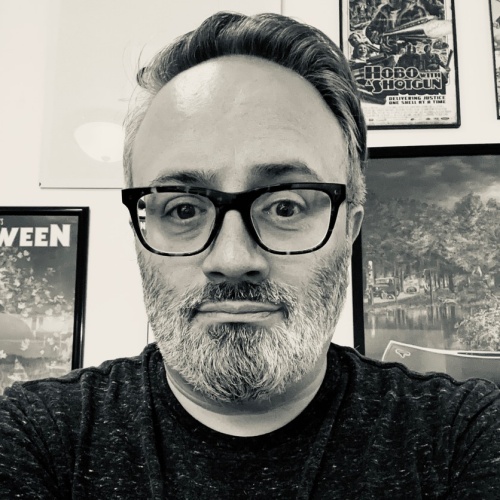
Kris Longo is the CEO and Publisher of PANICK Entertainment LLC, a horror-focused entertainment company dedicated to developing bold, creator-driven stories across comics, games, and multimedia. He is also the Co-Founder of Modern Fanatic, a fandom-focused marketing agency that helps brands, creators, and entertainment companies build authentic connections with passionate fan communities.
Kris Longo is the CEO and Publisher of PANICK Entertainment LLC, a horror-focused entertainment company dedicated to developing bold, creator-driven stories across comics, games, and multimedia. He is also the Co-Founder of Modern Fanatic, a fandom-focused marketing agency that helps brands, creators, and entertainment companies build authentic connections with passionate fan communities.




![[Guest Article] Maggots On Your Body Of Work: Clay McLeod Chapman On Finding His Own Muses](https://dailydead.com/wp-content/uploads/2026/03/Bodies-of-work-1000-180x83.jpg)
![[Editorial] AI of the Living Dead: Why Have So Many Already Accepted the Simulation?](https://dailydead.com/wp-content/uploads/2025/09/M3GAN-180x83.jpg)